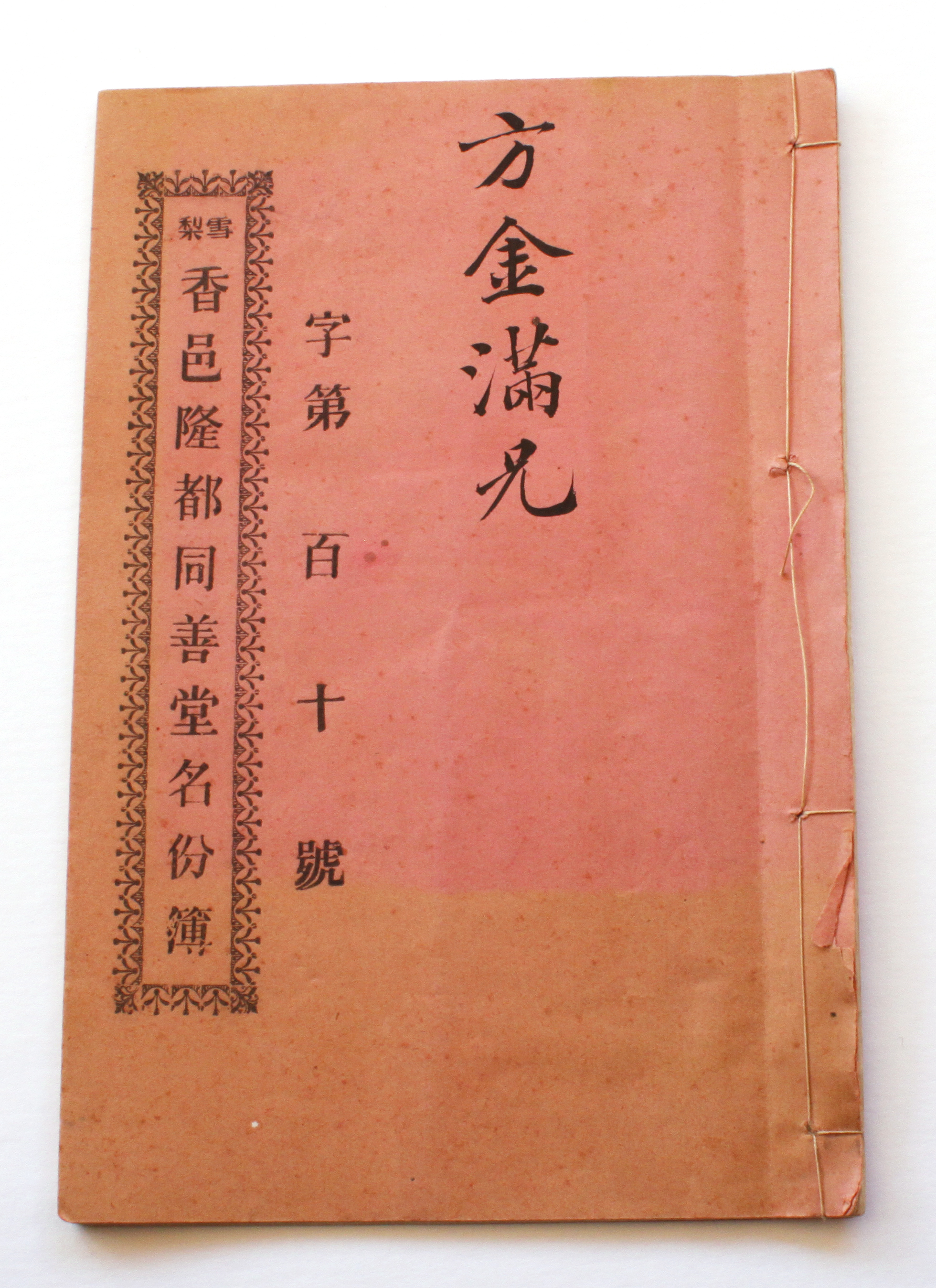
Pearl River Delta (珠江三角洲)
Date Published
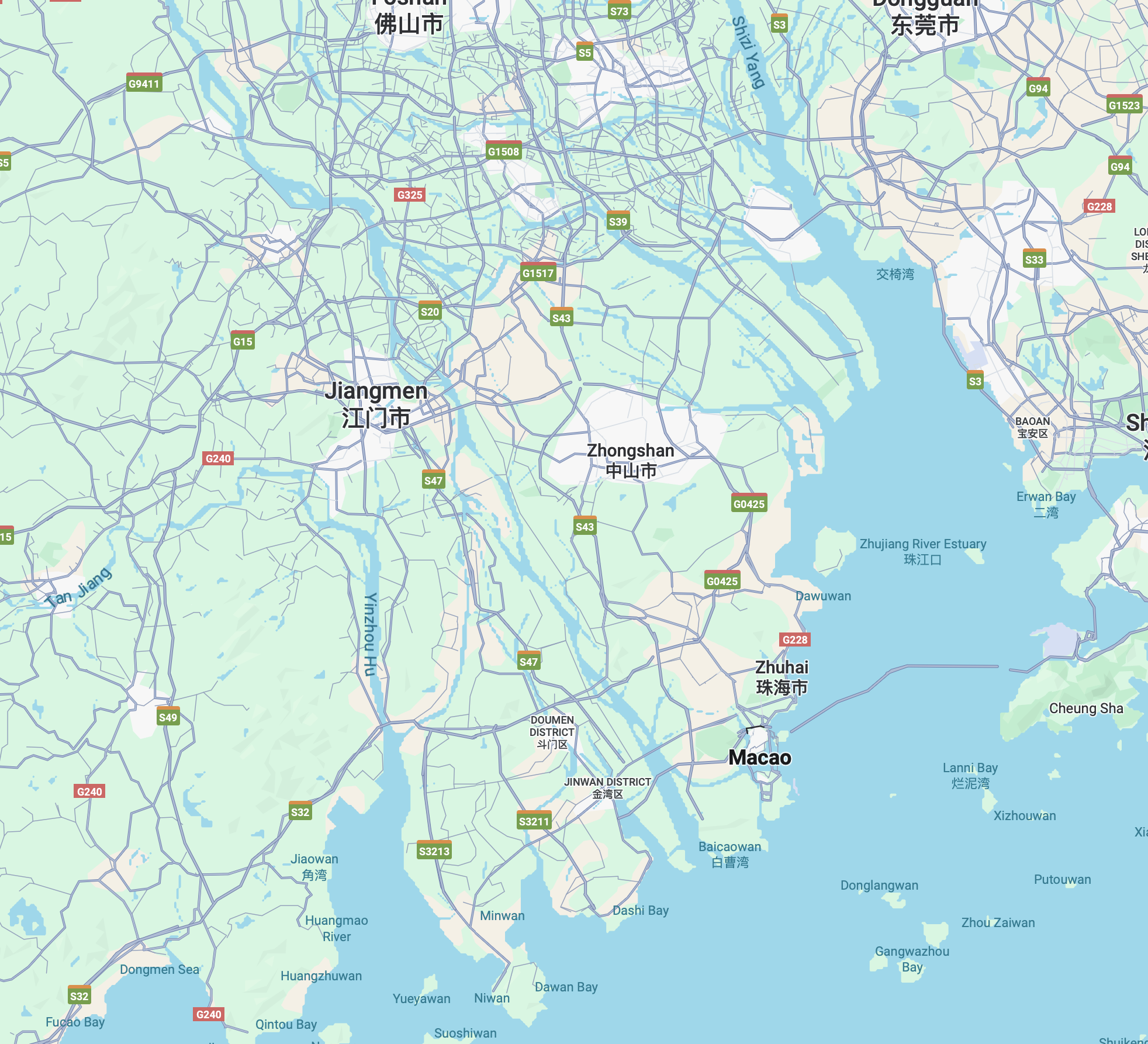
The Pearl River Delta (珠江三角洲) is the major source for people of the Chinese (Cantonese) diaspora until the late 20th century.
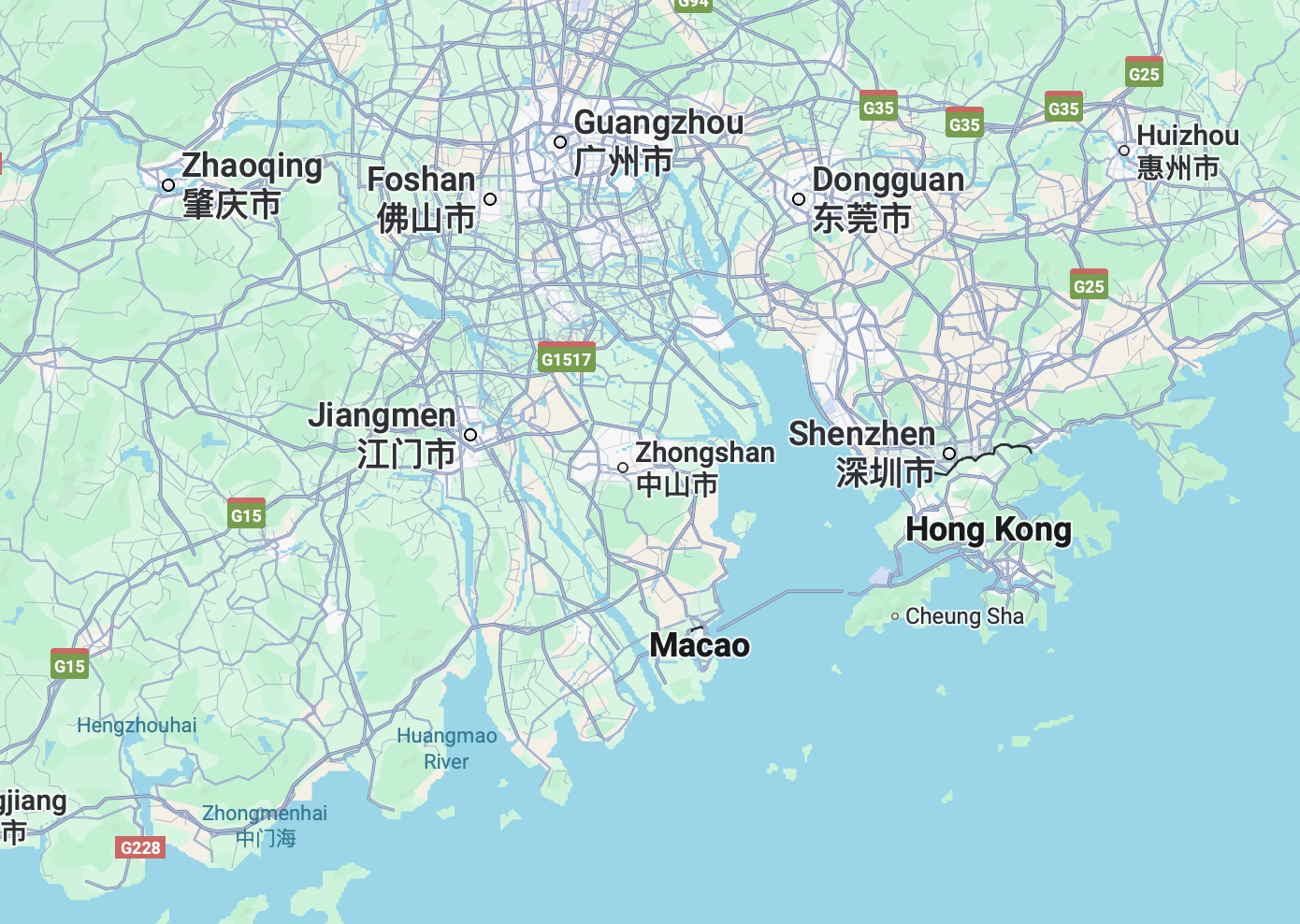
"By the beginning of the nineteenth century, the Pearl River Delta region was already much influenced by factors that would contribute to the movement of people after 1849. These included the links merchants from this area had established with the Nanyang since the twelfth century, and the growth of the so called Canton (Guangzhou) Trade since the sixteenth century with Europeans who were restricted by Qing government policy to bases at Macao and Guangzhou. In addition to merchants, many thousands of labourers had gone to the Nanyang, including to the British colony of Singapore, often using credit-tickets in order to do so. By the beginning of the nineteenth century, therefore, the Pearl River Delta was an area where many lived who had a history of overseas travel. It was also an area where mechanisms enabling those without money to travel had developed, and in which contact with European traders was familiar. When trade networks in the Pacific began to include the north-west coast of America, the Hawaiian Islands, and the Australian colonies, all well before the establishment of Hong Kong, it is unsurprising that traders and people of Guangzhou and the Pearl River Delta were involved."
"Thus, by the middle of the nineteenth century, the people of the Pearl River Delta had a knowledge of Europeans in both trade and war. They also had access to European shipping and to the new colony of Hong Kong, operating as a port independent of Chinese officials. Many merchants, seamen, and others from the Pearl River Delta had visited various Pacific Ports or were living in them. Such Pacific connections, running through Hong Kong and Guangzhou, provide much in explanation of how a large-scale movement of Pearl River Delta people to the Pacific Ports occurred after 1849. However, other factors are also needed to explain why people would have wished to participate in such travels.
Poverty, famine, and flood would have provided ample motivation to seek outside income for residents of the Pearl River Delta, and such motivations have often been cited. However, such circumstances were not unique to the Pearl River Delta villages and so other factors more specific to the Pearl River Delta in the first half of the nineteenth century must be considered. These included disruptions caused by the war with the British, subsequent heavier taxation, increased unemployment as the tea trade shifted north of Guangzhou with the opening of the new treaty ports, and the impacts of bankruptcy for many who had operated under the old comprador system. Revolts, said to be the work of triads, broke out in Zhongshan County and the county capital, Shekki (石岐) was attacked in 1844. These disturbances led to the first major influx of what the British described as a “better class” of Chinese into Hong Kong.
Source: Michael Williams, Returning Home with Glory, HKU Press, 2019, p.46-48
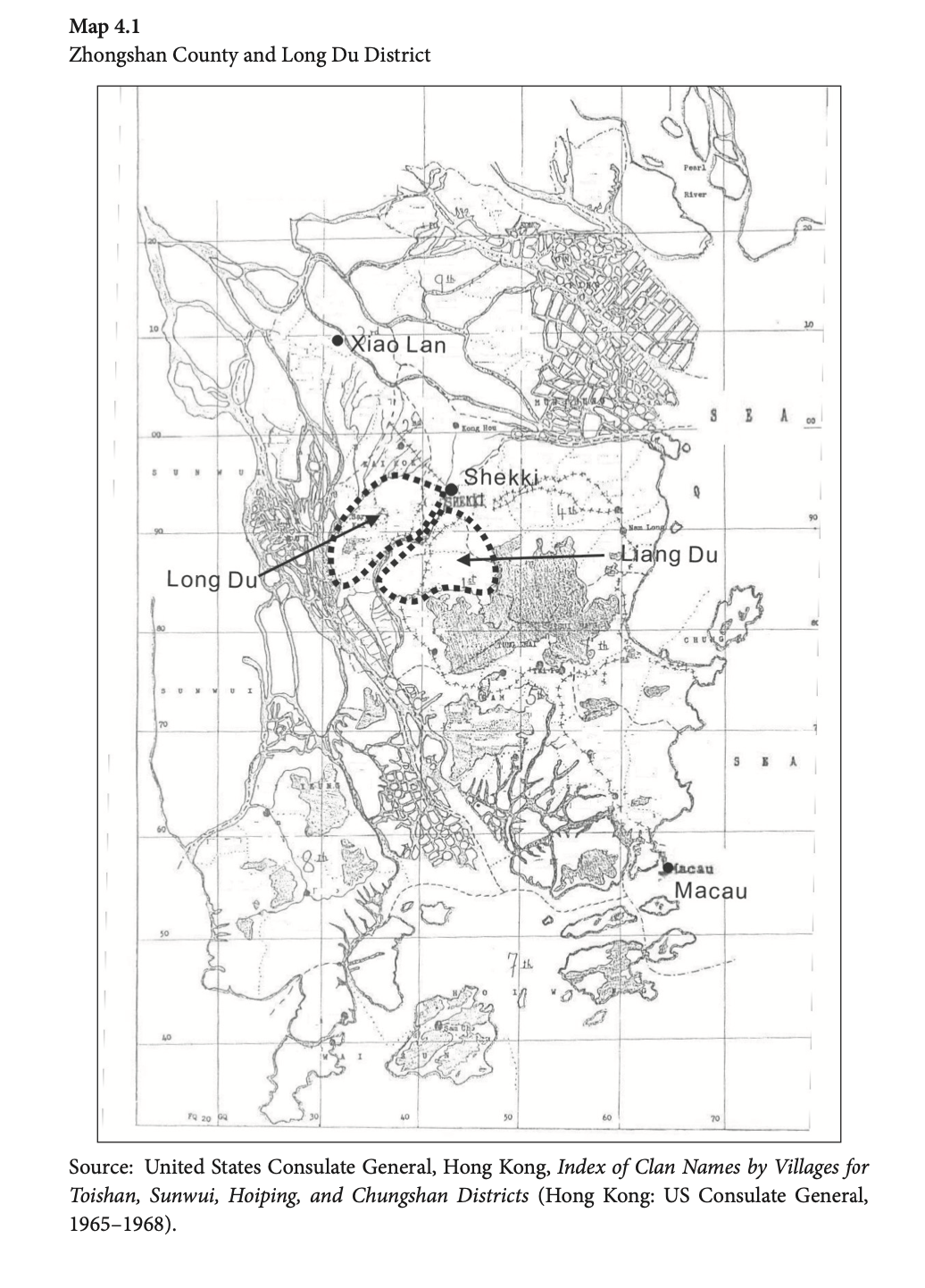
US Consulate Map