Donations, villages
Date Published
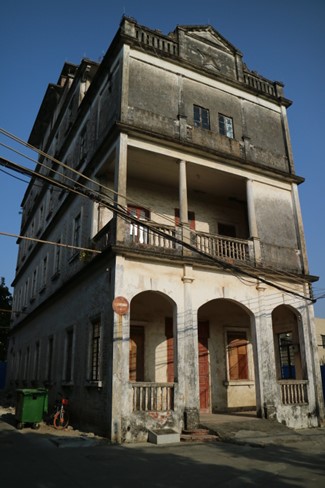
As well as remittances to immediate family those working overseas often made village orientated donations.
Also of great impact were the many donations made, often in co-operation with others on projects such as health clinics, schools, street lights, reading rooms, tea pavilions, community buildings, village watch towers and bridges.
These donations were not mere symbols but practical contributions designed to improve the living standards of those in the villages. Nevertheless when people made such donations they were not only exercising personal generosity but mirroring a role that had long been played by the traditional gentry of China. According to a study of the pre-Republican gentry: “They undertook many tasks such as welfare activities, ...” “Numerous examples in local gazetteers show their very frequent activities in such public works as the repairing of roads, the building of bridges, the dredging of rivers, the construction of dikes, and the promotion of irrigation projects.”
Non-gentry also participated in the less costly of such projects, wooden rather than stone bridges, for example. It can be assumed therefore that people returning with money would have participated in similar projects. There is no evidence, however, that even wealthier overseas people performed such tasks before 1911. During the 1920s and 1930s, on the other hand, certainly in Long Du district, there is a great deal of evidence of public donations by those who earned their money overseas. By the 1930s for example, Buck Toy village had a reading room, telephone system, watchtower and streetlights, all the result of its generous Hawaiian based villagers.
Williams, M., 2018, Returning home with glory: Chinese villagers around the Pacific, 1849 to 1949 (榮歸故里:太平洋地區的中國僑鄉 1849–1949), Hong Kong University Press, Hong Kong, pp.85-86.