Silk cloth with poem by Liang Qichao
Date Published
: politics
: Central Goldfields (Vic)
: Orange
: 1901
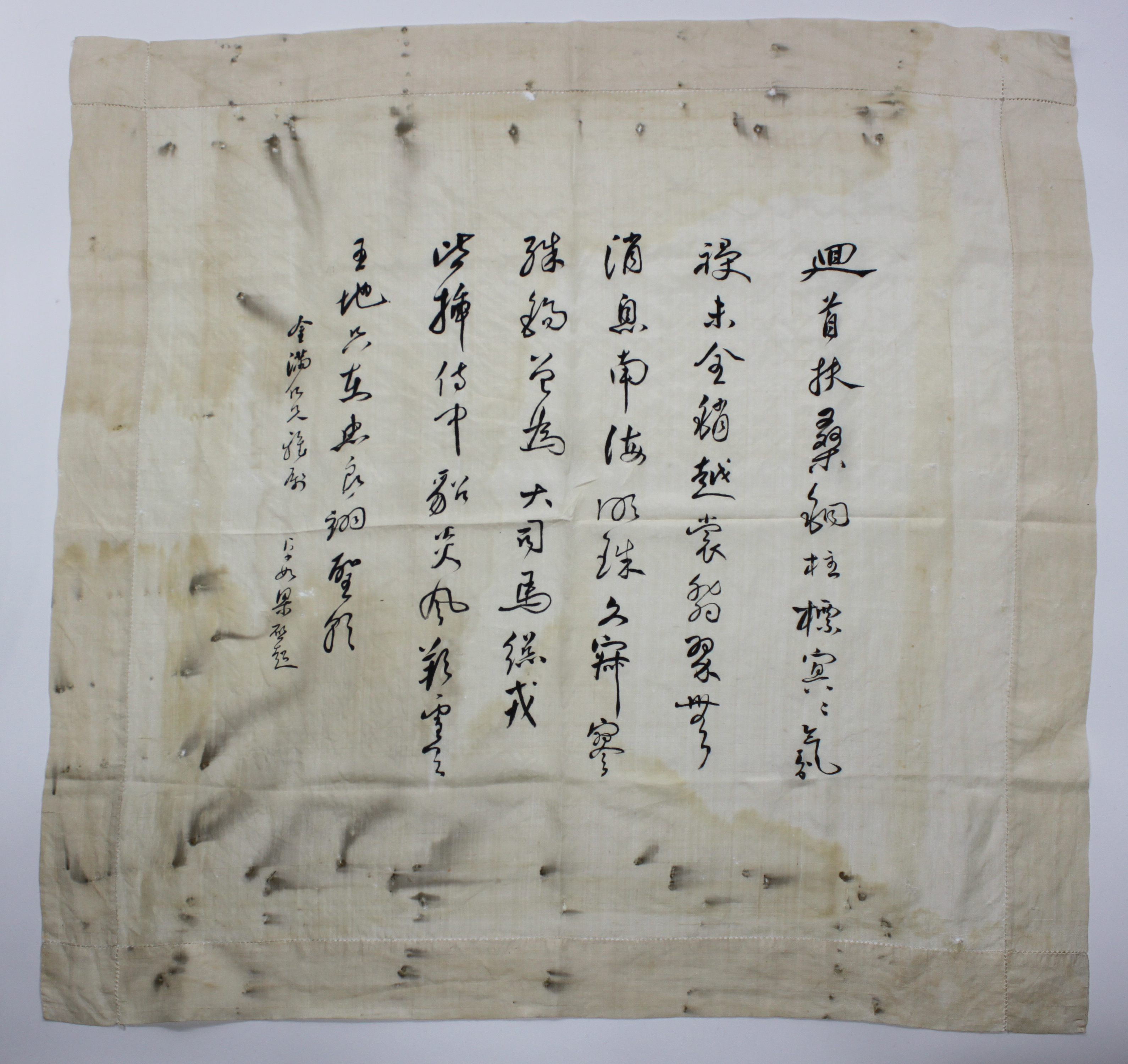
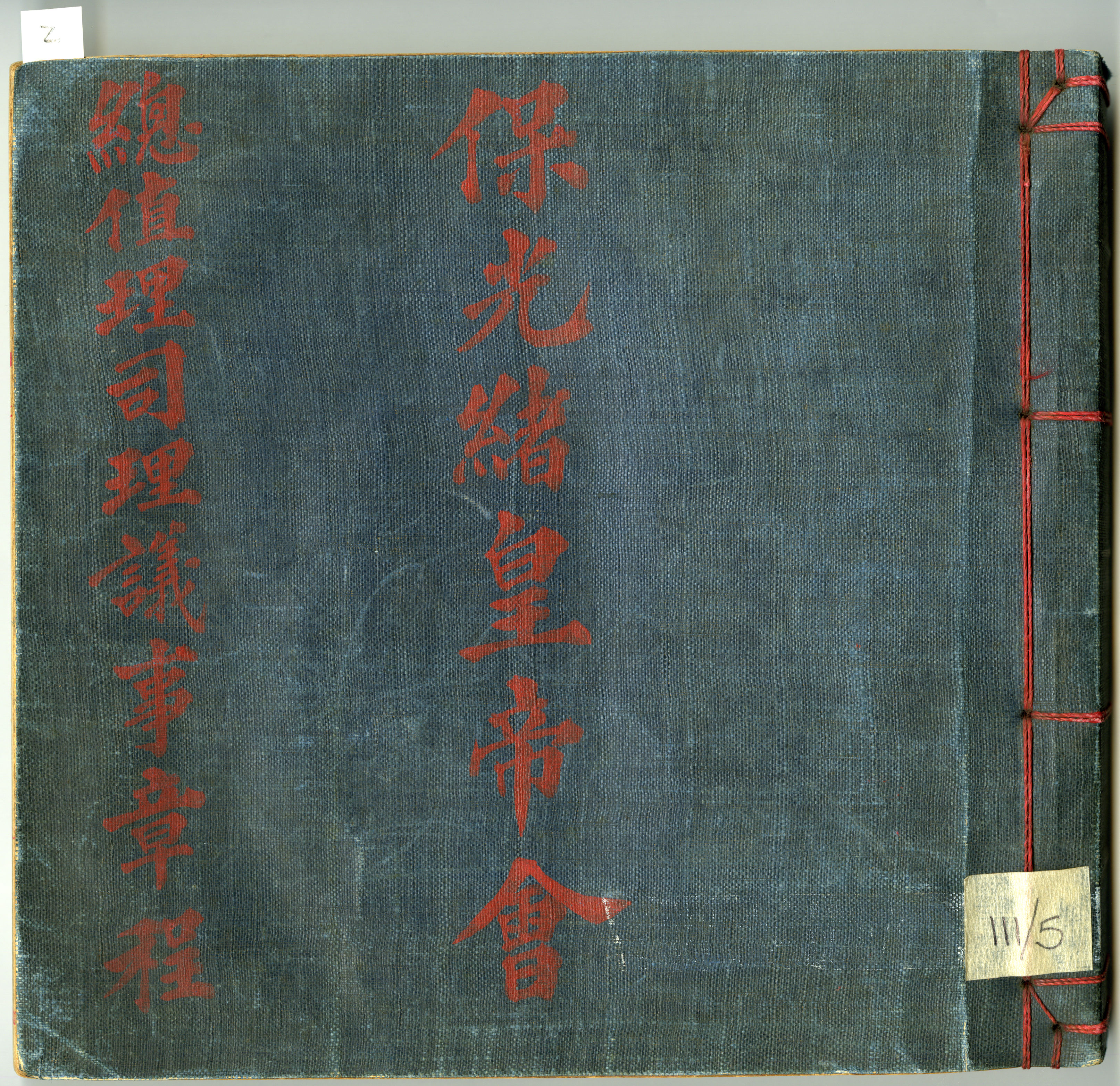
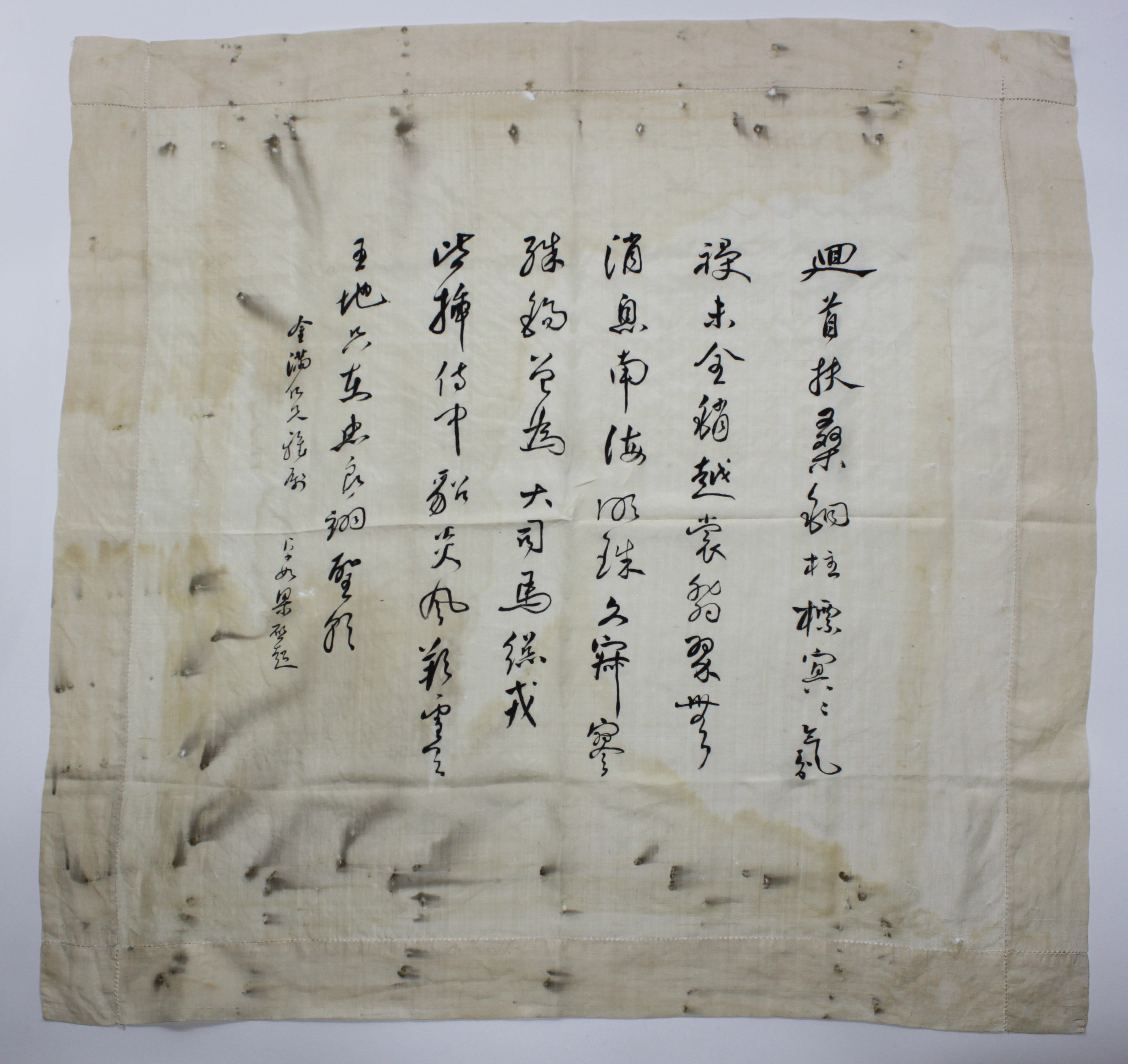
A silk cloth on which the Chinese intellectual Liang Qichao inscribed a Tang poem while touring Australia in 1901.
This silk cloth inscribed with fine calligraphy forms part the Kira Brown family collection. Its subscription indicates that it was written at the request of a certain 金滿 “Kum Moon” by the prominent and prolific late-nineteenth-century and early-twentieth-century Chinese intellectual 梁啟超 Liang Qichao (a.k.a. Liang Kai Chu, Leung Kai Chiu; 1873–1929). Liang Qichao toured Australia in 1900–1901, and visited the Chinese communities of New England, NSW, during his trip. It is likely that the Kum Moon for whom the calligraphy was written was 方文厚 Fong Mon How, a storekeeper in Inverell, NSW, at the time of Liang Qichao’s visit, Kum Moon being his courtesy name."
For more information see Our Chinese Past: Ely Finch, Silk cloth inscribed by Liang Qichao, probably when in Inverell, NSW, in 1901
Poem Translation (by Ely Finch)
Turn your head to the emblems that are Foo-song’s bronze pillars,
A dark miasma (about them) has not yet fully dissipated. Of kingfisher plumes from Yuet-sheung, there is no news,
Of bright pearls from the South Sea, there has long been silence. A special bestowal created a Minister of War,
Commanders (now) all have the ermine of a Director of the Chancellery stuck (in their hats).
This heavenly realm of scorching southerlies and snowy northlands
Depends entirely on the assistance of the good and loyal at its sacred court.
Historical linguist Ely Finch feels that the poem chosen by Liang Qichao to write on the cloth was due to its being able to convey allusions to early twentieth century concerns with the declining Qing government and its concluding couplet in particular expresses support for the Chinese court, a message consistent with the aims of the Chinese Empire Reform Society.
The Silk Cloth is in the family collection of Kira Brown - See: Chen Quin Jack