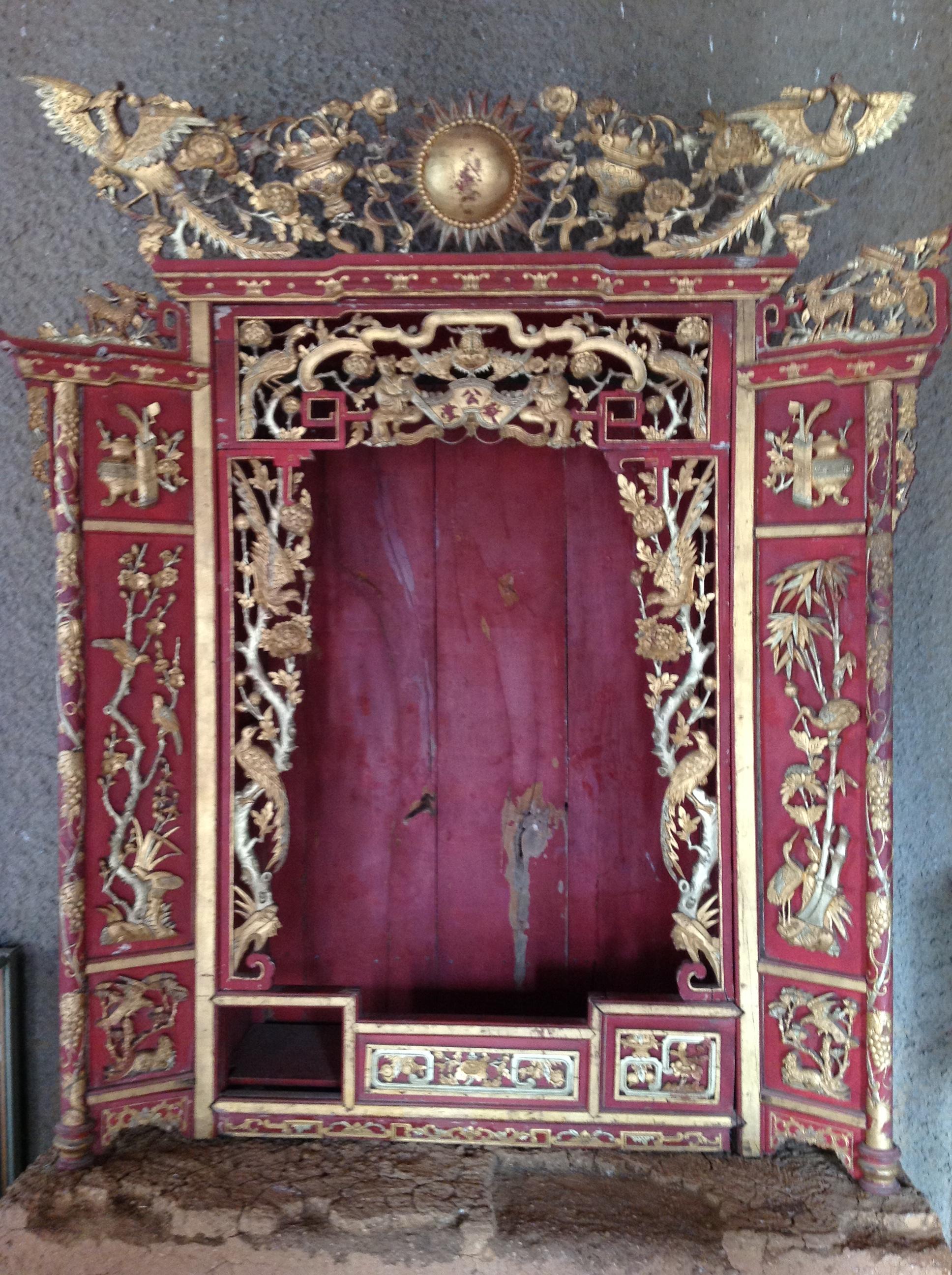
Masonic altar, Bathurst
Date Published
: Temples / Joss House, Masonic
: Central Tablelands (NSW)
: Bathurst
: 1880 to 1930
Bathurst Masonic Altar
Bathurst Masonic Altar
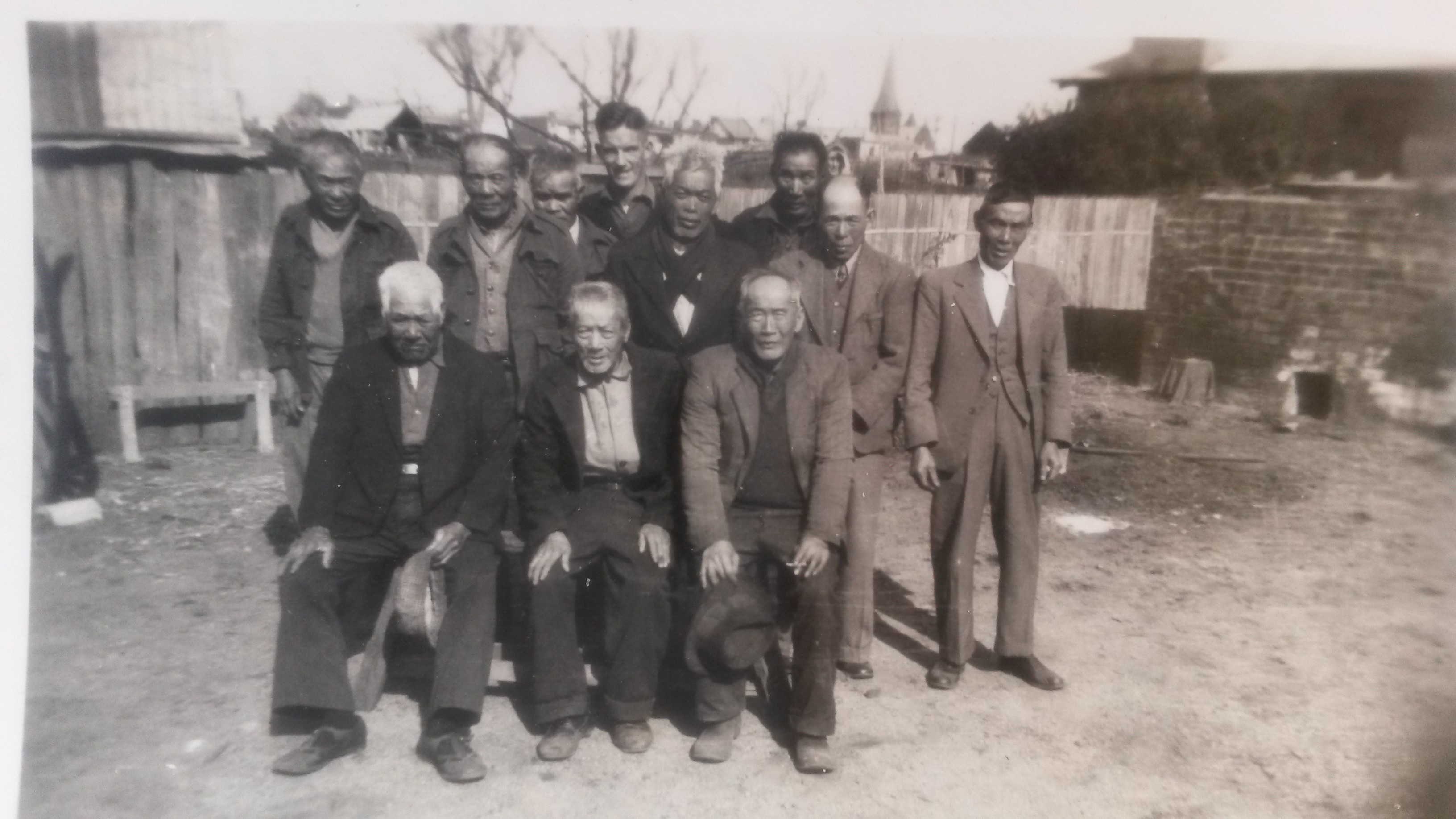
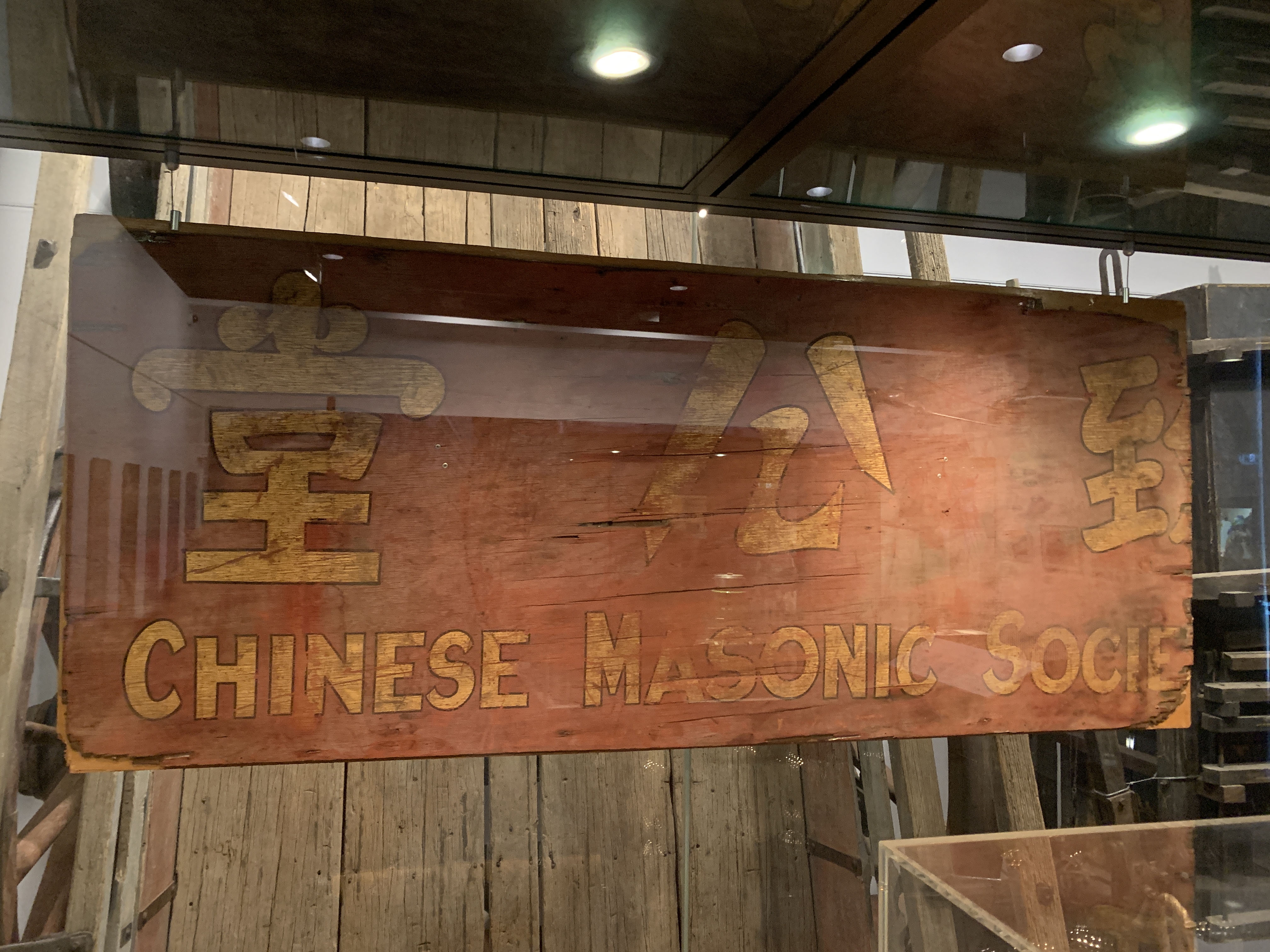
This elaborately carved and painted ‘altar’ is one of the last remaining objects from the Bathurst branch of the Chinese Masonic Society. It is now to be found in a replica Chinese temple that is part of the Bathurst Goldfields display on Mount Panorama. The distinction between a Chinese temple or Joss house and a Chinese Masonic Society hall was not always apparent to non-Chinese and it is not uncommon for objects from the one to be attributed to the other.
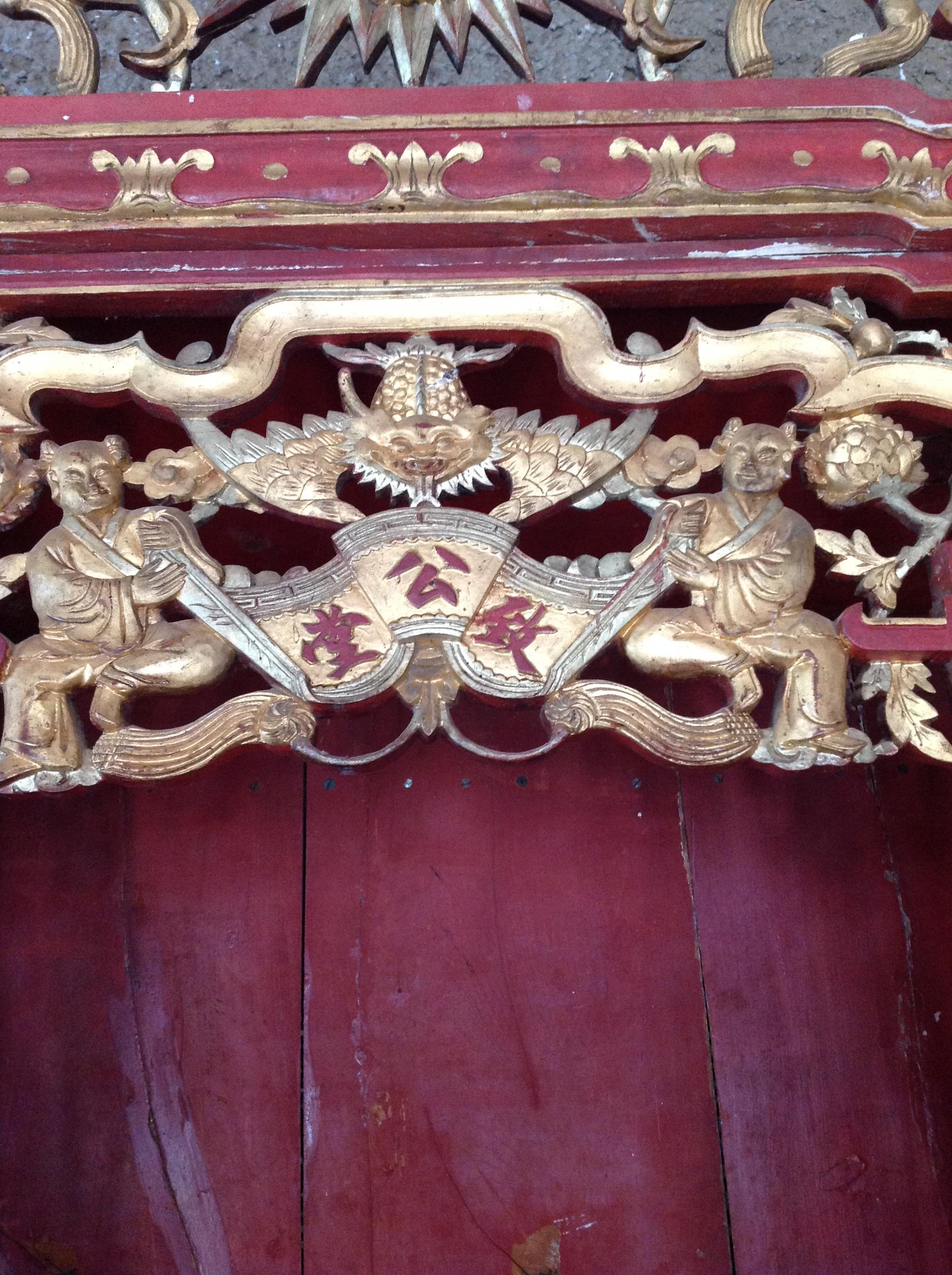
致公堂 (Zhì gōng táng) → literally “Hall for Serving the Public” or “Hall of Devotion to the Common Good.”
In fact, the Chinese Masonic Societies were an evolution from the various ‘Brotherhoods’ or so-called ‘secret societies’ that were common associations among Chinese people in the 19th century. While some like to play on the ‘secret’ aspect of these groups, an observer as early as the 1870s felt that they had declined ‘into mere tea-shops’.1 Though as anti-Qing feeling grew among the Overseas Chinese along with a desire to modernise China these organisations were able to formed themselves into branches of the Zhigongtang (致公堂 – written above the altar) or Chinese Masonic Society. They were strong supporters of Sun Yat-sen and the 1911 revolution in China.
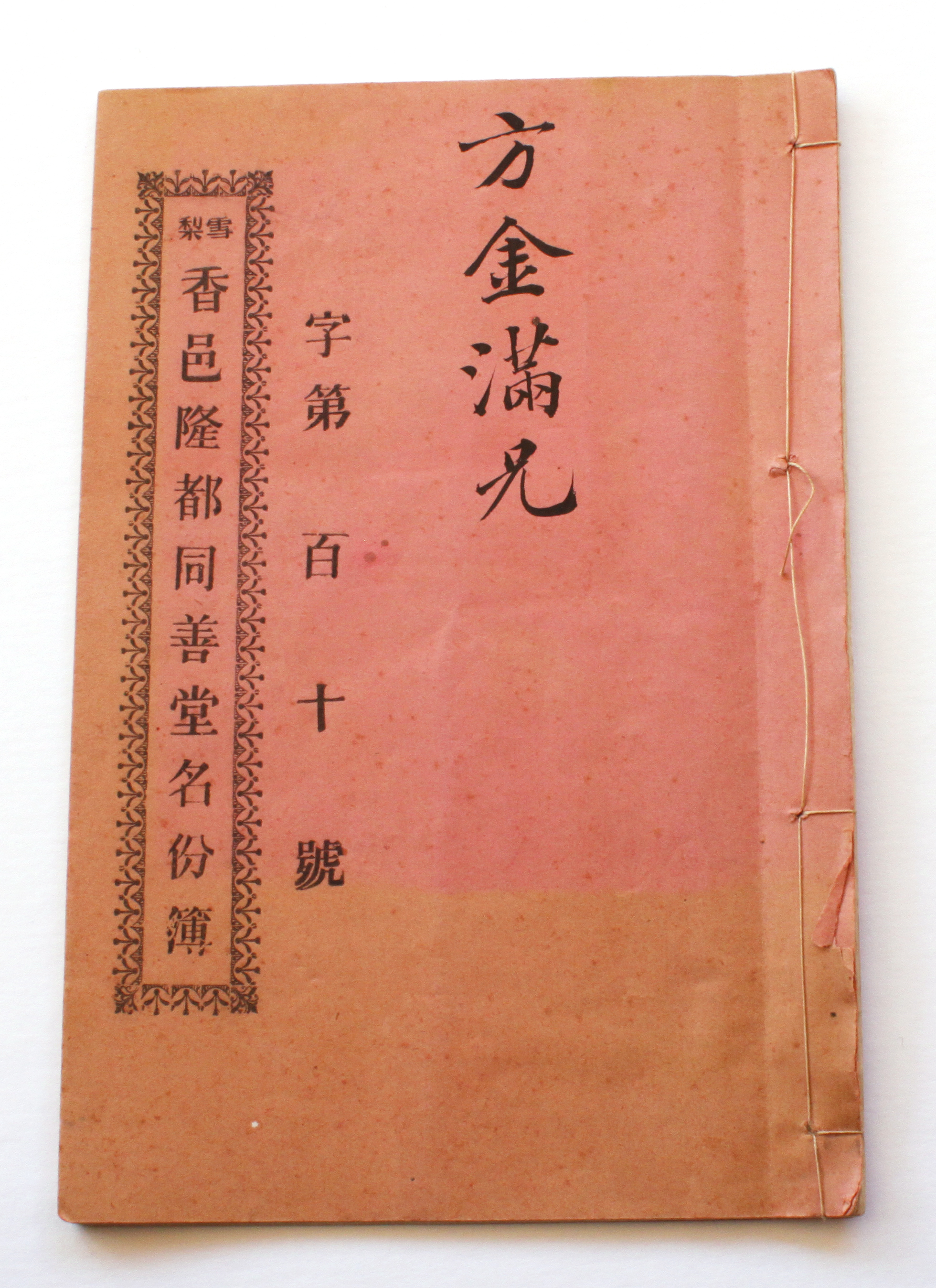
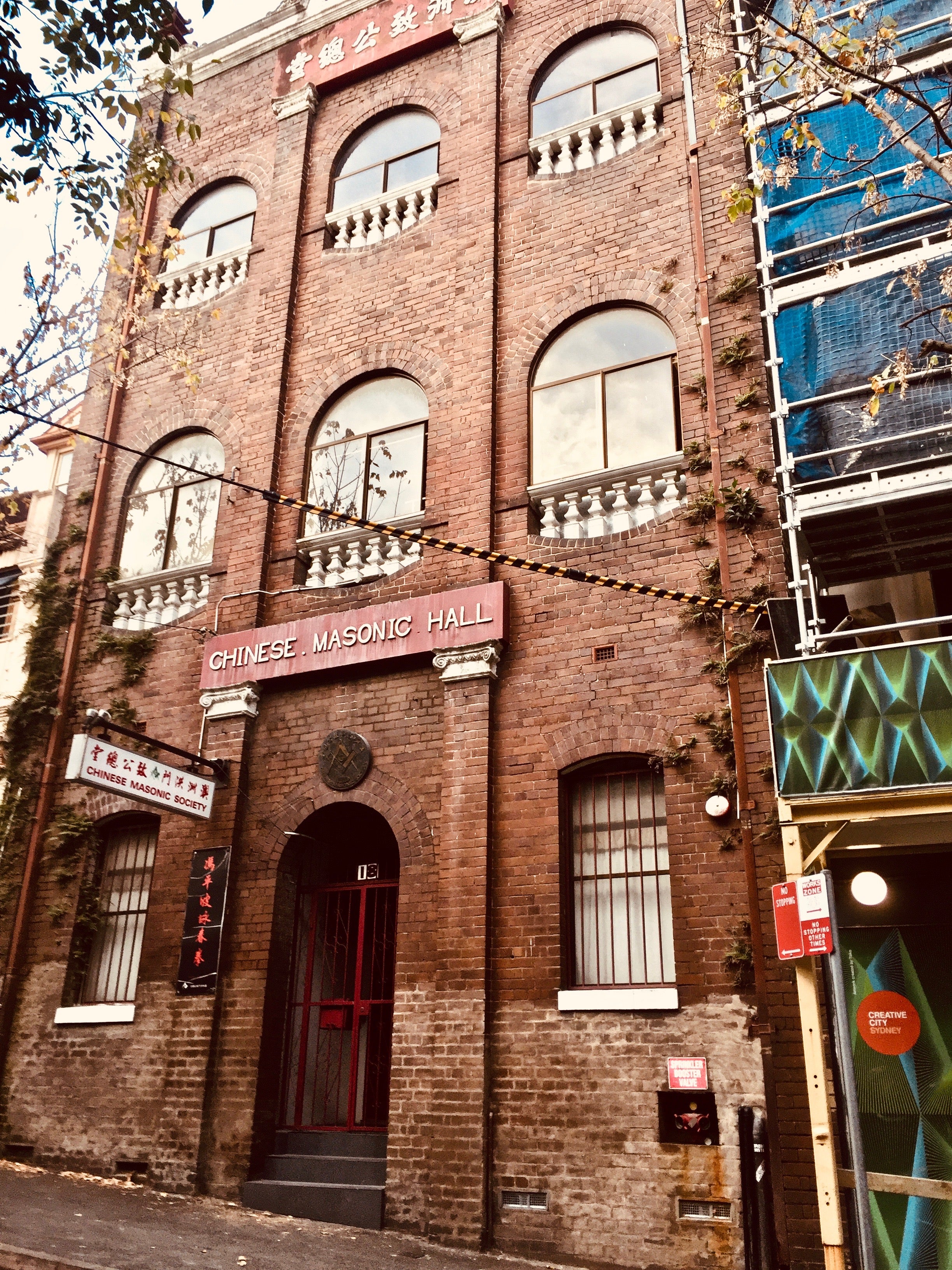
While the Bathurst branch died out in the 1950s, the Sydney branch remains today. However, the Bathurst Chinese Masonic Society was operating strongly in the 1920s when it hosted a visited by Ma Hsiao-chin, an early Sun Yat-sen supporter and member of the Chinese Parliament. (See: National Advocate, 27 June 1922, p.1.) By hosting Ma Hsiao-chin the Masonic Society of Bathurst was continuing a long traditional of overseas Chinese support for the Nationalist Party.
1. See Michael Williams, “Observations of a China Consul”, p.7.