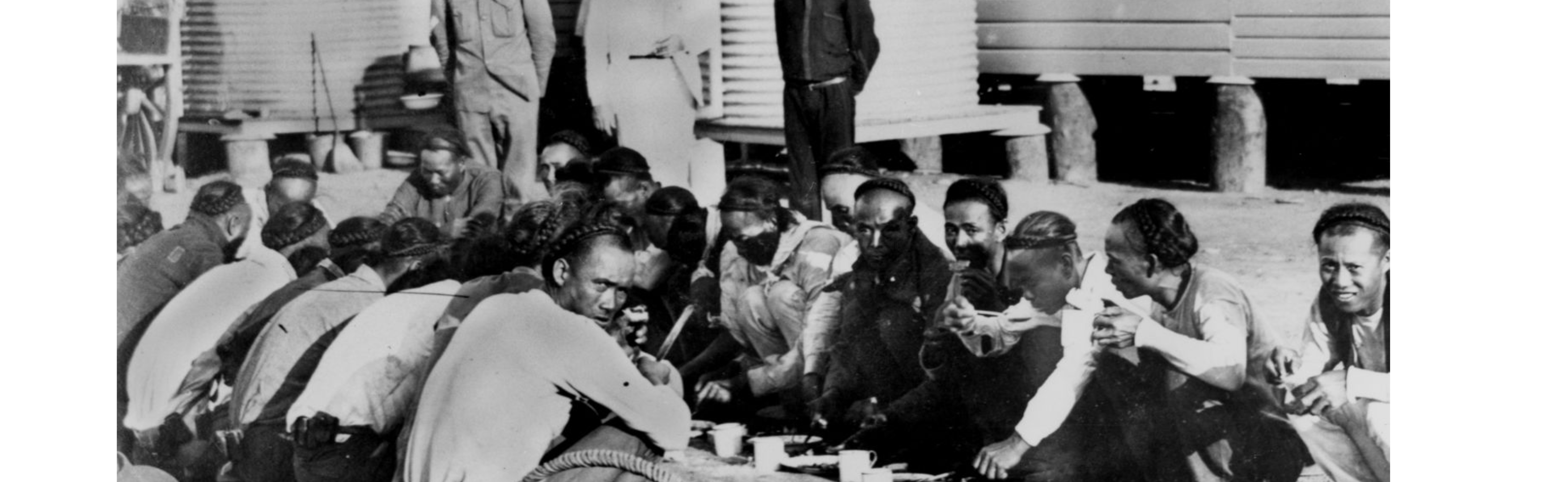
Poll tax evaders, Normanton
Date Published
: Poll Tax, discrimination / racism, legal restictions
: Gulf Country (Qld & NT)
: Normanton
: 1900
Queensland’s poll tax prevented many Chinese crossing the border from the Northern Territory.
Queensland’s poll tax prevented many Chinese people from crossing the border from the Northern Territory freely. Many nevertheless did so while others were captured and gaoled. Ironically it was the new Commonwealth's 1901 Immigration Restriction Act that opened the border to free movement.
"Chinese migrants in North Australia followed routes across nearly half the continent, which wound across expansive tropical savanna woodland and vast tracts of open grasslands; they were also dogged by a lack of supply points and the tropical climate. From Pine Creek, 220 kilometres south of Darwin, to the “border” towns of Burketown, Camooweal and Urandangi in Queensland, two main routes were favoured. The northerly route, the “Coast Road”, skirted the Gulf of Carpentaria while a more southerly route initially used the Overland Telegraph and then crossed the grasslands of the Barkly Tablelands. Once within Queensland, the routes diversified and became less precisely defined, with several family histories recounting travellers who ended up settling in Far North Queensland and some even heading as far as Sydney." (Grimwade, 2019: 169)
"Getting to Queensland was the biggest challenge. A regular steamer service operated to Australian east coast ports and onwards to Adelaide, but a fare to Townsville, the nearest major port, cost £5. Together with the £10 poll tax, these were substantial hurdles for near destitute Territory Chinese. The other option was to travel overland to Camooweal or Burketown. The “coastal” route was well established by the late 1880s."(Grimwade, 2019: 174)
"Three Chinamen have been charged at the Burketown Police Court with evading the poll tax. Two were sentenced to imprisonment, but the third man paid the
tax."
Gympie Times and Mary River Mining Gazette, 30 June 1891, p.2.
"... large numbers of Chinese men and others from a wide variety of backgrounds also came to the Gulf Country after colonisation." "[they] came to northern Australia following the discovery of gold around the Palmer River in northeast Queensland and at Pine Creek in the Northern Territory in the 1870s. By the late nineteenth century, it is estimated that Chinese people outnumbered those of European ancestry north of the tropic of Capricorn."
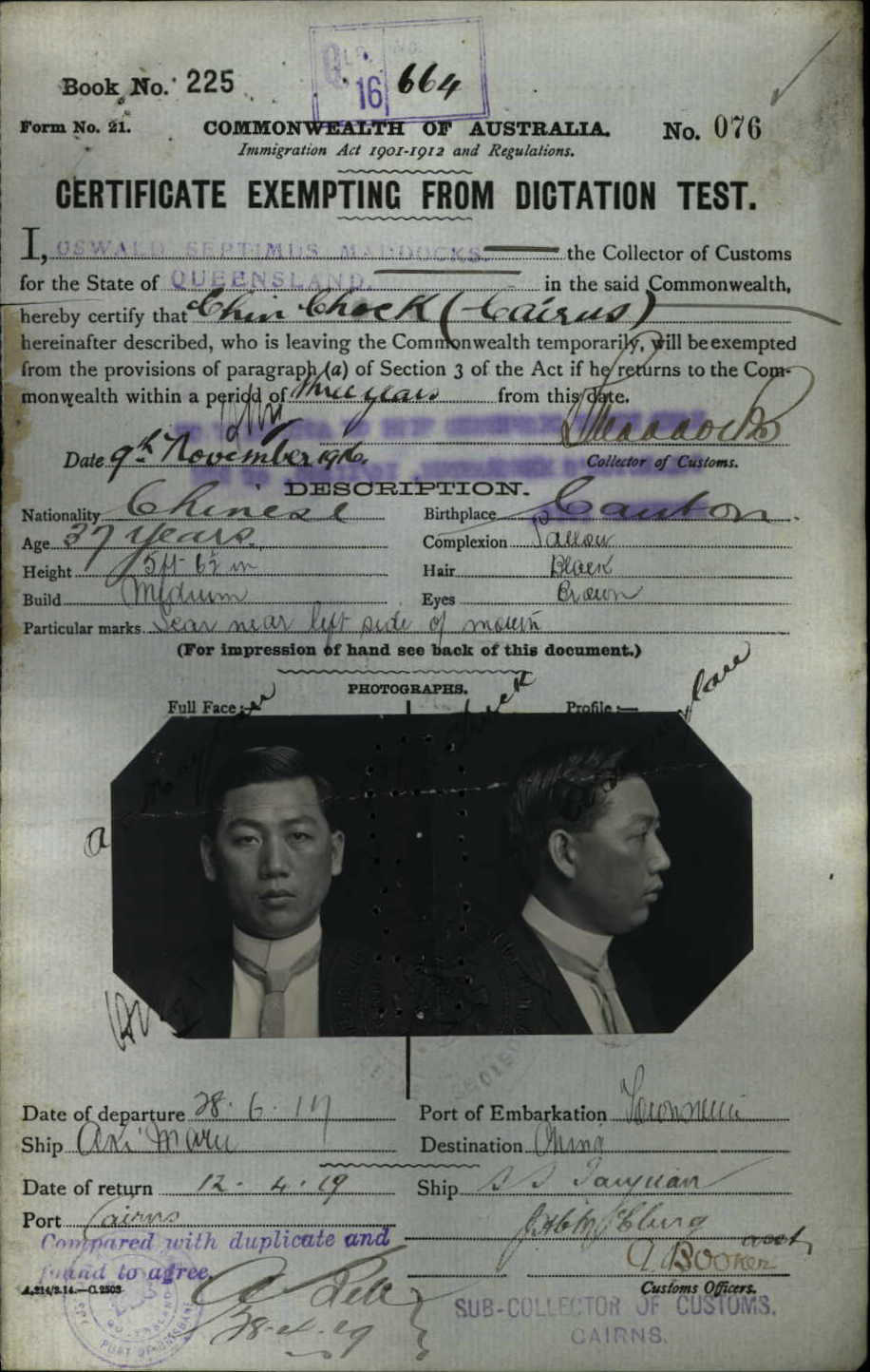
Chinese migration into Queensland’s Gulf Country probably peaked in the early 1890s, just before the institution of the Chinese Immigration Restriction Act 1891 (Qld). This law aimed to prevent the arrival of Chinese through the introduction of a £10 poll tax—an amount equivalent to six months’ wages for an average worker at the time. For a Chinese person to legally emigrate from the Northern Territory to Queensland in this period, it would have cost this tax in addition to the cost of a steamer from Darwin to Townsville, which was £5 in 1898—a prohibitive expense."
"However, others managed to evade arrest and remain in the Gulf Country at this time, and for a long time thereafter, coming to live on the fringes of Burketown at Woods Lake and Hookeys Lagoon, as well as on stations and around mines. While living separately from other Australians, many of these men became close to Aboriginal people, conceiving children with Aboriginal wives..."
Richard J. Martin, The Gulf Country : The Story of People and Place in Outback Queensland, Sydney: Allen & Unwin, 2019, pp.107-108.
BURKETOWN, October 17: "Twenty-five Chinese now in the lockup for evading the Poll Tax, refuse to be removed from here."
The North Queensland Register, 22 October 1900, p.14.
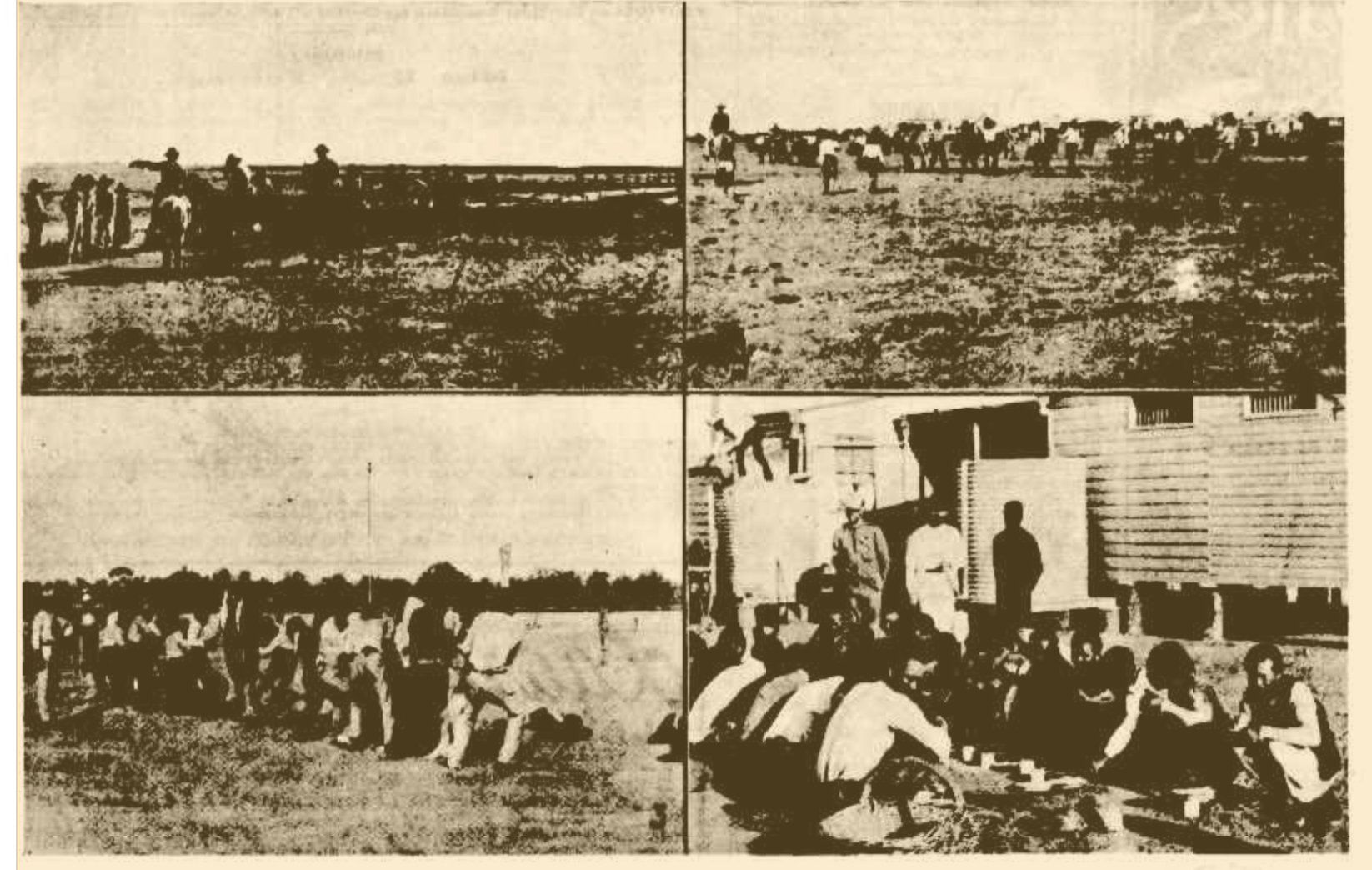
Captions to photos:
(1) "John," to the number of 25, crosses the border from Northern Territory and is interviewed by the Queensland police.
(2) He is escorted to Burketown, where he is lodged in the lockup for safe keeping.
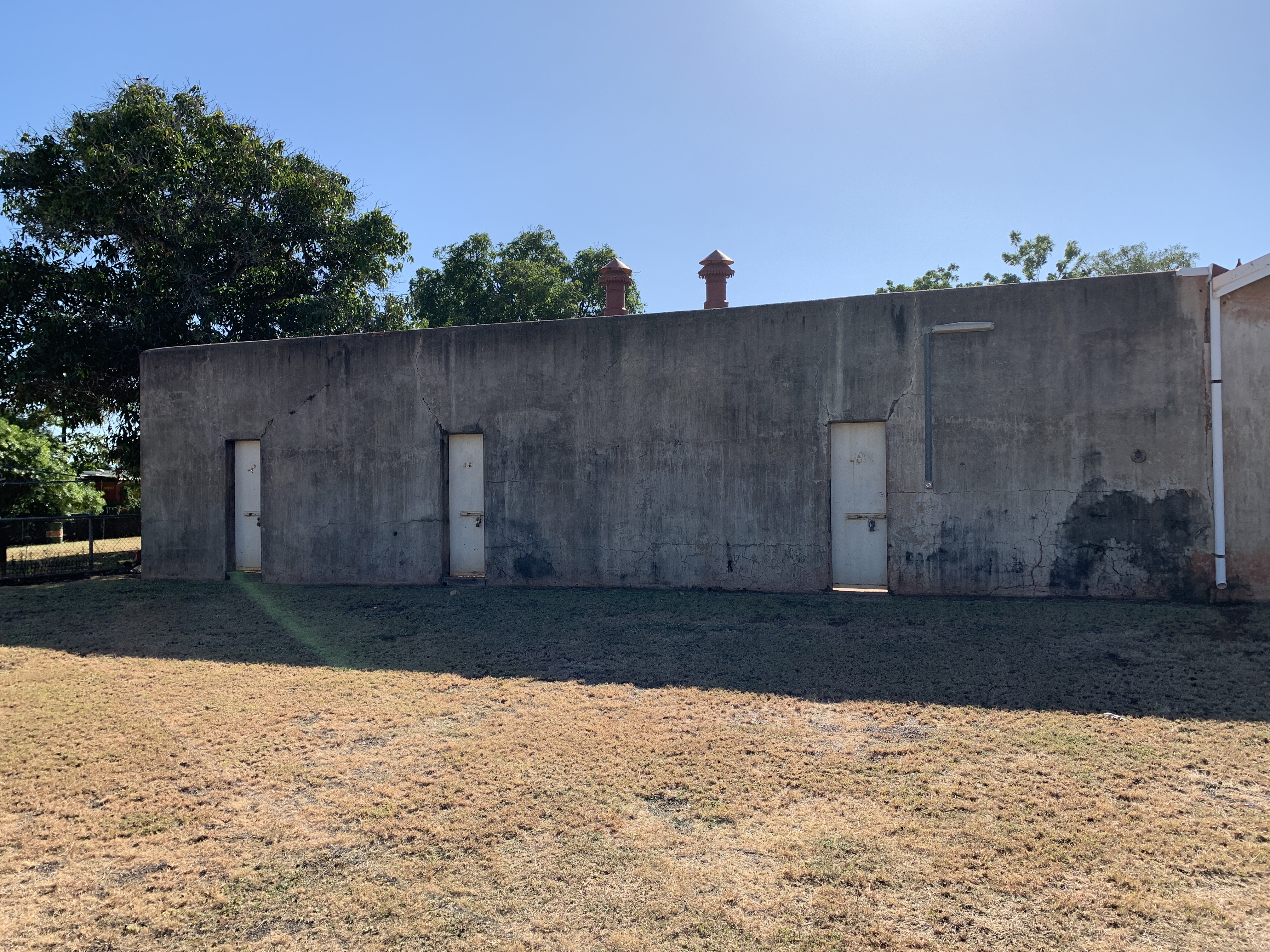
(3) Confinement in 12 by 12 cell, when there are twenty-five of him, is not conducive to good health, so the Health Officer orders morning exercise in the Gaol Yard.
(4) After which "John" Is quite ready for breakfast.
The Queenslander, 27 October 1900, p.876.
Poll tax prisioners
For a detailed analysis of the cross border history see:
Gordon Grimwade, ‘Tenacity in the Tropics: Chinese Overland Migration in Northern Australia During the Nineteenth Century’, Chinese Southern Diaspora Studies, Vol. 8, 2019, pp.168-189.
Gordon Grimwade, Australia’s Long March: The exhibition, Grimwade, Yungaburra, 2013.