White Australia policy (WAP)
Date Published
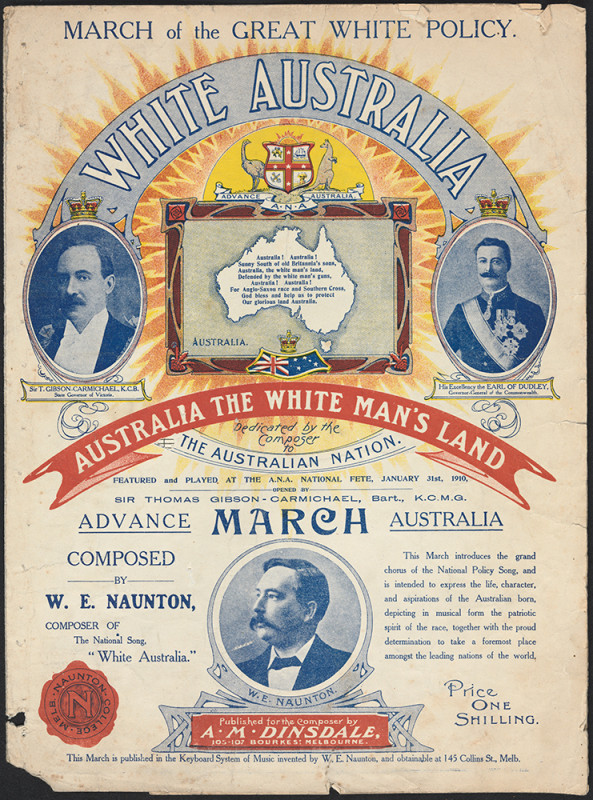
The accepted policy of all governments of Australia from 1901 until 1972 that Australia should be a predominantly “white” nation.
1. From Platform to Practice
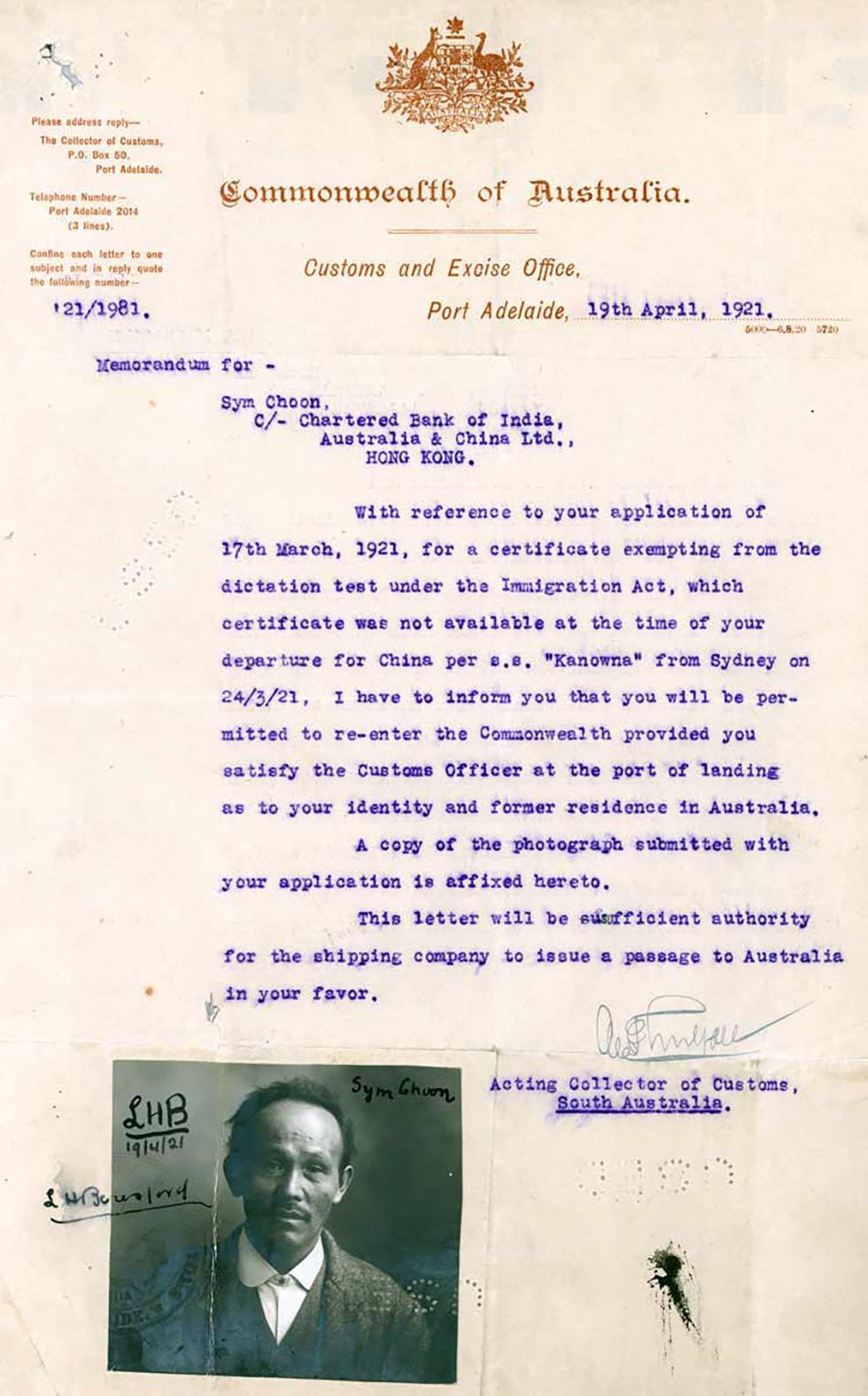
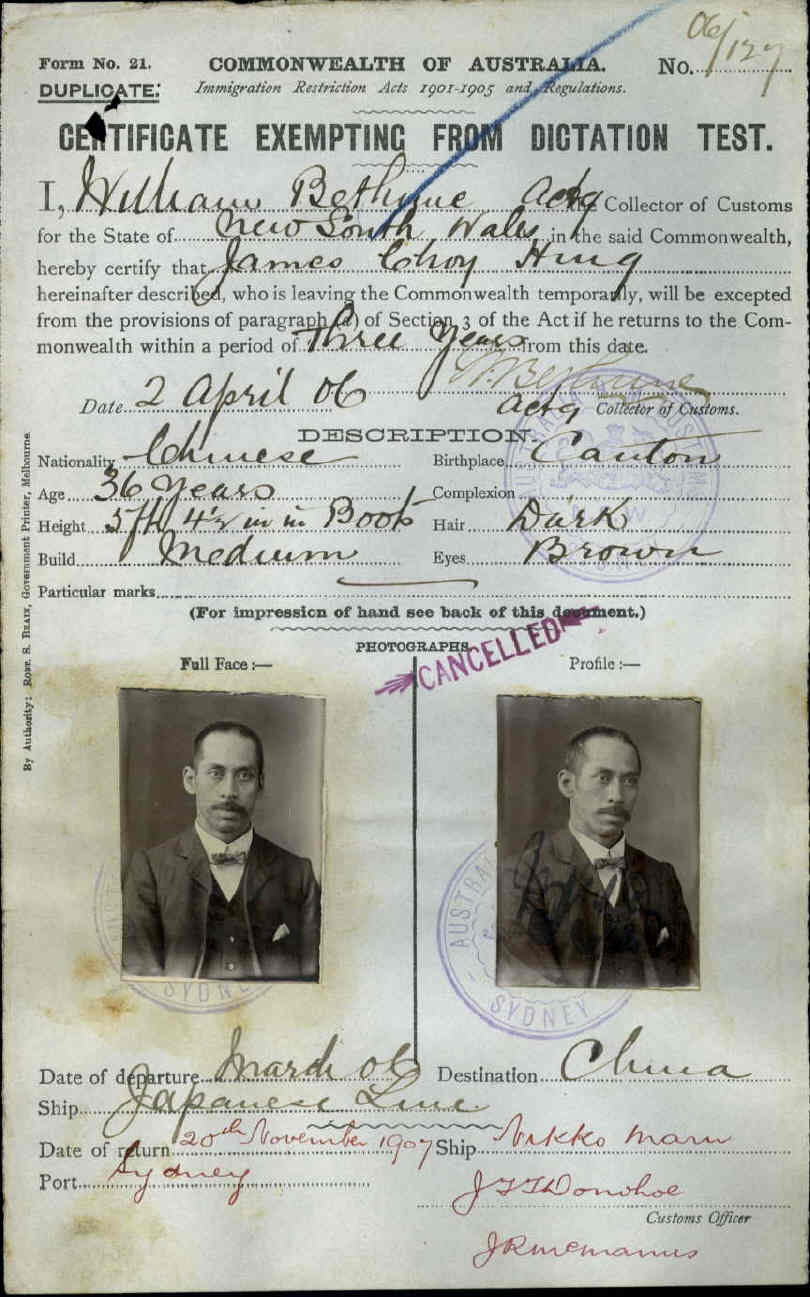
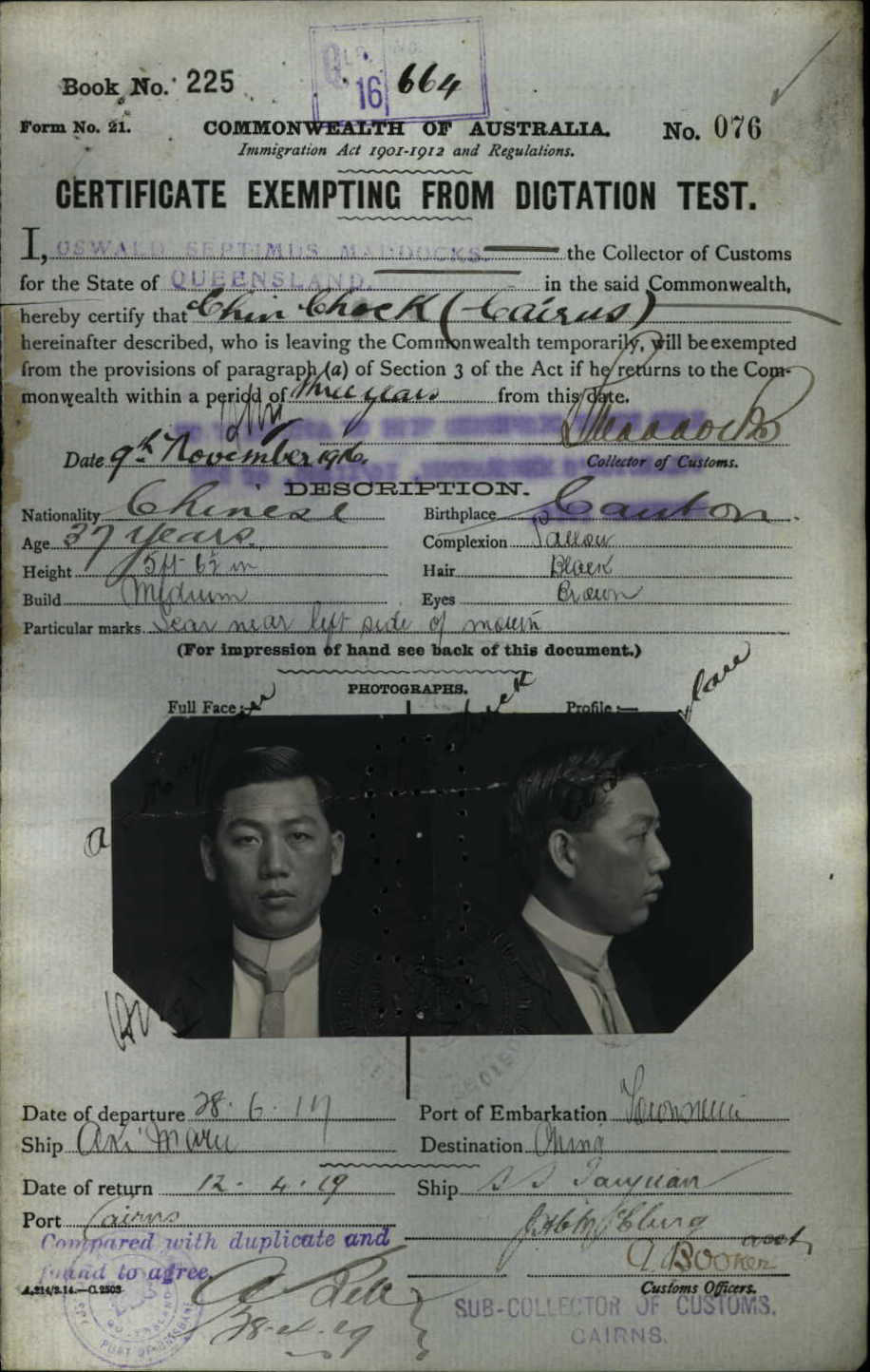
While the Australian Labor Party made “White Australia” part of its formal platform in the 1900s, the idea predated Federation. It grew from late-nineteenth-century labour and protectionist politics, where “racial purity” and “industrial fairness” were treated as synonymous. Even though not always officially codified, nearly every major party endorsed the principle. The Immigration Restriction Act 1901, with its fake dictation test, became its cornerstone, but exclusion also worked through a web of administrative practices, shipping regulations, and informal local barriers.
2. Mechanisms Beyond Legislation
• Queensland’s Pacific Island Labourers Act (1901) forced the repatriation of South Sea Islander workers.
• Queensland Also introduced its own Dictation tests to discriminate against non-white ownership in various industries but primarily sugar.
• In Darwin, discriminatory fishing licences and restrictive ordinances dismantled Chinese-run industries.
• Pearling in northern Australia saw repeated attempts to “whiten” the workforce, yet Europeans refused the dangerous underwater work, leaving Japanese, Malay, and Chinese divers indispensable.
3. The Psychological and Cultural Dimension
The success of the White Australia ideology also lay in its ability to rewrite memory. By the interwar period, Australians increasingly imagined the nineteenth century as uniformly white, forgetting that Chinese, Afghan, Indian, and Pacific Islander workers had been integral to its development. Textbooks, museum displays, and popular histories often neglected non-European presences or reduced them to stereotypes.
This cultural amnesia meant that when Chinese contributions resurfaced — as herbalists, opera troupes, tobacco farmers, or furniture-makers — they were treated as quaint anomalies rather than integral to the colonial society and economy.
4. Legacy and Longevity
The White Australia mindset persisted well after the formal policy began to erode in the post-war period. Even as immigration laws were liberalised between 1949 and 1973, popular attitudes lagged behind. The “invisible whiteness” of Australian identity shaped film, literature, and policy assumptions about who could belong. Only from the 1970s onwards — through multiculturalism, new scholarship, and community activism — did the erasure of non-whiteness begin. Although Chinese Australian history continues to be seen as separate from and parallel to Australian history with stereotypes and white guilt narratives still predominating.
"The Commonwealth government developed an immense administrative apparatus that institutionalised the values of White Australia as the corporate ethic of the Australian national state.” p.219
John Fitzgerald, Big White Lie: Chinese Australians in white Australia, University of New South Wales Press, 2007.