Poll taxes
Date Published
Poll taxes
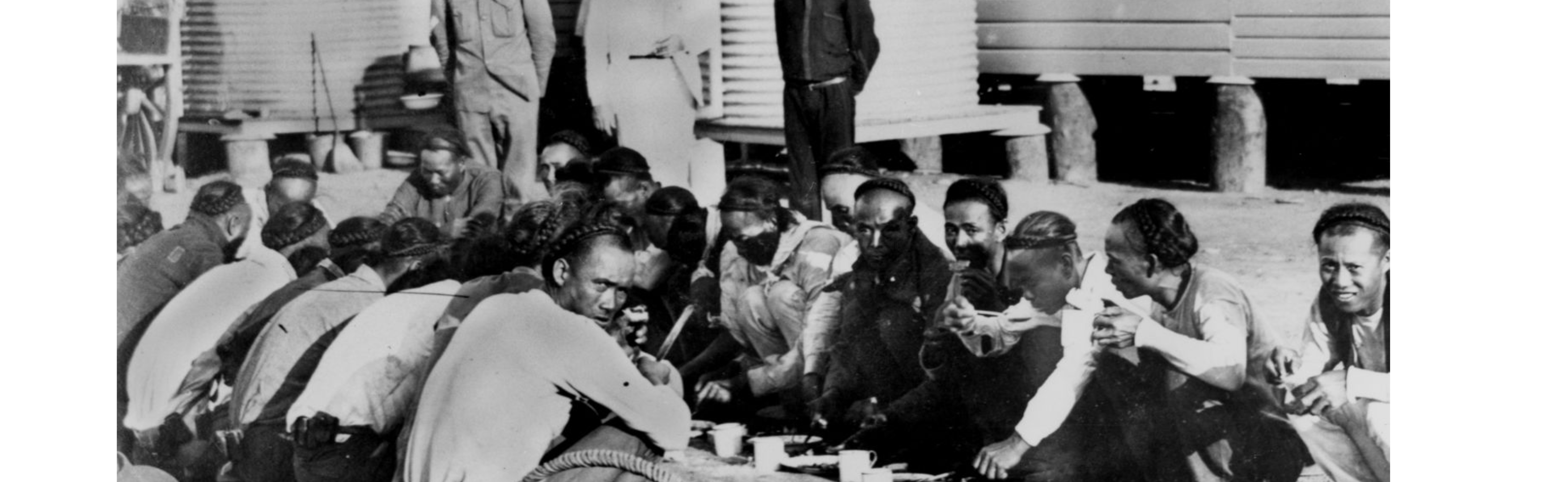
Poll taxes occupy a significant place in the history of Chinese migration to Australia, but what exactly they were and how they functioned is not always clearly understood. A poll tax is simply a head tax, a fixed amount charged to each person entering a colony. In nineteenth-century Australia these taxes were intended not to abolish Chinese immigration completely, but to reduce arrivals to a level that reassured anxious settlers and diffused political pressure.
The first poll tax appeared in Victoria in 1856 during the gold-rush period, and New South Wales and South Australia soon adopted similar legislation. These taxes usually formed part of a broader regulatory package that limited the number of Chinese passengers permitted per ton of shipping and, at times, restricted access to naturalisation. Although the early round of measures was rescinded during the 1860s, they were reintroduced from 1881 and remained a major feature of Chinese immigration control until Federation in 1901. Initially set at £10, the poll tax was later raised dramatically in some colonies, especially New South Wales, where it reached £100 per person—a prohibitive sum by contemporary standards.
One aspect of these colonial poll taxes that is often overlooked is that they applied not only to people arriving from overseas but also to movement between the colonies themselves. Because immigration was a colonial responsibility, a Chinese resident who travelled from Victoria into New South Wales, or from Brisbane to Sydney, could be required to pay the tax even if they had lived in Australia for decades. This created considerable inconvenience for Chinese communities living along colonial borders, such as those on either side of the Murray River, and for long-established merchants and community leaders who found that ordinary intercolonial travel suddenly carried a substantial financial penalty. Chinese residents of the Northern Territory attempting to enter Queensland faced similar difficulties.
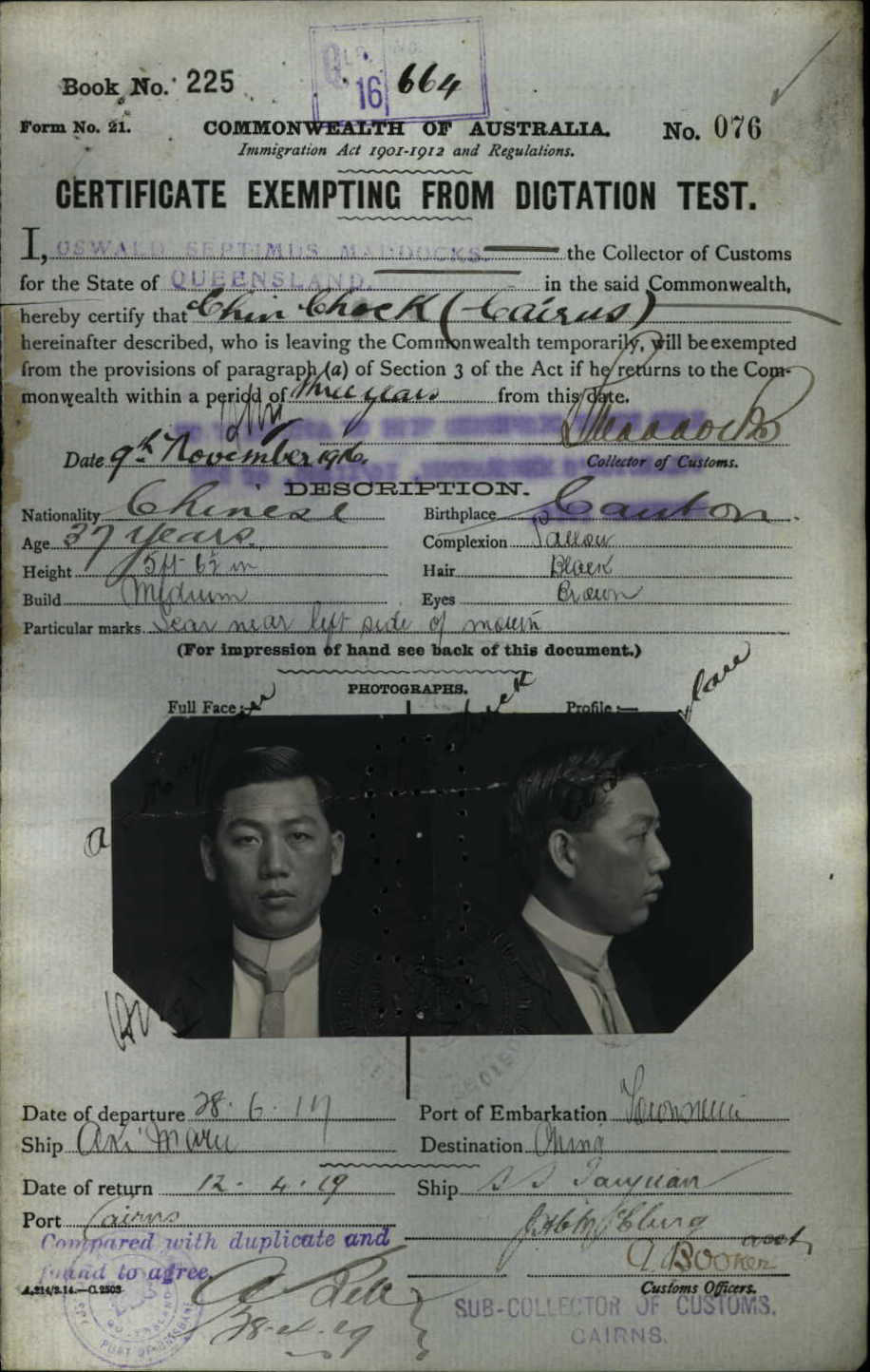
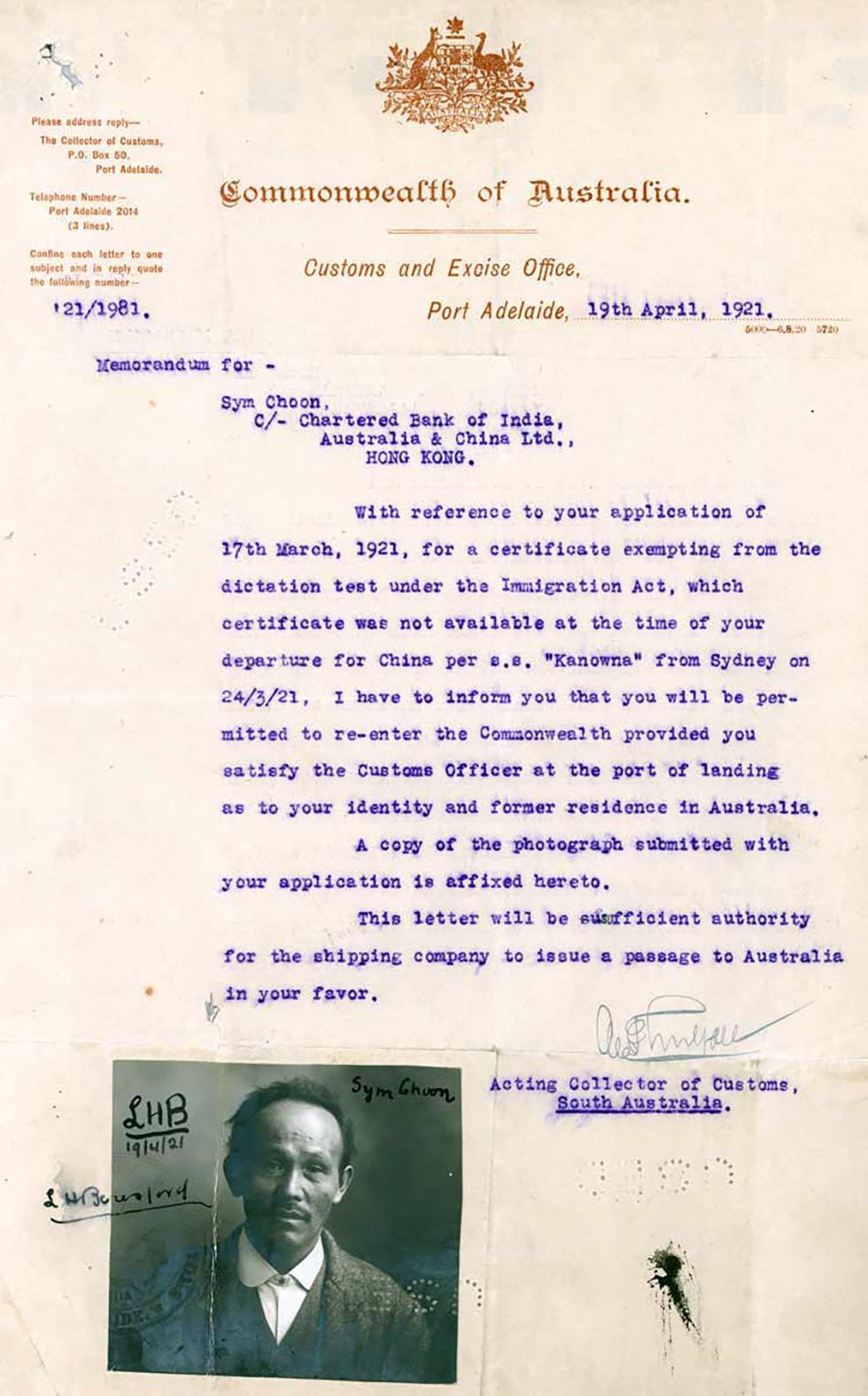
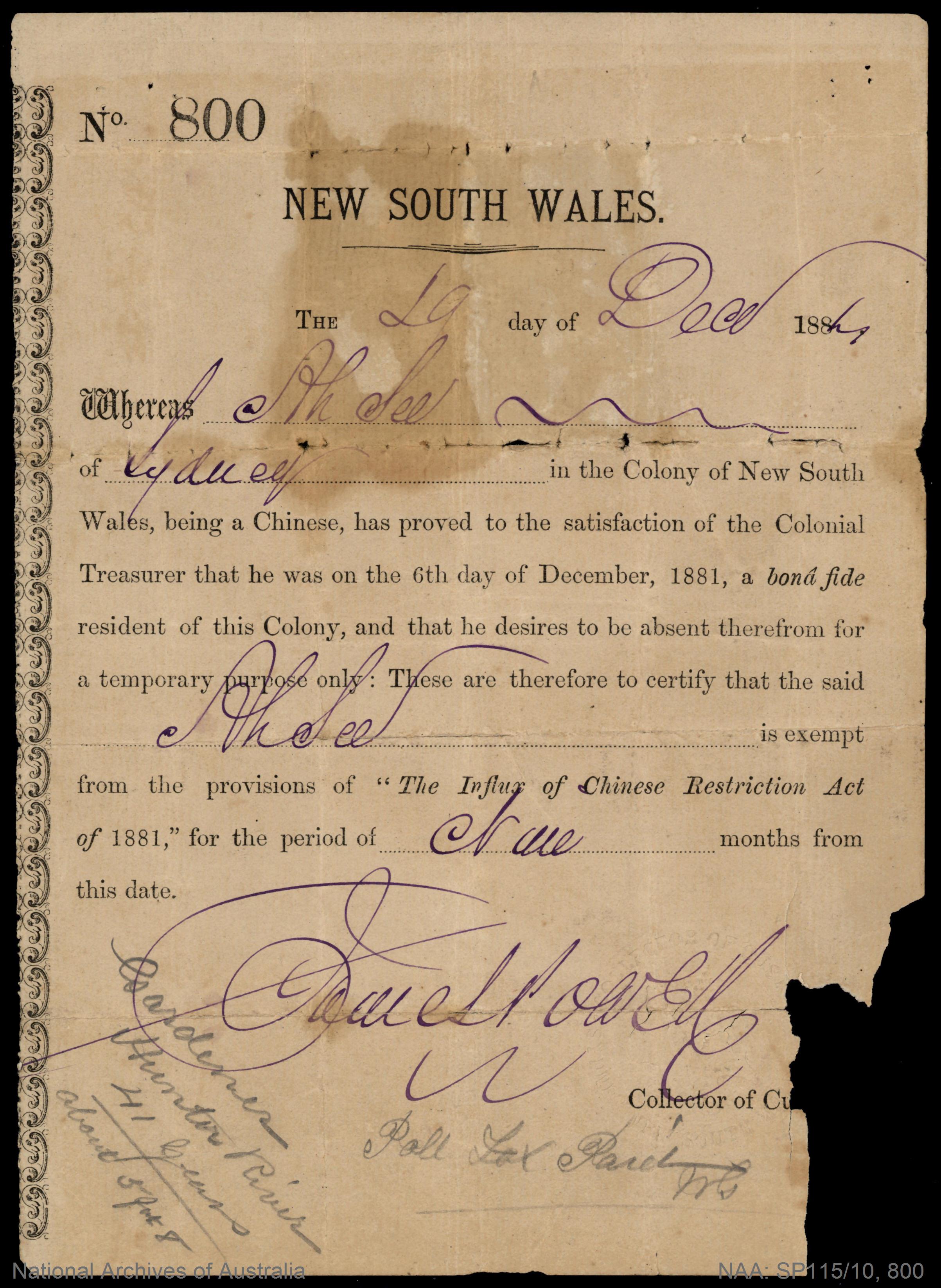
Colonial governments issued certificates that acknowledged payment of the poll tax and exempted the holder from paying again upon re-entry. Once issued, these certificates allowed Chinese travellers to leave and return without further charge and anticipated the later system of certificates exempting the dictation test after 1901. With Federation, immigration became a federal responsibility and the new Commonwealth government introduced the fake dictation test, designed not merely to slow but essentially to prevent non-European immigration. At the same time, colonial poll taxes ceased because under the Commonwealth Constitution they were considered impediments to intercolonial trade and movement. The immediate consequence was that Chinese residents of the Northern Territory could suddenly travel into Queensland without restriction, much to the consternation of some customs officials from the previous era.
Comparatively, New Zealand maintained its poll tax well into the twentieth century and combined it with a genuine dictation test that, unlike the Australian version, was actually administered. Canada also retained its head tax for many years and, in the early twenty-first century, and both Canada and New Zealand issued an official apologies and financial redress to their Chinese heritage communitoes on the babsis of monies levied through poll taxes. Australia has never offered an equivalent apology, though Victoria has, though without compensation.
Although poll taxes never completely halted Chinese migration, they shaped mobility within Australia, increased the financial burden on Chinese travellers, encouraged the creation of bureaucratic systems of certification and exemption, and helped lay the administrative foundations for later racially based immigration policies. They remain an important, if often misunderstood, chapter in the history of Chinese–Australian relations and the evolution of Australia’s restrictive immigration regimes.