Sydney
Date Published
.jpg?2025-10-05T22:57:41.483Z)
: 雪梨 , 悉尼
: City
: Sydney
: remittances, district societies, Trade (International)
Sydney occupies a central place in the history of Chinese settlement in Australia. From the mid-nineteenth century, it served primarily as the first point of embarkation for Chinese migrants arriving by sea. What is often described as Sydney’s first Chinatown—more accurately a Chinese quarter, referred to in Chinese sources as Tangren Jie (唐人街, “Chinese Street”)—was located along Lower George Street in the Rocks area.
For much of the early period, however, Sydney functioned less as a place of permanent settlement than as a gateway. Many newcomers passed quickly through the city before moving on to goldfields or establishing themselves in rural districts. This pattern began to change as Sydney urbanised. Chinese communities increasingly gravitated back to the city, leading to renewed concentrations near the Rocks, where boarding houses catered to transient populations, including those preparing to return to China or Hong Kong.
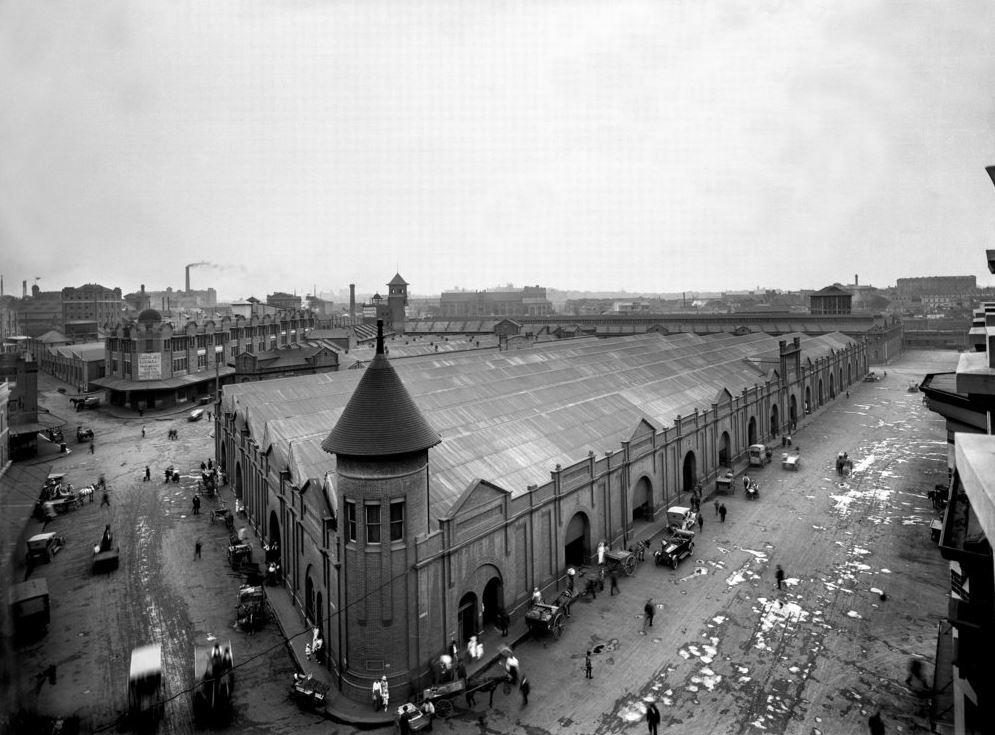
Economic shifts further reshaped the geography of Chinese Sydney. As market gardening became more prominent, Chinese activity moved southward towards the Belmore Market area. This district—later transformed by the construction of Central Railway Station—was closely tied to the supply of fresh produce to the city. When the Central Station complex was completed, municipal redevelopment redirected commercial activity towards the nearby Haymarket precinct. Over time, many Chinese businesses relocated there, establishing what is now widely recognised as Sydney’s Chinatown.
Despite this shift, Chinese residents and enterprises remained dispersed across adjacent areas, including the upper end of Castlereagh Street and the lower reaches of Surry Hills. From the 1950s and 1960s, Dixon Street emerged as the focal point of Chinatown life. Boarding houses were particularly significant, providing accommodation for market gardeners who travelled into the city to sell produce and stayed overnight before returning to their gardens. These market garden whee scattered around greater Sydney with Botany, North Sydney, and Fairfield of especial note.
Dixon Street also became an important centre for remittance services and community institutions. Establishments such as the Kwong War Chung building at 84 Dixon Street played a crucial role in sustaining transnational connections, alongside numerous other businesses spread throughout the surrounding streets. Café were always popular and over time high end restaurants also became a feature of the Chinese community in Sydney not only in Chinatown but throughout the suburbs of Sydney.