Brocks Creek Joss House
Date Published
: Temples / Joss House
: Northern Territory
: Brocks Creek
: 1938
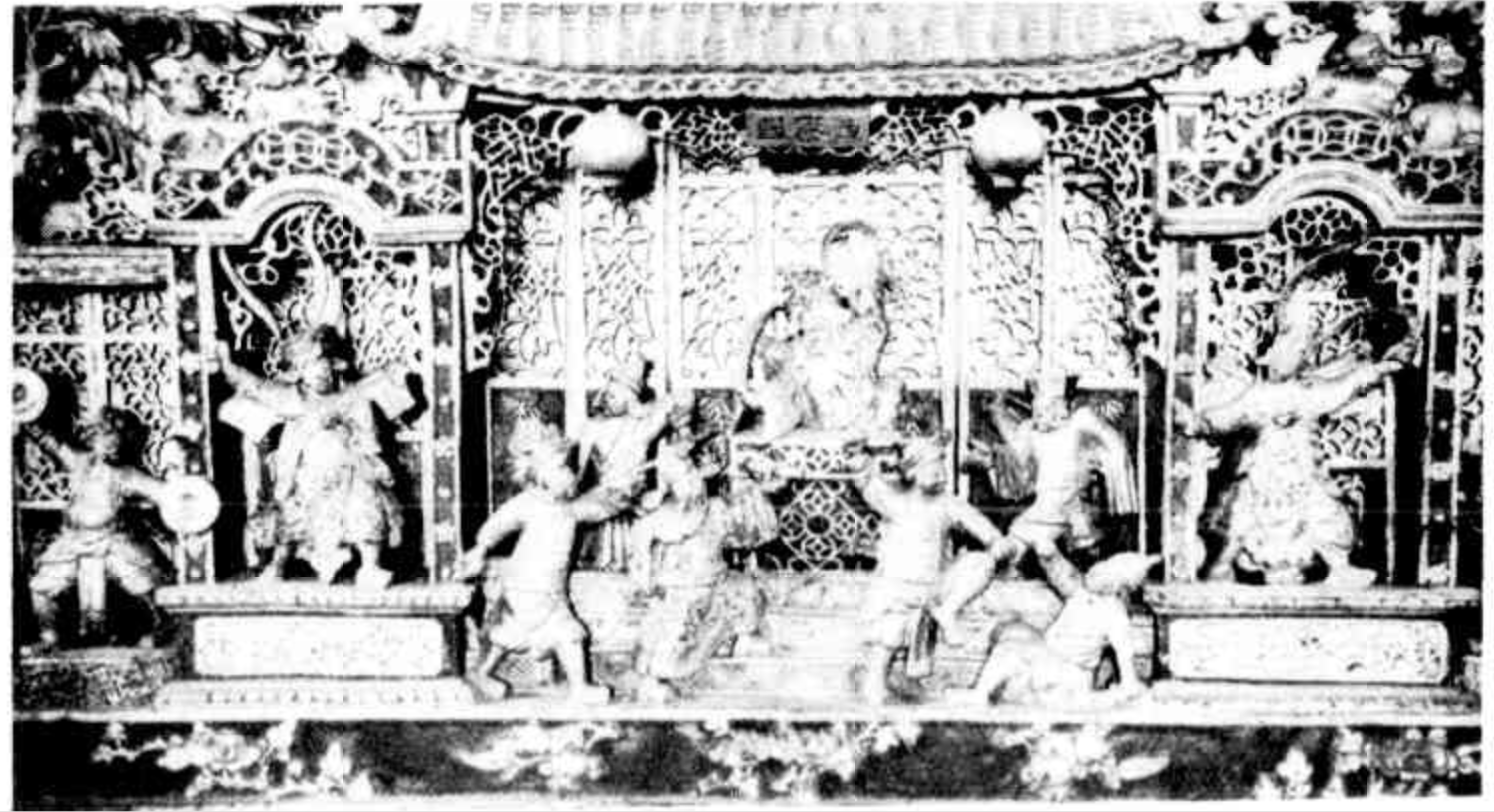
Brocks Creek Joss House altar
Sydney Mail, Wednesday 27 October 1937, p.42.
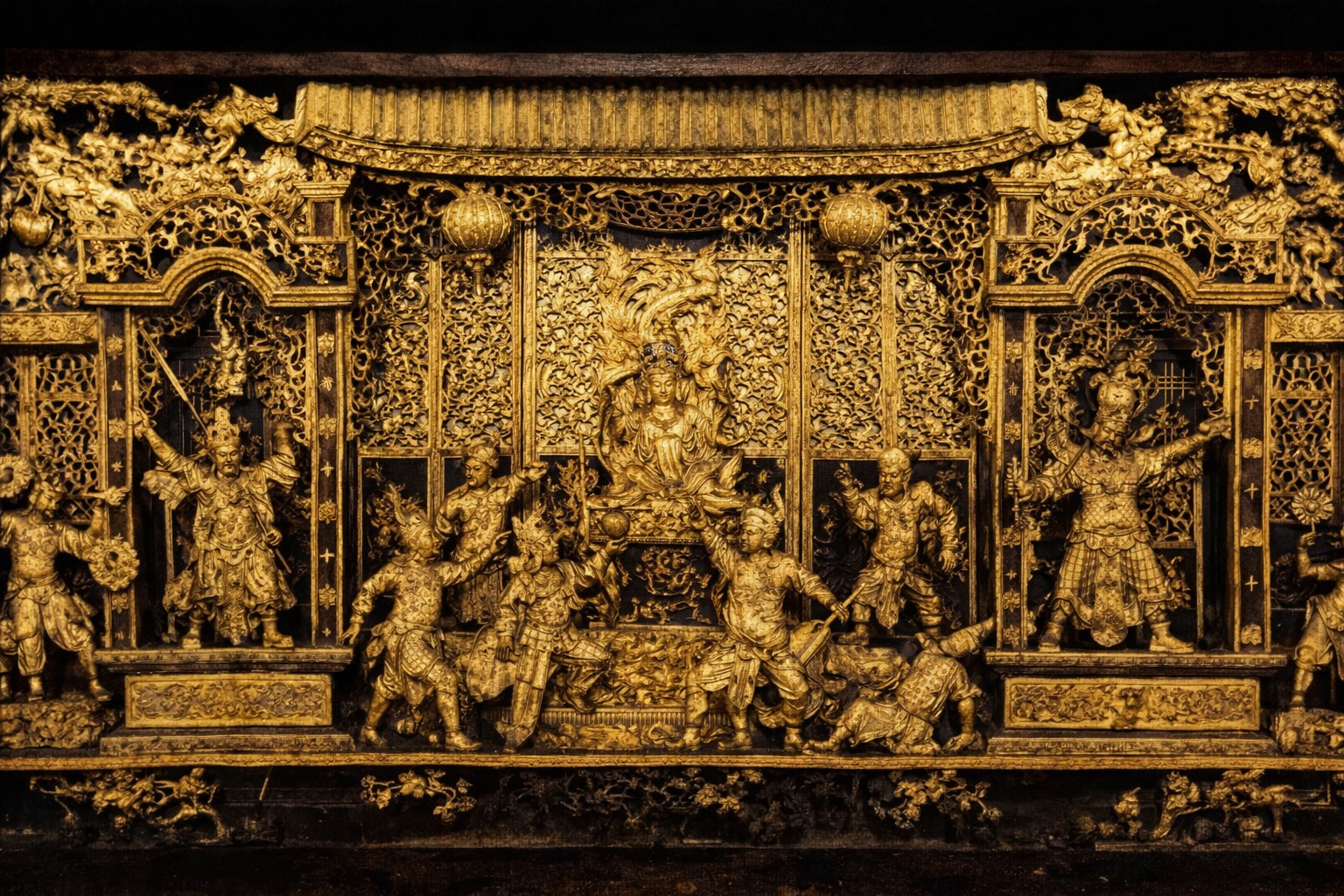
Brocks Creek Joss House altar as configured by AI from the B&W photo
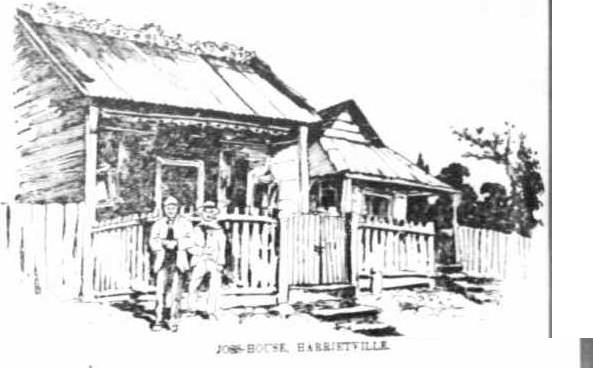
"In various other parts of Australia, where Chinese work in different occupations and have no Joss-houses, there are, nevertheless, places of worship, but these are generally established in a private house, where a few collect, from time to time, and pay homage to their Joss."
The Herald, Thursday 17 February 1938, p.36.
For images of Pine Creek, Darwin and Brock's Creek Temples see:
The Queenslander, Saturday 18 April 1925, p.28.
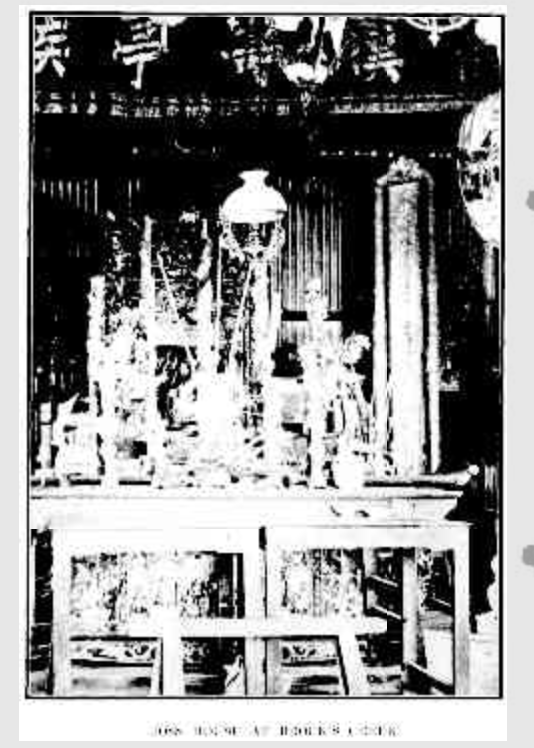
Altar, Brocks Creek Joss House
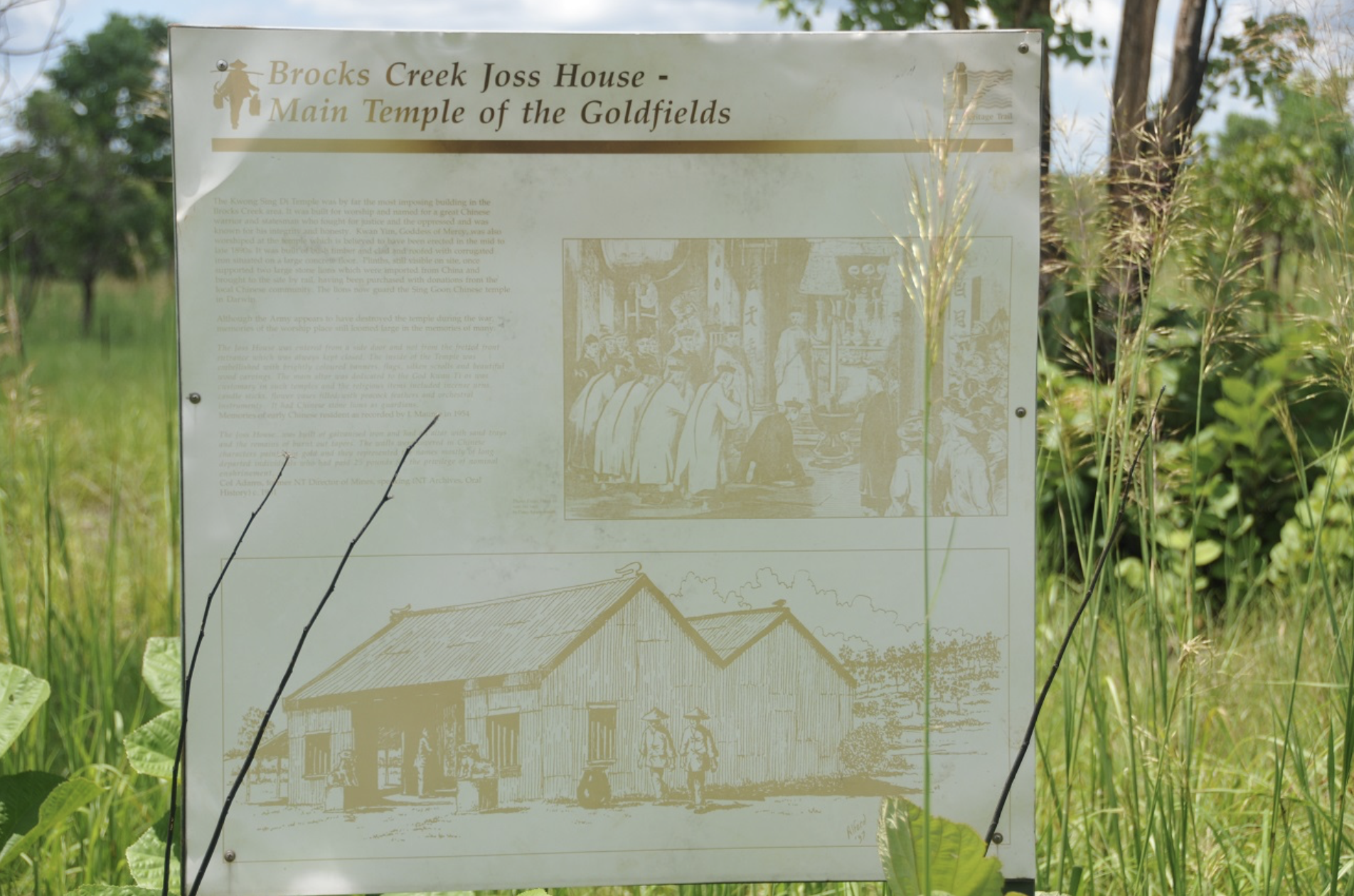
Brocks Creek Joss House heritage sign
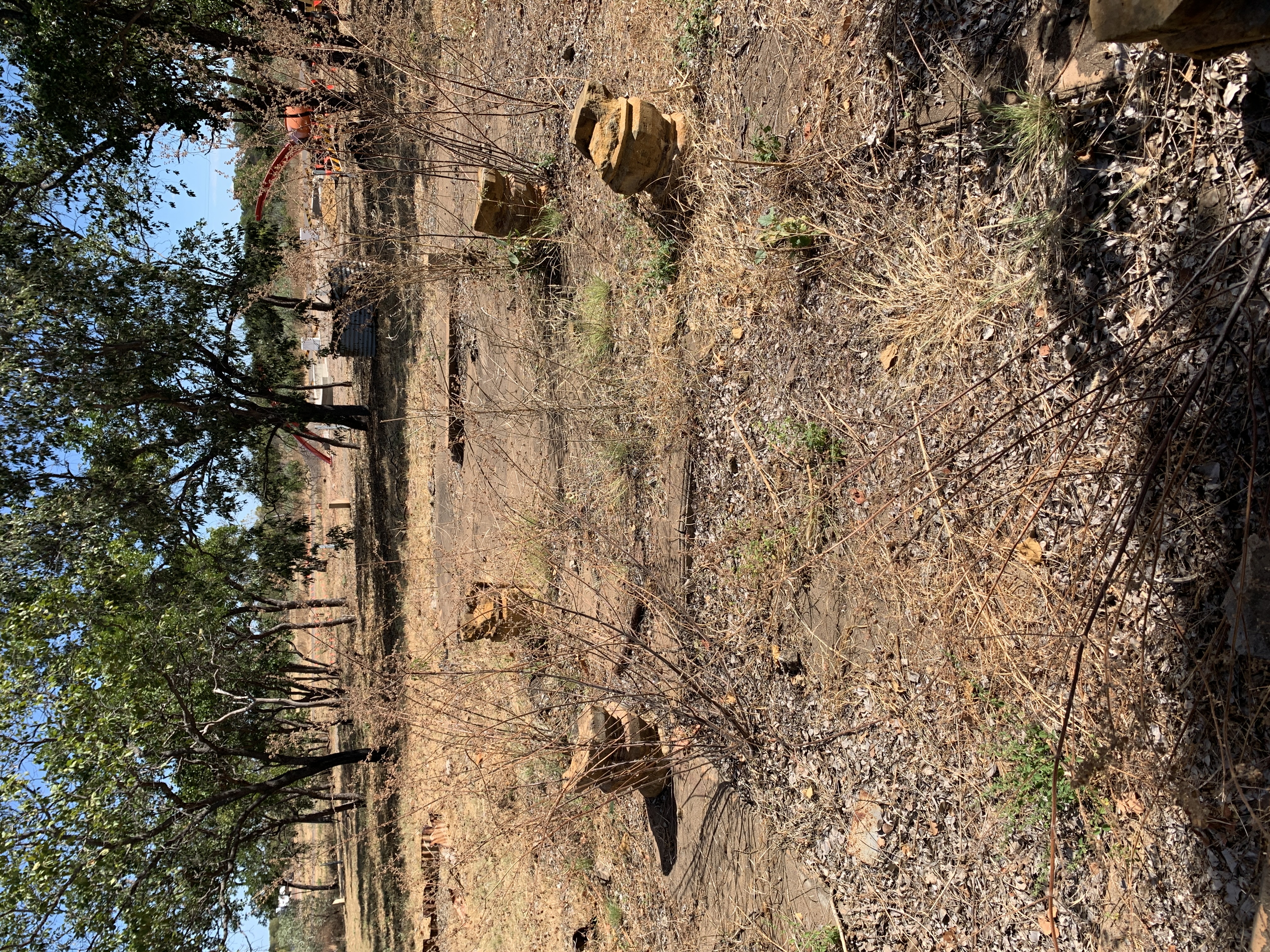
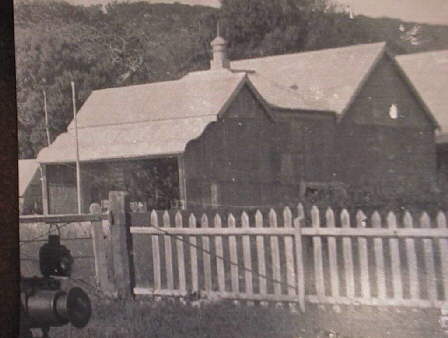
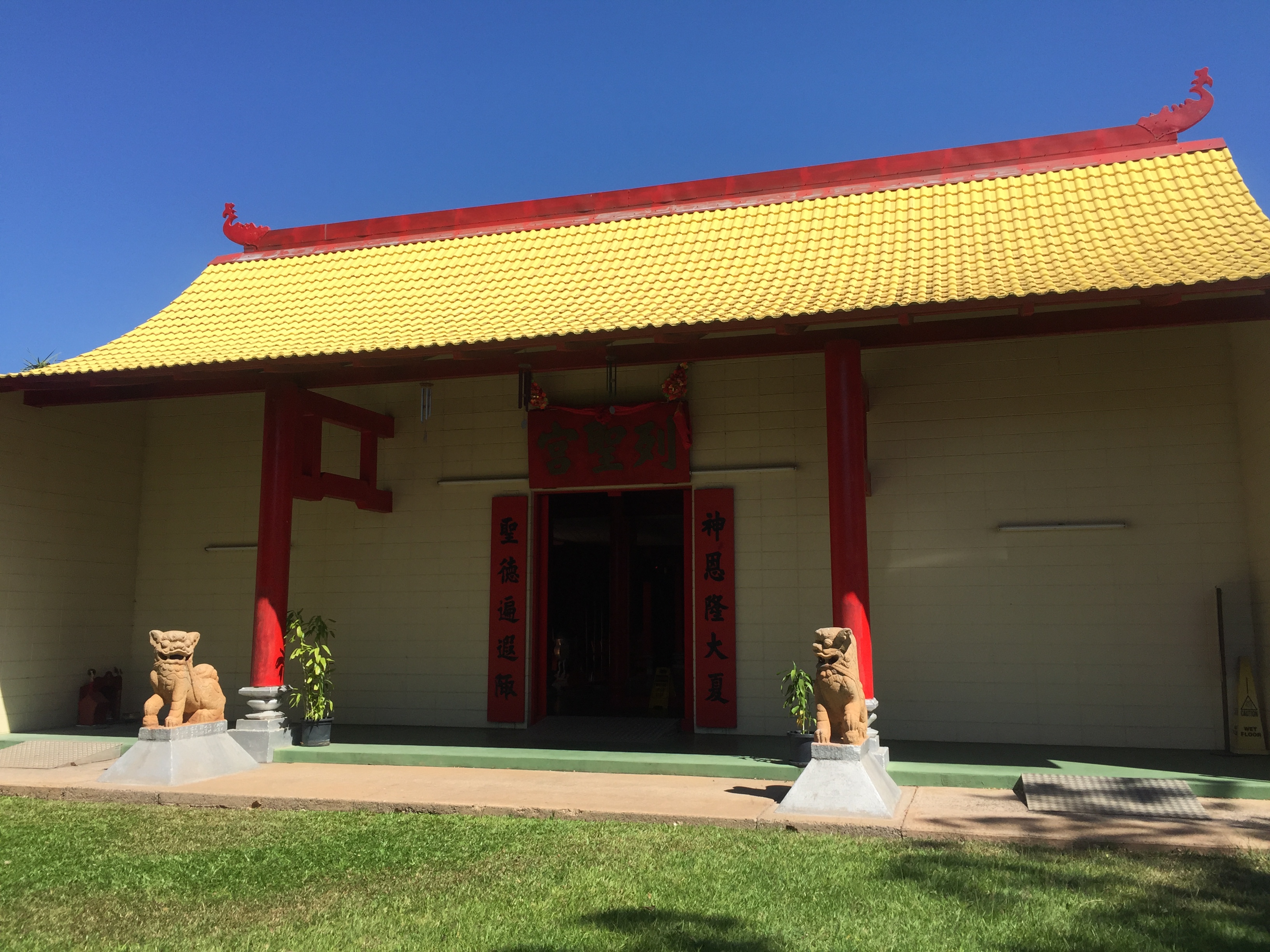
The Kwong Sing Di Temple was by far the most imposing building in the Brocks Creek area. It was built for worship and named for a great Chinese warrior and statesman who fought for justice and the oppressed and was known for his integrity and honesty. Kwan Yin, Goddess of Mercy, was also worshipped at the temple which is believed to have been erected in the mid to late 1890s. It was built of bush timber and clad and roofed with corrugated iron situated on a large concrete floor. Plinths, still visible on site, once supported two large stone lions which were imported from China and brought to the site by rail, having been purchased with donations from the local Chinese community. The lions now guard the Sing Goom Chinese temple in Darwin.
Although the Army appears to have destroyed the temple during the war, memories of the worship place still loomed large in the memories of many.
The Joss House was entered from a side door and not from the fretiel front entrance which was always kept closed. The inside of the Temple was embellished with brightly coloured banners, flags, silken scrolls and beautiful wood carvings. The main altar was dedicated to the God Kwan Ti as was customary in such temples and the religious items included incense urns, candle sticks, flower vases filled with peacock feathers and orchestral instruments. It had Chinese stone lions as guardians. Memories of early Chinese resident as recorded by I. Matrics in 1954
The Joss House was built of galvanised iron and had a slat with sand trays and the remains of burnt out tapers. The walls were covered in Chinese characters painted gold and they represented the names mostly of long departed individuals who had paid 25 pounds for the privilege of nominal enshrinement.
Col Adams, former NT Director of Mines, speaking (NT Archives, Oral History) c. 1980.