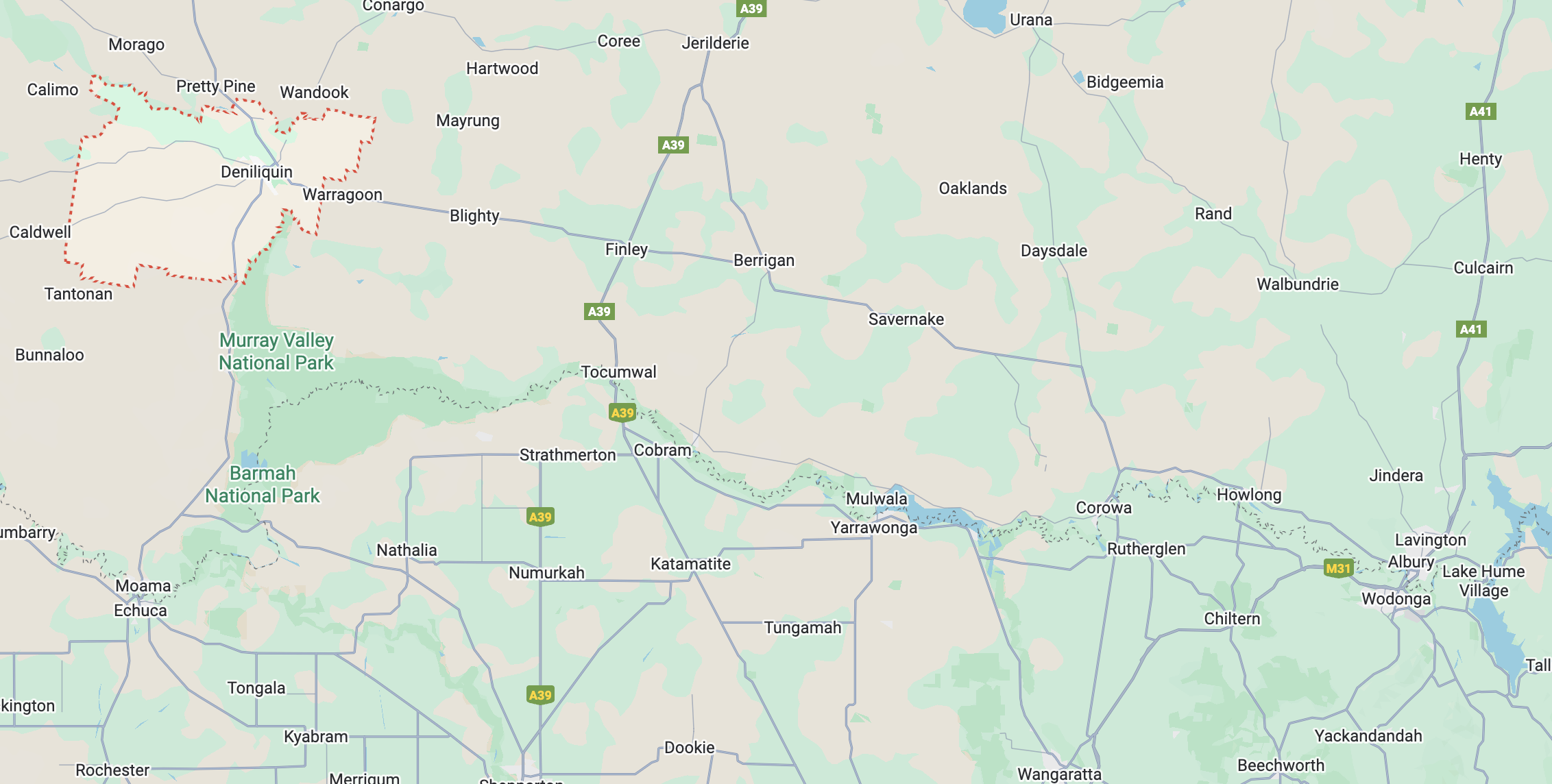
Deniliquin
Date Published
: 典打利郡埠
: Town/small
: Riverina (NSW/VIC)
: market gardening
Deniliquin
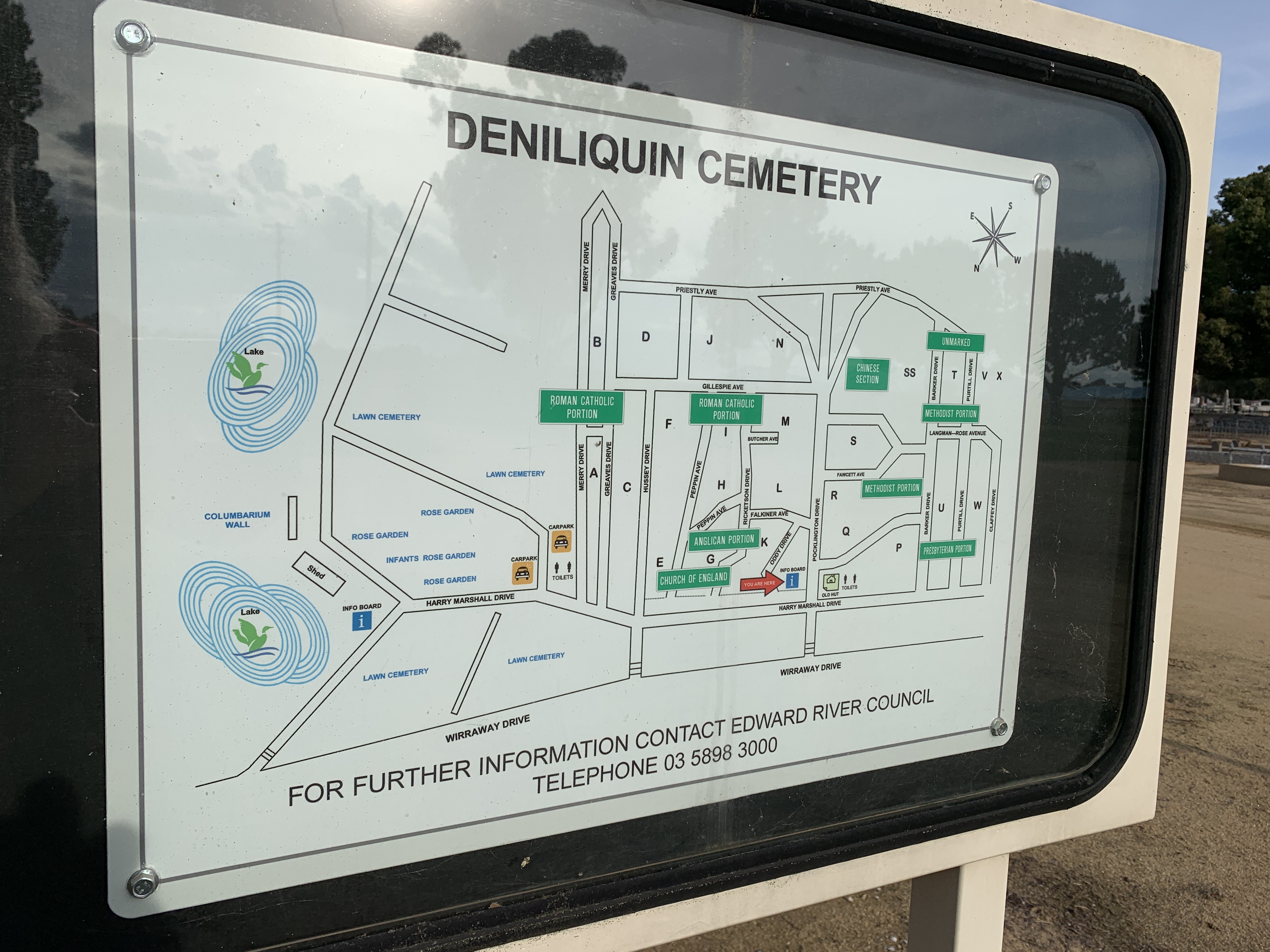
Like many towns of the Riverina, Deniliquin once had a numerous population of Chinese people who worked as scrub cutters, market gardeners and ran stores. Today the main evidence is the record of numerous Chinese burials in the local cemetery - though no grave markers remain. A well preserved burning tower also marks the previous existence of this community.
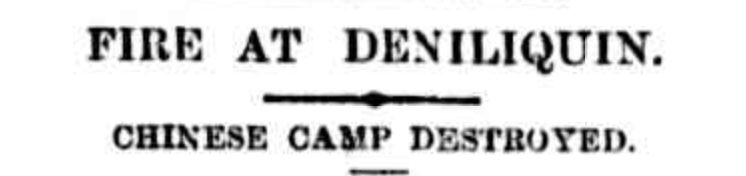
There was once a large "Chinese Camp" in Deniliquin, though no trace of it remains today and few local residents have any clear recollection of it. The camp existed in the block bounded by Cressy, Butler, Russell and George Streets and it is thought that an earlier camp-dating from the 1860's, was concentrated in Cressy Street.
By 1880 there were reckoned to be nearly 100 Chinese living in the district, and two years later the paper reported the presence of several Chinese stores in the town. In March 1883 the Pastoral Times commented on the coachload of "rose-coloured" occupants on their way to Coree station to cut scrub. The boss had chartered a Cobb coach for the trip. As it moved through the streets an occasional brickbat was hurled at it by small boys who, the report stated, were the same ones known to "steal our fireplugs and turn on our water taps when our backs were turned"
By 1895 the Chinese population had risen to its highest point in Deniliquin, 118 persons, and two years later 109 Chinese were counted in the town.
The large Chinese population of the 1890's continued to observe traditional celebrations, and on 29 October 1898 this report appeared in the Pastoral Times under the headline "Pig Day in the Chinese Quarter".
A 1917 photograph shows the store of Louey Wee fronting this lane, facing south. Beside it are several other shacks, none approaching the substantial nature of Louey Wee's well known store.
Louey Wee ran a well-conducted store in the laneway dividing the camp the store photographed in 1917. The front room's cafe was a favourite haunt for the young fry of the town to buy their crackers and consume stone ginger. Old Louey seemed to be the "boss" of the dwindling camp, he died of cancer at the Deniliquin Hospital in 1933.
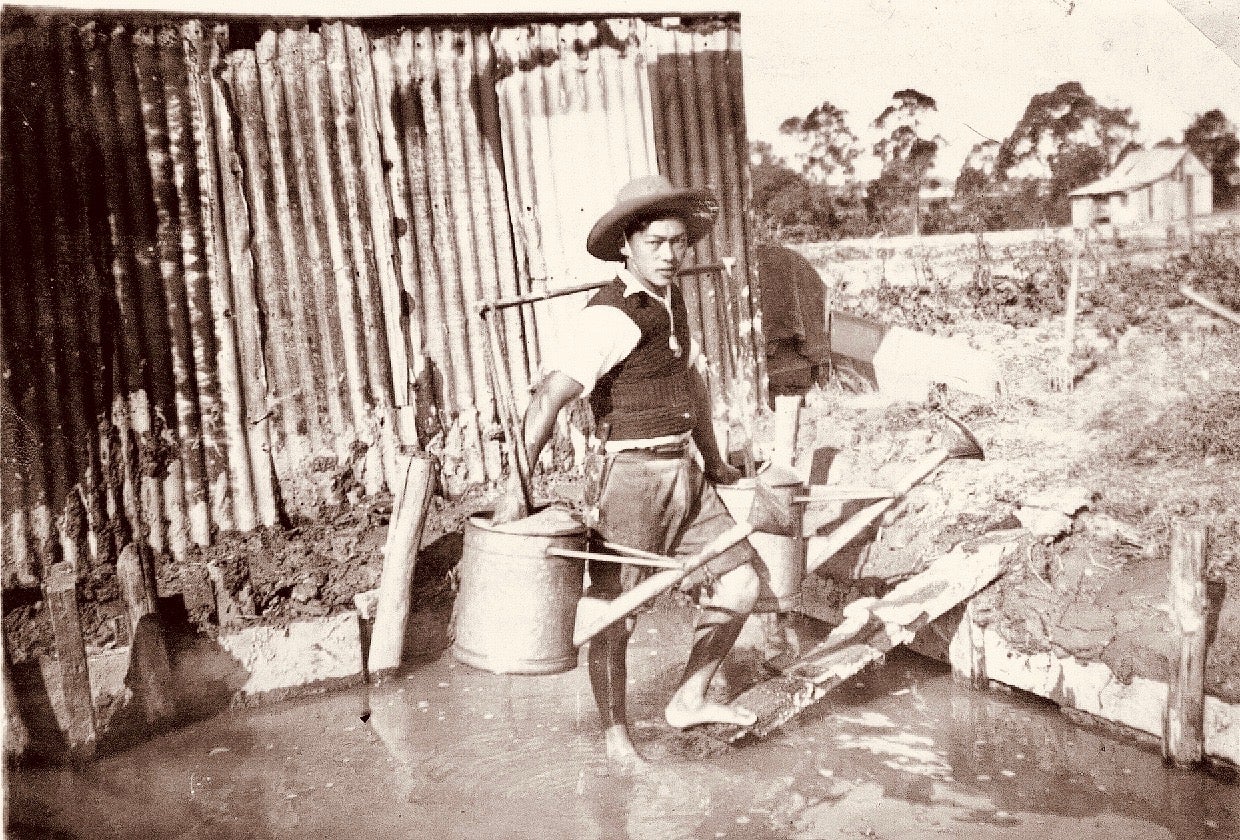
Pelly Ah None first conducted his garden in Morris Street near the Butter Factory on rented land, but later bought a block in River Street, where he lived until his retirement. Pelly was a favourite with young and old - a jovial and generous man, who was ready to contribute toward any fund in the public interest. In 1946 he decided to return to his own land to spend his final days and in July that year he was given a public send-off at the Town Hall. The Mayor, James Hynes, presented Pelly with a gold watch, leather travelling case and a wallet of notes from his Deniliquin friends. Pelly's son Charlie, was educated at Deniliquin School and later became a medico.
Chin Shoo was the last of the Chinese to frequent Deniliquin. He occupied the Butter Factory garden during the 1939 flood, when the river reached 27 ft. 8ins. In order to escape the 1956 flood he moved himself and his belongings to Nisbet's farm at Wandook, but returned when the danger had passed. He was found one day in his garden in a state of collapse and taken to the Deniliquin Hospital, where he died in 1957. Chin was a Christian, and a member of the Masonic Lodge in Sydney, where he had once been employed as a cabinet maker. He was buried in the Methodist portion of the Deniliquin Cemetery.
Chin's wife lived at Lok Bo in Canton Province, China. He always wanted his two sons to come out and help him in his garden but could not get permits for their exit, nor for his own re-entry into China. Hence Chin Shoo lived and died in Deniliquin.
Source: John E. P. Bushby, Saltbush Country - History of the Deniliquin District, 1980, p.268, 272, 275-275, 277.
For Deniliquin
Tommy Ah Mon worked with Pelly Ah None at the Butter Factory garden, but later went to the River Street garden with Chun Ah Yin who delivered vegetables around the town in a horse drawn cart. Local residents may remember Tommy delivering his vegetables in a green Chev. van supplied by Burchfields. Tommy went to Melbourne with Sun Yee Lee to Little Bourke Street.
Mow Ong had the Brewery garden for many years. He had the misfortune to fall from a fruit tree on to a tin and severely injure his side, which maimed him for life. He was assisted at the garden by Ah Louey who is remembered for his delivering vegetables around in two baskets suspended on a cane stick across his shoulders.
Source: John E. P. Bushby, Saltbush Country - History of the Deniliquin District, 1980, p.276.
For a description of Fan Tan played in the Deniliquin Chinese camp see:
Source: The Pastoral Times, Saturday 20 May 1882, p.3.
https://trove.nla.gov.au/newspaper/article/268022204
A pig oven is described in Deniliquin in p.273.