Market Garden, Deniliquin
Date Published

: market gardening
: Riverina (NSW/VIC)
: Deniliquin
: c.1890
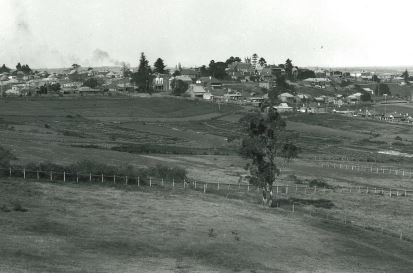
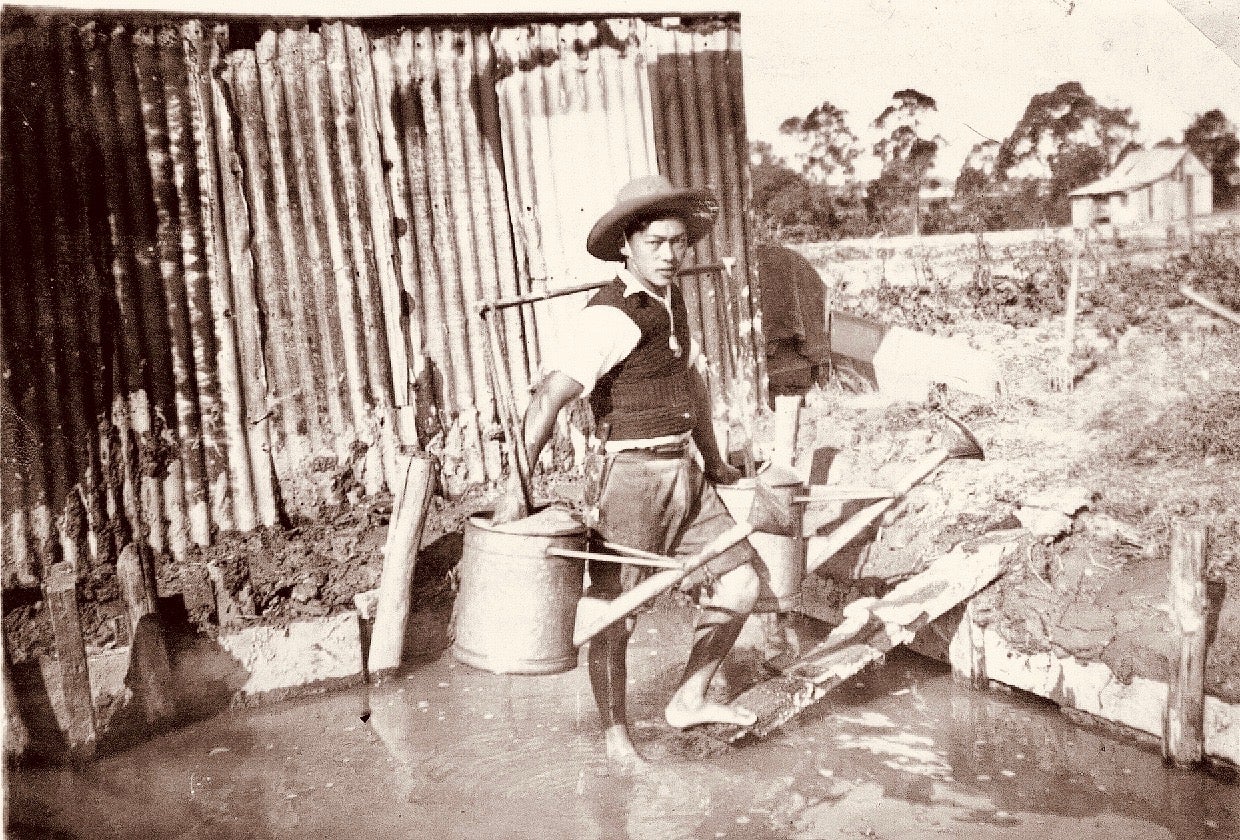
Brewery market garden in flood. Deniliquin, late 1800s
Brewery market garden in flood, Deniliquin, late 1800s (Source: Deniliquin and District Historical Society).
The first Chinese garden of any size was set up in the spring of 1864 by Ah Quong & Co., who leased three acres from Jas. Willoughby at £20 per annum. It was at the corner of Poictiers and Butler Streets.
The original gardener in Deniliquin was Hong Ming King.
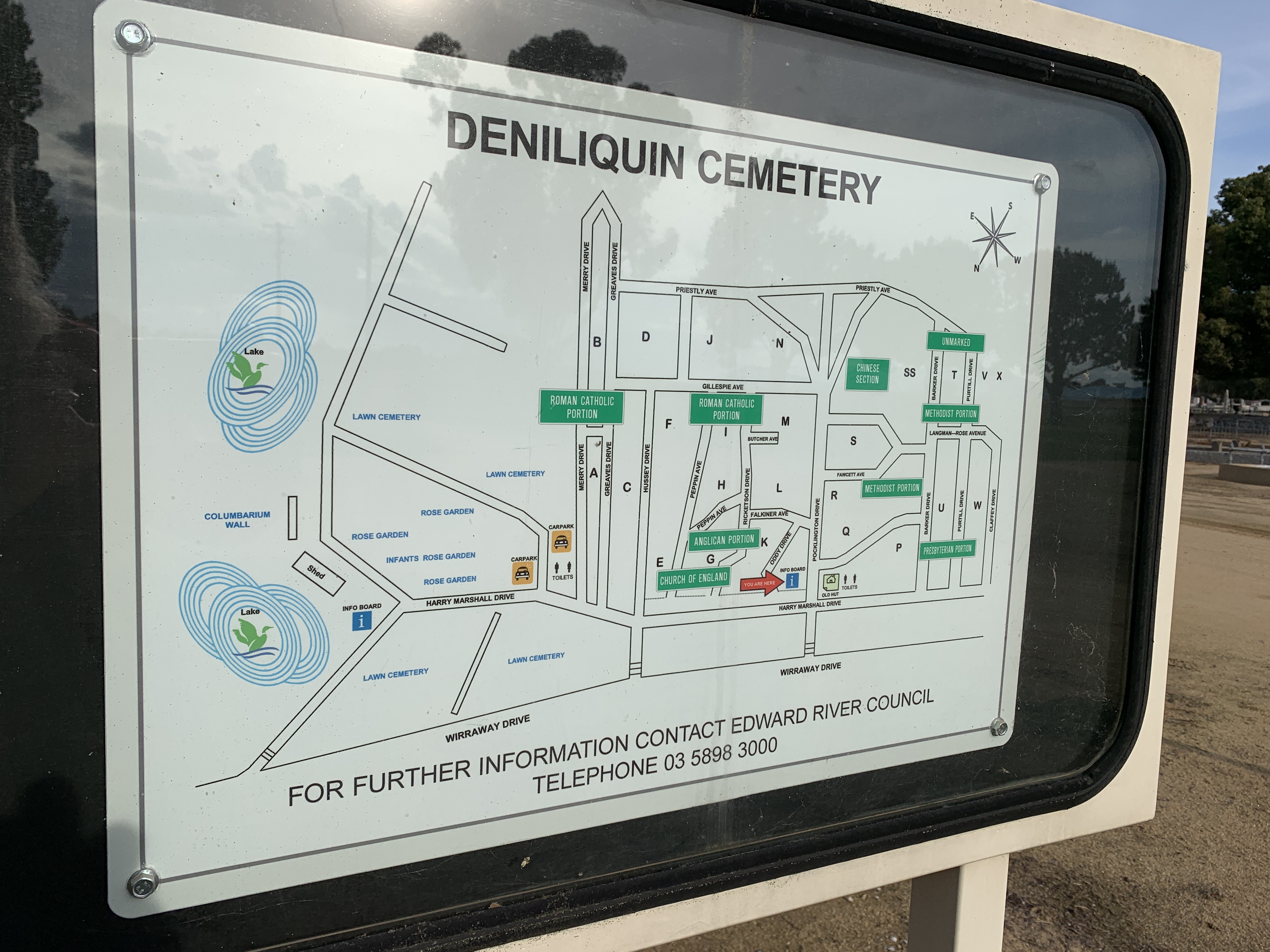
Chin Shoo was the last of the Chinese to frequent Deniliquin. He occupied the Butter Factory garden during the 1939 flood, when the river reached 27 ft. 8ins. In order to escape the 1956 flood he moved himself and his belongings to Nisbet's farm at Wandook, but returned when the danger had passed. He was found one day in his garden in a state of collapse and taken to the Deniliquin Hospital, where he died in 1957. Chin was a Christian, and a member of the Masonic Lodge in Sydney, where he had once been employed as a cabinet maker. He was buried in the Methodist portion of the Deniliquin Cemetery.
Chin's wife lived at Lok Bo in Canton Province, China. He always wanted his two sons to come out and help him in his garden but could not get permits for their exit, nor for his own re-entry into China. Hence Chin Shoo lived and died in Deniliquin.
Source: John E. P. Bushby, Saltbush Country - History of the Deniliquin District, 1980, p.275, 277.
For Deniliquin
Louey Wee ran a well-conducted store in the laneway dividing the camp the store photographed in 1917. The front room's cafe was a favourite haunt for the young fry of the town to buy their crackers and consume stone ginger. Old Louey seemed to be the "boss" of the dwindling camp, he died of cancer at the Deniliquin Hospital in 1933.
Pelly Ah None first conducted his garden in Morris Street near the Butter Factory on rented land, but later bought a block in River Street, where he lived until his retirement. Pelly was a favourite with young and old - a jovial and generous man, who was ready to contribute toward any fund in the public interest. In 1946 he decided to return to his own land to spend his final days and in July that year he was given a public send-off at the Town Hall. The Mayor, James Hynes, presented Pelly with a gold watch, leather travelling case and a wallet of notes from his Deniliquin friends. Pelly's son Charlie, was educated at Deniliquin School and later became a medico.
Ah Louey was the owner of the Sun Quong Hie store at the camp. He was a spotlessly dressed man who rode a well-kept bicycle to town. As well as supporting the gambling dens at the camp Ah Louey was also a keen subscriber to Tattersalls. He was a popular man and had many friends in Deniliquin.
Charlie Ling was a cook and a good one, too. For a time he was cook at the Royal Hotel. He afterwards worked on stations in the district and eventually left the area.
Tommy Ah Mon worked with Pelly Ah None at the Butter Factory garden, but later went to the River Street garden with Chun Ah Yin who delivered vegetables around the town in a horse drawn cart.