Myths
Date Published
Numerous myths are associated with Chinese Australian history - round shafts, various buildings, Gympie Ape, Robe walk.
Various myths are commonly associated with Chinese-Australian history—some quite specific, others rather absurd. A few contain a grain of truth, but are nevertheless exaggerated or distorted. These myths have generally arisen from a combination of factors: widespread ignorance of Chinese culture, a lingering sense of exoticism—the notion that because Chinese people were perceived as so different or mysterious, almost anything could be believed about them—and a general lack of understanding of the historical role played by people of Chinese heritage in Australia.
This ignorance was compounded by the whitewashing of history that followed the implementation of the White Australia Policy. That policy not only sought to reduce the Chinese-Australian population, but also to define Australia as a white nation—retrospectively erasing from public memory any alternative versions of the country’s past.
The result is that a surprising number of myths continue to circulate, both at the local level and in broader popular understanding. The following is a list of some of the more common examples.
Myth 1: That Chinese miners dug round shafts and that this was to keep spirits away who would otherwise hide in the corners.
This has no basis in Chinese thinking and seems to have been completely made up. If anything, round shafts would be stronger in some circumstances. However, there is no evidence that the mining shafts or tunnels of Chinese or European miners were constructed differently. See Mining
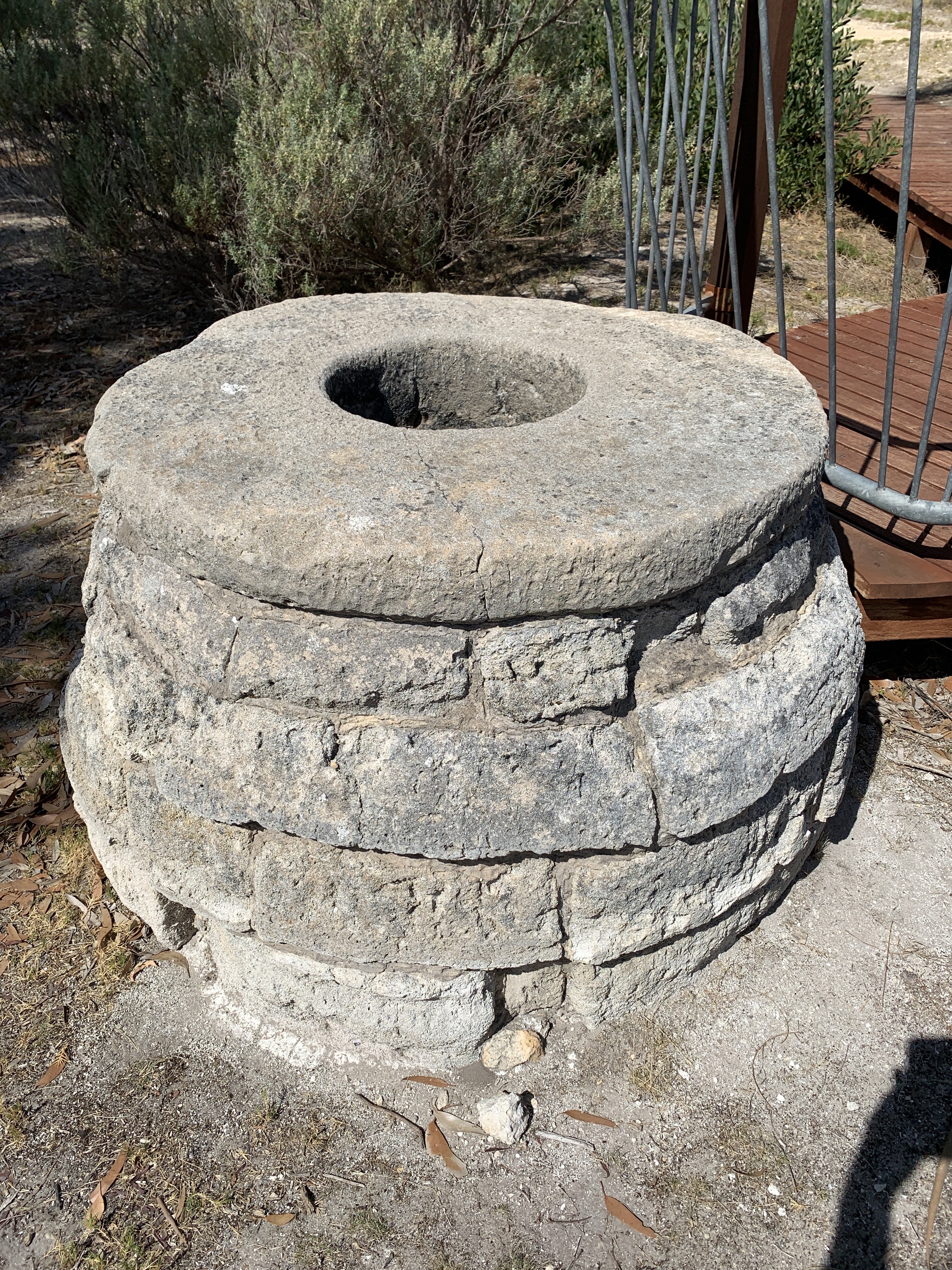
"The most convincing and plausible argument to date is that of Peter Bell, who has postulated that the round shafts were dug by Chinese miners who were also well diggers. The Chinese were often sought after as well diggers in Australia, and obviously their expertise in this area was highly regarded. This would account for the relative rarity of the round holes and the degree of perfection with which they were dug. It would also explain why rectangular and round shafts sometimes occurred in close proximity. The former were dug by Chinese miners who were not well diggers and the latter by those who were. Furthermore, as discussed above, there is one site on the Mon garlowe workings where the round shaft was converted later into a well or cistern fed by a water race."
Barry McGowan, The archaeology of Chinese alluvial mining in Australia, Australasian Historical Archaeology, Vol. 21, 2003, pp. 11-17.
Myth 2: That the blowing out of a candle flame or the spilling of chicken blood were possible methods of ‘swearing in’ a Chinese person in court.
The basis of this was the obsession of the British legal system with fear of consequences in the afterlife as the only basis for exacting the truth out of a person in court. This made it for many years impossible, for example, for Aboriginal people’s evidence to be accepted in courts with often disastrous consequences. However, neither this fear, nor chicken blood, nor blown candles, has any basis in Chinese courts. These methods appear to be a variation on Chinese clan practices or even that of Chinese secret societies for swearing brotherhood and loyalty.
Myth 3: The White Australia Policy forced Chinese people to leave Australia or did not allow them to return if they left.
The Immigration Restriction Act of 1901, which implemented the White Australia Policy, restricted the entry of new arrivals but imposed only bureaucratic controls on those already in Australia. This mainly entailed the need to apply for a CEDT (Certificate of Exemption from the Dictation Test) in order to re-enter Australia after a home-village visit. More affected in many ways were Australian-born people who, if they were attempting to return to Australia after growing up in the village, were often denied entry or had to go through many barriers before being allowed to do so.
Myth 4: Poverty, war and famine caused Chinese people to come seeking gold.
Like those from Europe, Chinese gold seekers certainly wished to make a fortune or at least to increase what they had. But they were no more driven by special circumstances such as famine or war than anyone else. Like most migrants, those that came to Australia were not the poorest but those with some access to sufficient money for passage. Regarding war, in fact, neighbouring provinces were much more affected by wars and rebellions than Guangdong province from which people travelled to Australia.
Myth 5: All Chinese people in Australia came for the gold rushes of the 1850s.
In fact, Chinese people came to do a wide range of occupations and the majority came after the 1850s gold rushes to work in such occupations as cabinet-making or market gardening. Those that did come in the 1850s had largely returned to China by the 1860s and it was Queensland’s Palmer River gold rush of the 1870s that contributed more to the Chinese population of NSW than any other.
Myth 6: Most Chinese men in Australia came as virtual slaves or indentured labour.
This is part of the debate concerning cheap but free labour that raged throughout the 19th century. Certainly many Chinese men came owing money for their passage money and some came on contracts that required them to work for a number of years for a particular contractor. But this was very different from the indentured and very often kidnapped labour that shipped many people to Peru and other locations. The accusations of slavery, however, served the needs of those seeking to limit Chinese migration for other reasons.
Myth 7: Chinese people, once the gold rushes were over, only worked as market gardeners.
In fact Chinese people in NSW and other parts of Australia worked in a wide variety of occupations ranging from fishing to scrub cutting to cabinet making. However, the impact of the White Australia policy meant that by the 1920s only a relative handful of ageing Chinese men remained and very often these found work as market gardeners. It is this memory of one stage in the long history of Chinese people in Australia that has remained strongest for some.
Myth 8: That gold was smuggled back to China along with the bones of the dead, or even that this was the purpose of exhuming such bones.
Return to the home village, even after death, was an extremely significant aspect of Chinese culture and one not readily understood by European observers. The association of gold with Chinese is a common one but what it often forgotten is that the export of gold was not restricted except for a period during WWI. There is in fact no evidence that gold was ever smuggled this way and little reason why it should have been.
Myth 9: The Dictation Test was an educational restriction.
The so-called Dictation Test was designed to allow Immigration Officials to declare anyone they wished an ‘illegal immigrant’ without mentioning any particular race or nation by name. Britain was anxious not to antagonise India, China or Japan and the new Australian Commonwealth agreed to lessen Imperial embarrassment with this fake test. Most people given a Dictation Test sat uncomprehending while 50 words were read to them in a language it was know they did not know and the paper placed in front of them was left entirely blank apart from a signature.
Myth 10: Chinese miners only mined already worked claims and this was because either Europeans drove them off new claims and/or because they were more patient and harder workers.
Chinese miners certainly worked new claims as well as old workings. However, the fact that many Chinese miners owed money on first arrival, that many of their fellow miners may have been from the same village, and that even a little money earned in Australia would go a long way when sent back to the family, all combined to ensure that long-term work on old claims was perfectly viable as far as Chinese miners were concerned.
Myth 11: All Chinese women had bound feet and this is why they stayed home.
Foot binding was largely an upper class feature and was not common among families that sent members to Australia, or not until after they had made money overseas. It was the wife’s role as carer of parents that had the greatest impact on whether women travelled or not. In fact, some bound-footed women did indeed come to Australia.
Myth 12: Calling a Chinese Temple a ‘Joss House’ is a Chinese term or it is an insulting one.
In fact the term ‘joss’ comes from the Portuguese word deos (via the Latin deus) meaning god and is a Pidgin English term that was widespread and is still used in the term ‘joss sticks’. There is no inherent reason why the term Joss or Joss house should be insulting. The English term ‘temple’ is not especially accurate as Chinese has a number of words that would distinguish the small, local temples erected in Australia from larger temples complexes, especially Buddhist ones.
Myth 13: That opium smoking was ubiquitous among the Chinese, completely debilitating, and exclusively a ‘Chinese vice’.
Certainly the Chinese in Australia preferred opium to the alcohol of the Europeans, both drugs debilitating a minority while for most it was a relaxant that interfered little with day-to-day life. Opium was a legal drug until 1905, and while not introduced by the British, they had been willing to fight a war to ensure their own brand of the product was sold freely within China.
Myth 14: Chinese temples were often used as gambling dens and were therefore not true places of worship.
This is a case of making an equivalence with Christian Churches. While most Chinese temples were small and used for prayer and other religious purposes, there is nothing ‘sacrilegious’ or contrary to Chinese beliefs in using the same building for many purposes, including gambling if this should be convenient. In addition, many district associations and even what Europeans would consider ‘clubs’ would have had an altar and thus were often assumed to be Joss houses or temples.
Myth 15: That the walk from Robe was a death march?
The introduced of a Poll Tax by the Victorian government on Chinese arrivals in 1855 led many to instead disembark at Adelaide and increasingly the small port of Robe. From these South Australian locations, they would then walk to the Victorian goldfields and thus avoid the tax. While deaths and hardships did occur in the main this was a well organised method of arrival with Hong Kong based agents chartering the ships and providing guides and provisions.
That Chinese women were barred or legally restricted from entering Australia.
Wells, woodsheds and stone walls.
That Amoy men died in Australia and few could afford to return to China
Wagga tunnels - linked to opium
Dams everywhere
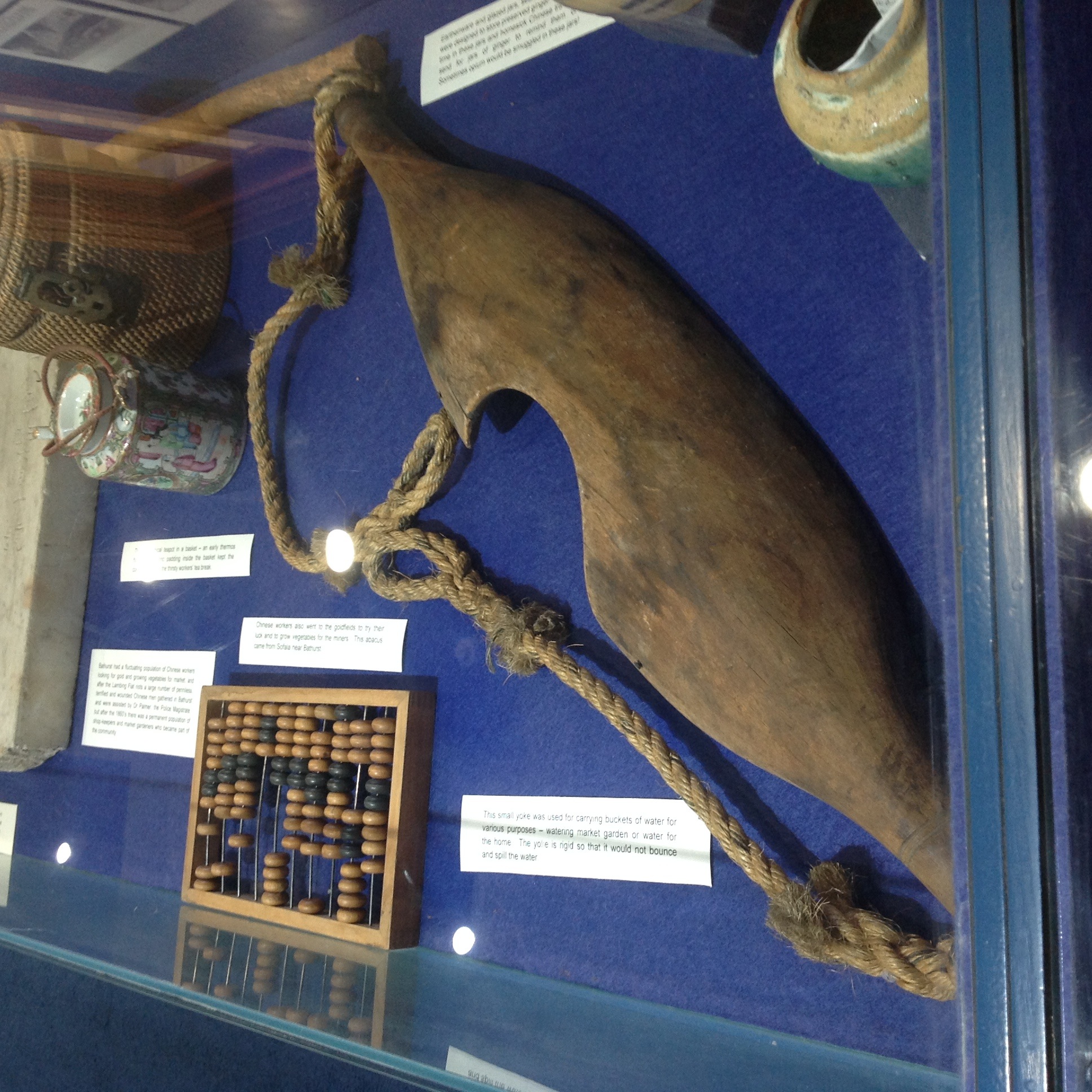
Yokes - <a href="https://victoriancollections.net.au/items/4f72ac1097f83e0308603836">https://victoriancollections.net.au/items/4f72ac1097f83e0308603836</a>
The Chinese couldn’t own land.
There was no blanket legal prohibition against land ownership by Chinese people in the colonial period, though discrimination certainly existed. Many held leases or freehold property through trusted intermediaries or their Australian-born children. Some even became substantial landowners, particularly in New South Wales and Queensland.
The Chinese were passive victims of racism.
While they suffered from severe discrimination, Chinese Australians were also active participants in public life. They petitioned parliaments, fought legal cases, organised boycotts, and formed associations to defend their rights. Their political engagement challenges the stereotype of a silent or submissive minority.