Australia China relations
Date Published
The political and economic relationship between Australia and China has always shaped not only the lived experience of Chinese people in Australia but also the way their history has been perceived, recorded, and interpreted. In the earliest period, when China was regarded by Europeans as distant, exotic, and largely unknown, the arrival of Chinese miners on the goldfields was framed in similarly exotic terms. Curiosity predominated, and overt hostility was not yet the dominant narrative.
However, the Opium Wars and the subsequent portrayal of China as militarily weak and diplomatically vulnerable quickly altered this perception. Chinese people came to be viewed through the same lens: as weak, exploitable, and lacking the qualities that the British settler population associated with modernity and strength. This was only one factor among many, but it contributed to an emerging racialised hierarchy that placed Chinese migrants in a subordinate position.
Australia’s secure place within the British Empire strengthened its self-conception as part of a global white polity. This sense of imperial protection reinforced attitudes that justified exclusion, culminating in the White Australia policy. After the Second World War and the rapid decolonisation of Asia, this geopolitical position shifted dramatically. Australia could no longer maintain the fiction of a white enclave surrounded by Asia, and it was this new strategic reality that ultimately made the dismantling of White Australia politically unavoidable.
Yet despite changes in immigration policy, China itself remained isolated for several decades. During this period, Chinese Australian history was largely marginalised or “whitewashed,” rendered invisible within mainstream national narratives. This only began to shift in the 1980s, when China opened to the world, diplomatic relations warmed, international students arrived in large numbers, and new waves of migrants reshaped the demographic landscape. Chinese Australians increasingly expressed pride in their ancestry, and broader public interest in Chinese Australian history grew.
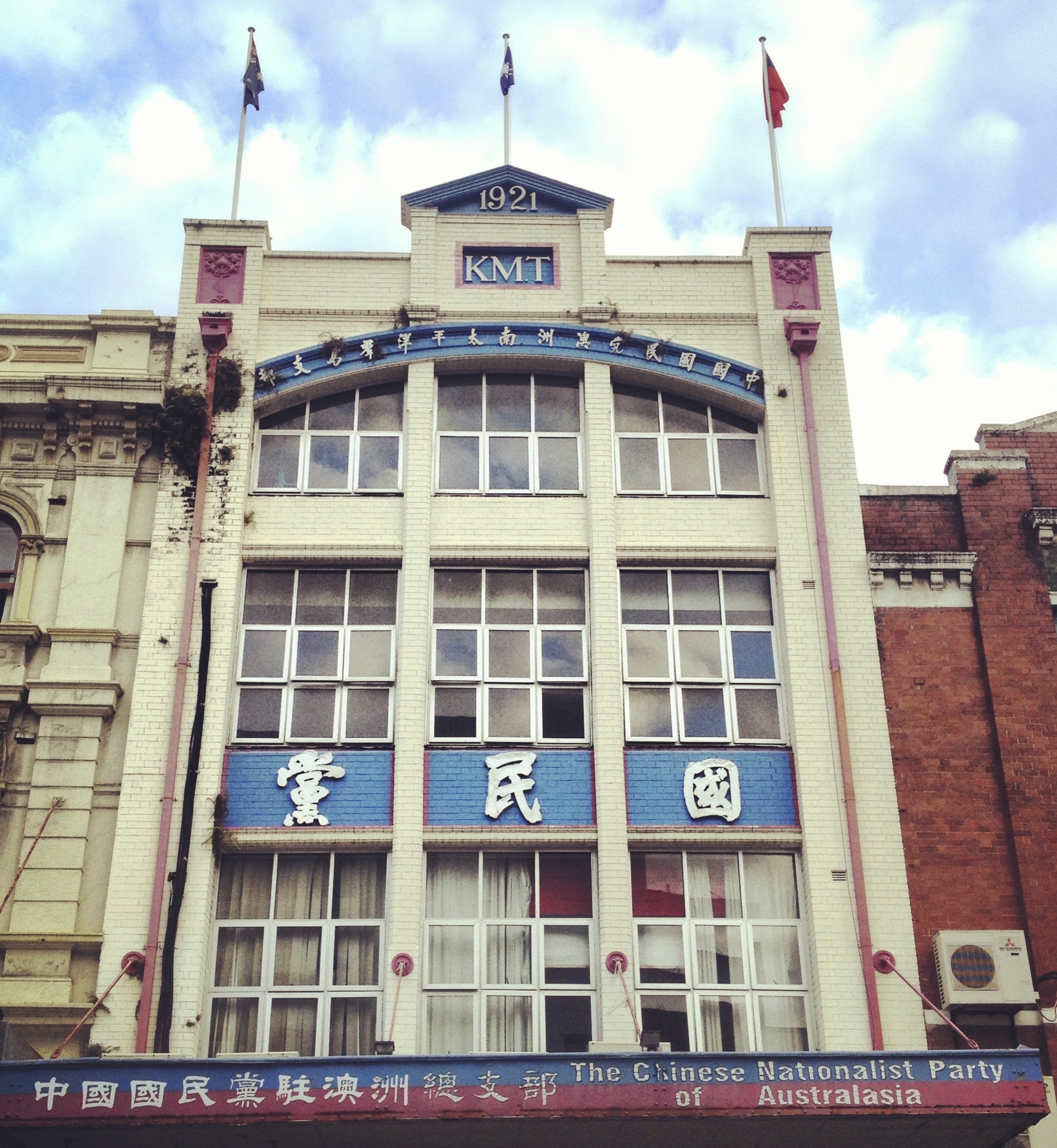
Tensions re-emerged in the early twenty-first century as geopolitical rivalry intensified—particularly as the United States sought to constrain China’s growing economic and strategic influence. Within Australia, anxieties about China began to colour public perceptions of Chinese Australian communities and their historical heritage. Activities that had once been seen simply as cultural or historical engagement were now, in some quarters, reframed as potential extensions of Beijing’s influence. This was reinforced by the Chinese Communist Party’s appropriation of diaspora narratives—building on earlier Guomindang ideas—to promote the “century of humiliation” story as part of its broader national project.
While such political agendas do exist, they represent only a small thread in a much wider tapestry. For the most part, the shifting interpretation of Chinese Australian history reflects how historical narratives are repeatedly repurposed to serve contemporary political concerns. In this sense, the state of Australia–China relations has always played a significant role in shaping how Chinese Australian history is understood, valued, contested, or weaponised.