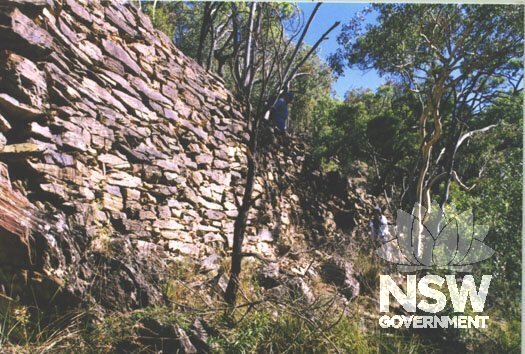
Water Race (gold mining), Windeyer
Date Published
: Mining (gold fields)
: Central Tablelands (NSW)
: Windeyer
: c.1855
An aqueduct wall built by Chinese gold miners near the banks of the Meroo River between 1855 and 1865.
Gold mining water race
Gold was discovered in the district of Windeyer around 1850, and by 1858 there was a considerable Chinese presence in the district. This wall was built between 145 and 130 years ago by Chinese gold miners. They were part of the general gold rush phase of Australia.
This Chinese-built aqueduct wall is built near the banks of, and following, the Meroo River. The nearest officially known gold settlement was Deep Crossing, which is on the next bend of the river down stream. This dry stone wall follows the Meroo River water course for approximately 350 metres. The wall ranges in height from a few stones to 3.6 metres in height. A large portion of it being over 1.8 metres in height. The wall is made of the shale rocks from the site, of flat rectangular shape and of various sizes, laid dry on their large sides. Rocks approximately 600mm x 600mm x 120mm deep are common.
The Chinese built aqueduct wall is believed to have been built around the gold rush days of Windeyer district which started in the late 1850s. There was a considerable Chinese presence in the area reaching as many as 1200 at the peak of the gold rush. There were a number of gold strikes, and the strike nearest to this location was the strike at 'Deep Crossing' . Whether the Chinese were the first or only prospectors in this vicinity is not known, but they often reworked claims that had been already left by Europeans, and this may have been the case here. The wall is believed to have been built by 12 Chinese men, supported by a cook. The time it would have taken to build the wall, implies these men were supported by wages or kept in supplies while on the project. They may have been contract workers.
The site was registered as NSW State Heritage in 2000
Source: NSW Environment and Heritage https://www.hms.heritage.nsw.gov.au/App/Item/ViewItem?itemId=5044742
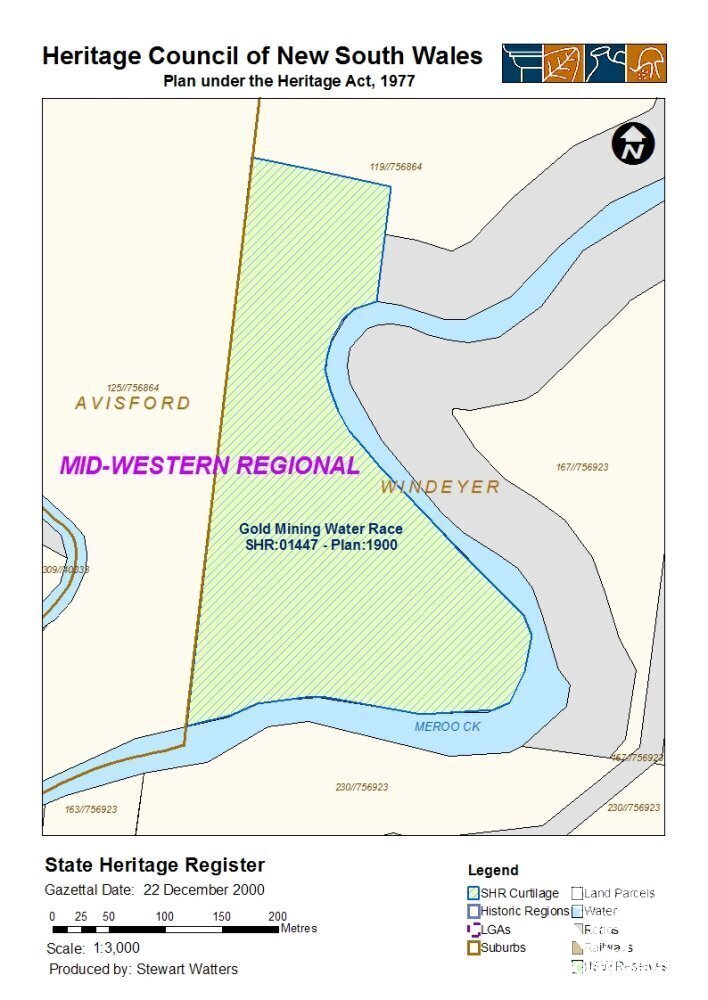
Gold mining water race location
.png?2025-11-10T20:32:20.362Z)