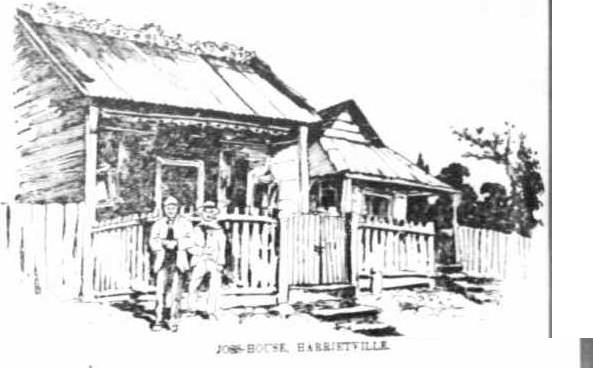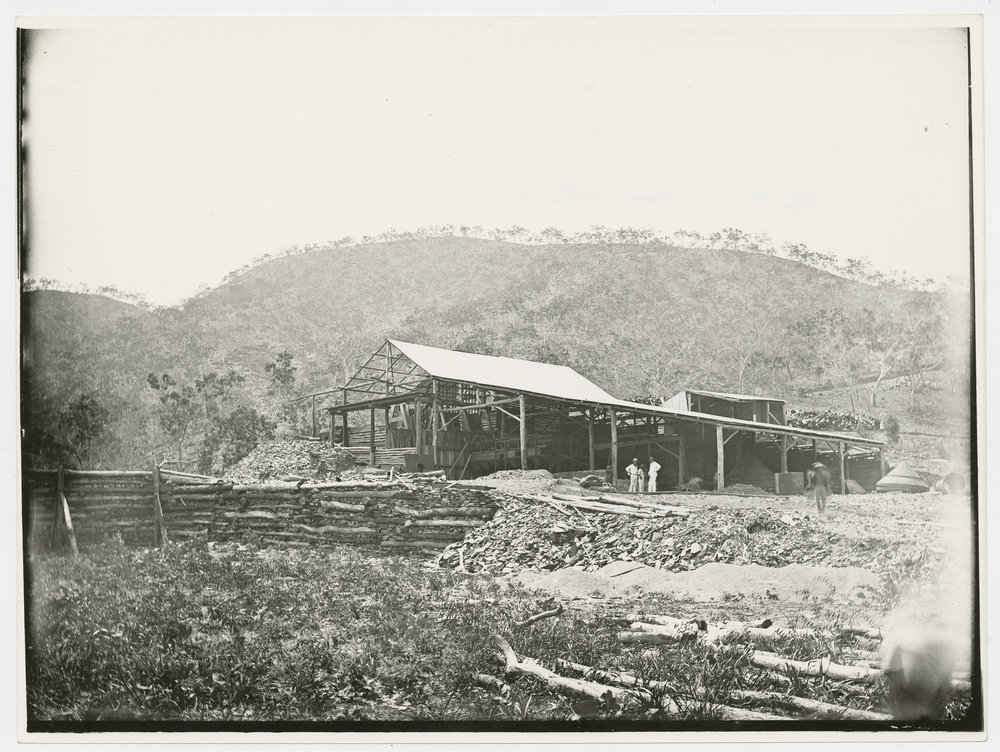
Emmaville Joss House
Date Published
: Temples / Joss House, Mining (tin)
: Northern Tablelands (NSW)
: Emmaville
: 1887 to 1932
Emmaville (Vegetable Creek) was a thriving tin mining town with a large Chinese population and perhaps two Joss Houses.
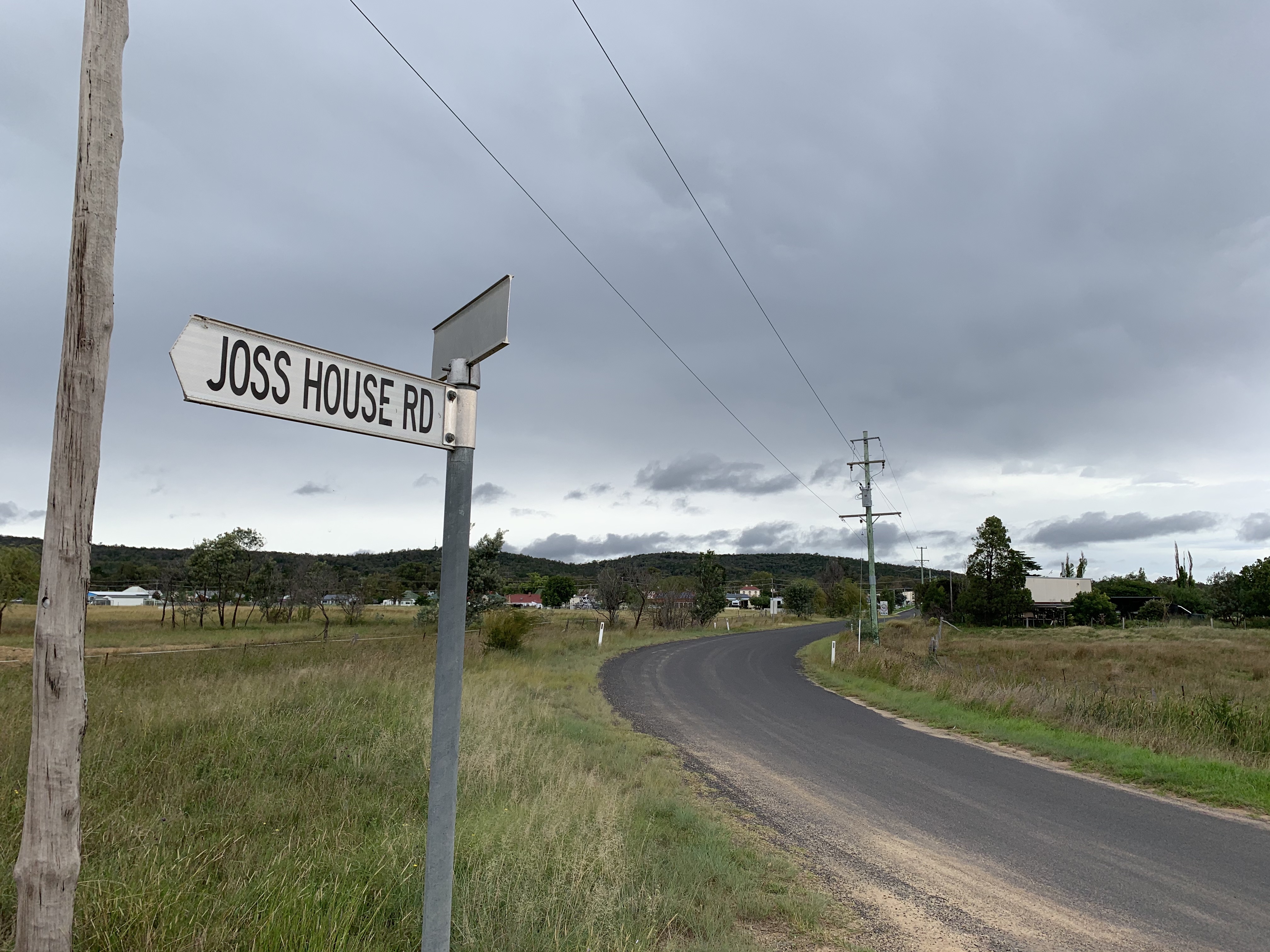
Joss House Rd, Emmaville
THE NEW SOUTH WALES PREMIER JOSS-HOUSE.
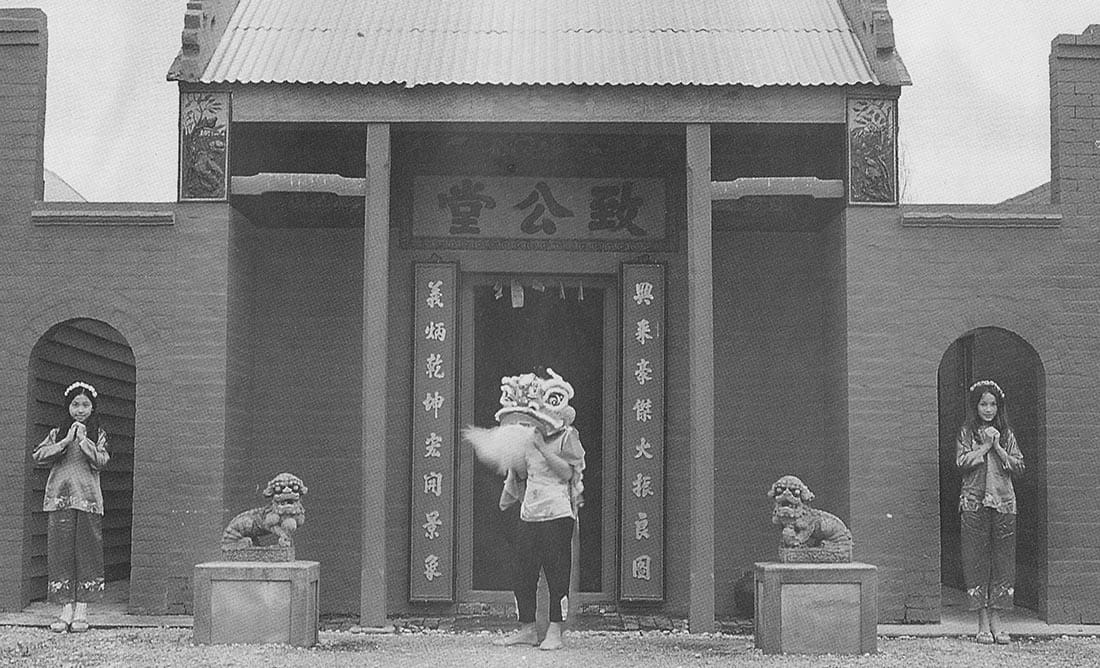
Emmaville, Friday. — The biggest Chinese Joss-house in New South Wales was opened here this morning with due pomp and solemnity by the Chinese of Vegetable Creek. The building is estimated to have cost £1300. Six hundred pounds' worth of imported work from China adorns the interior. About 500 Chinamen were present and a large number of Europeans. The celebrations are now on and will continue to Sunday. A Chinese procession paraded the streets to-day, accompanied by a Chinese band.
The Daily Telegraph, 30 April 1887, p.6.
* This would appear to be Emmaville's (aka Vegetable Creek) second Joss House as another is mentioned in 1881, see: Illustrated Sydney News and New South Wales Agriculturalist and Grazier, 3 September 1881, p.11.
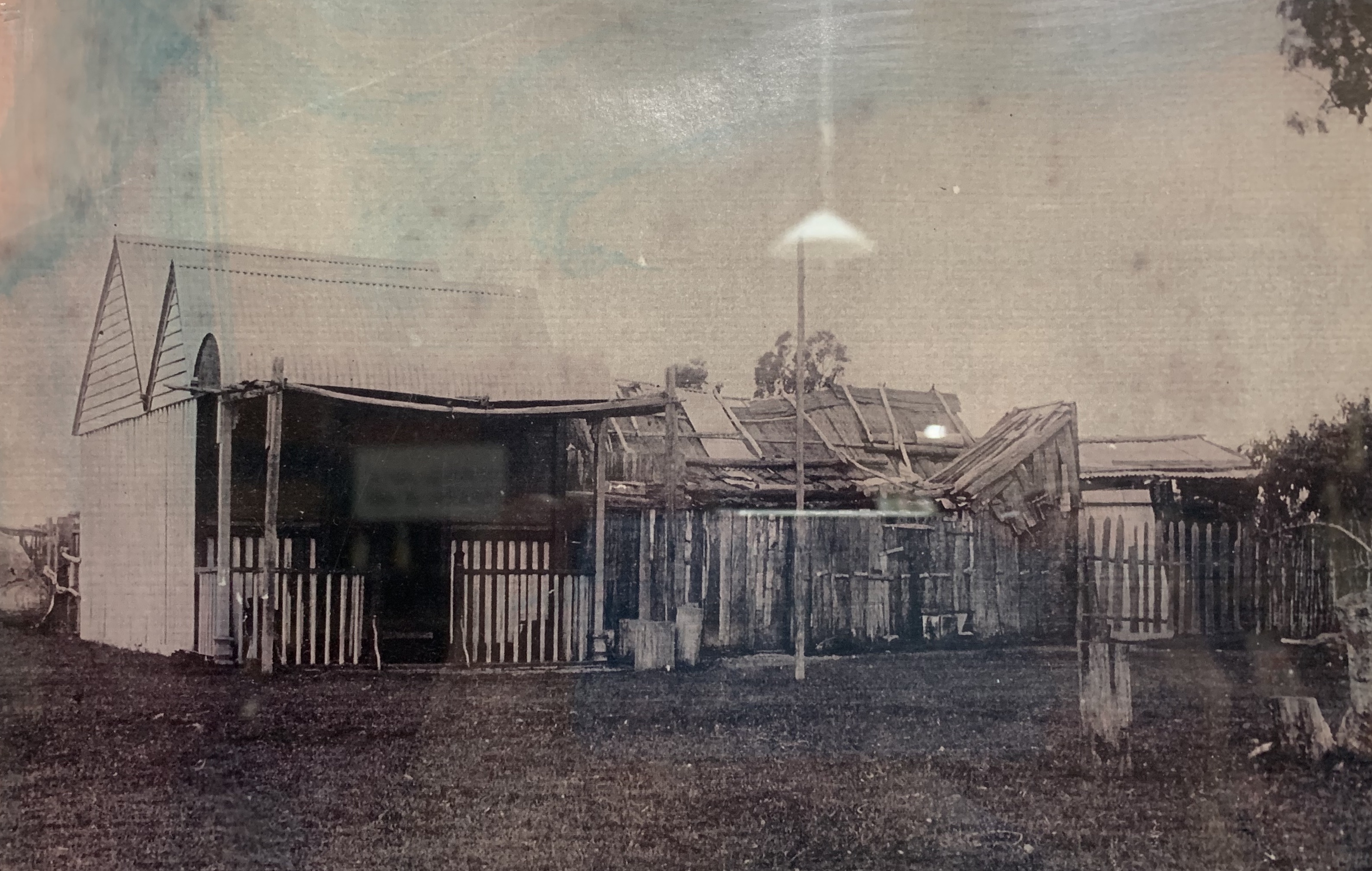
One of the chief attractions for travellers used to be Chinatown and the Joss-house. To-day the Joss house still stands in the same spot, and every morning clangs out its mournful bell, but the Celestial In almost a negligible quantity.
The Sydney Morning Herald, 27 September 1913, p.5.
CHINESE JOSS HOUSE BURNT.
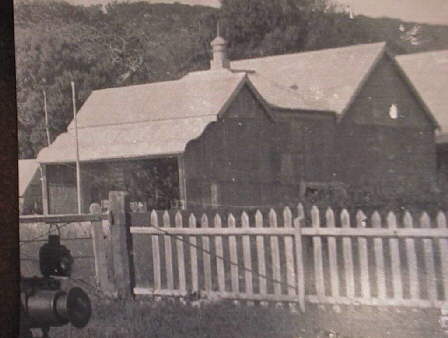
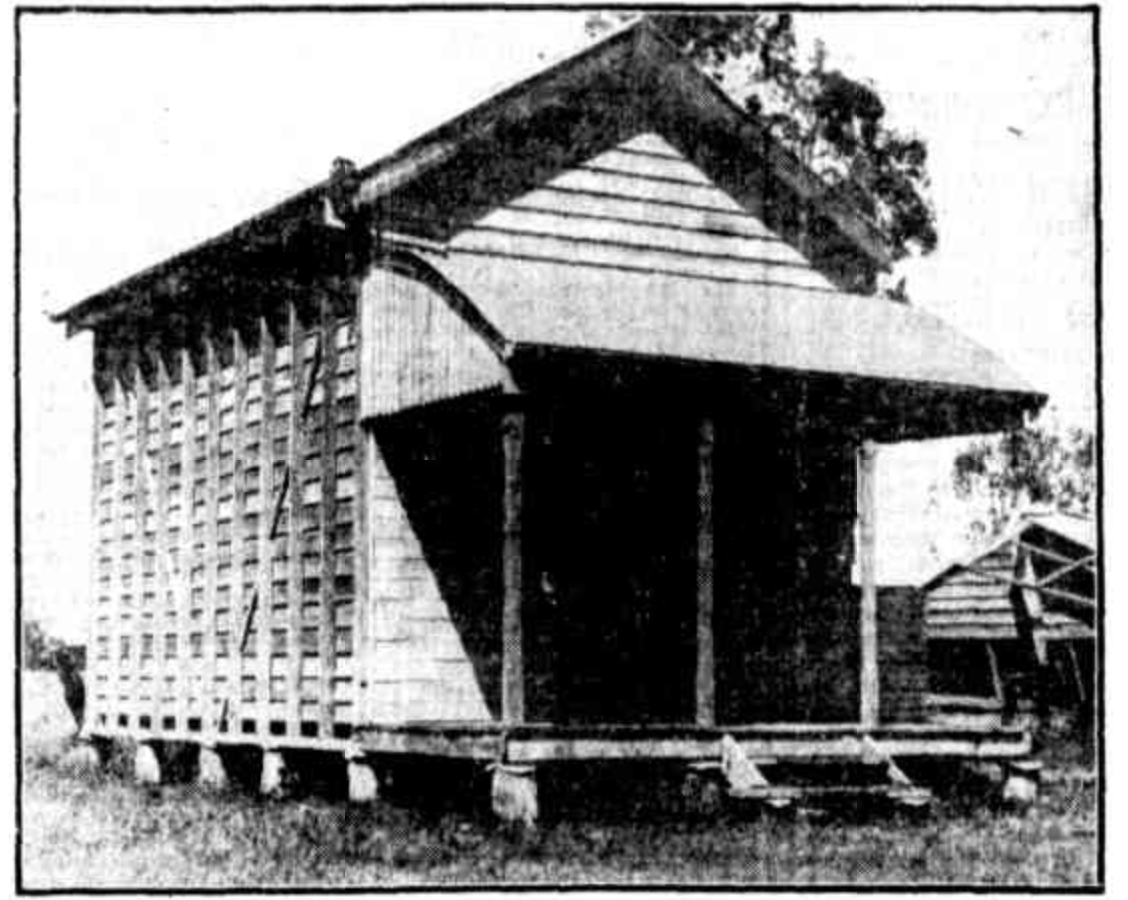
Built more than 50 years ago, the Chinese joss house at Emmaville has been destroyed by fire. It is said that there are only two others in the Commonwealth, one of which is at Tingha. The joss house, 40ft. long and 30ft.wide, was built when the Chinese population of Emmaville was more than 1,000, and the entire population more than 3,000. The interior decoration of tapestries and the special timber from China used in its construction were features of the building, which cost £1,000. The Oriental god, 3ft. high and 14in. wide, was set on a special stage at the northern end of the house. With a decrease in the Chinese population the building became dilapidated in recent years, but it remained a curiosity and an attraction to visitors. It was insured. Dungog Chronicle, 20 September 1932, p.2.
See also:
Toowoomba Chronicle and Darling Downs Gazette, 17 September 1932, p.6.
For a more detailed account of the Emmaville Temple based on Chinese language sources see Ely Finch in Our Chinese Past.
Emmaville Joss Hse photo
Altar, Emmaville Temple
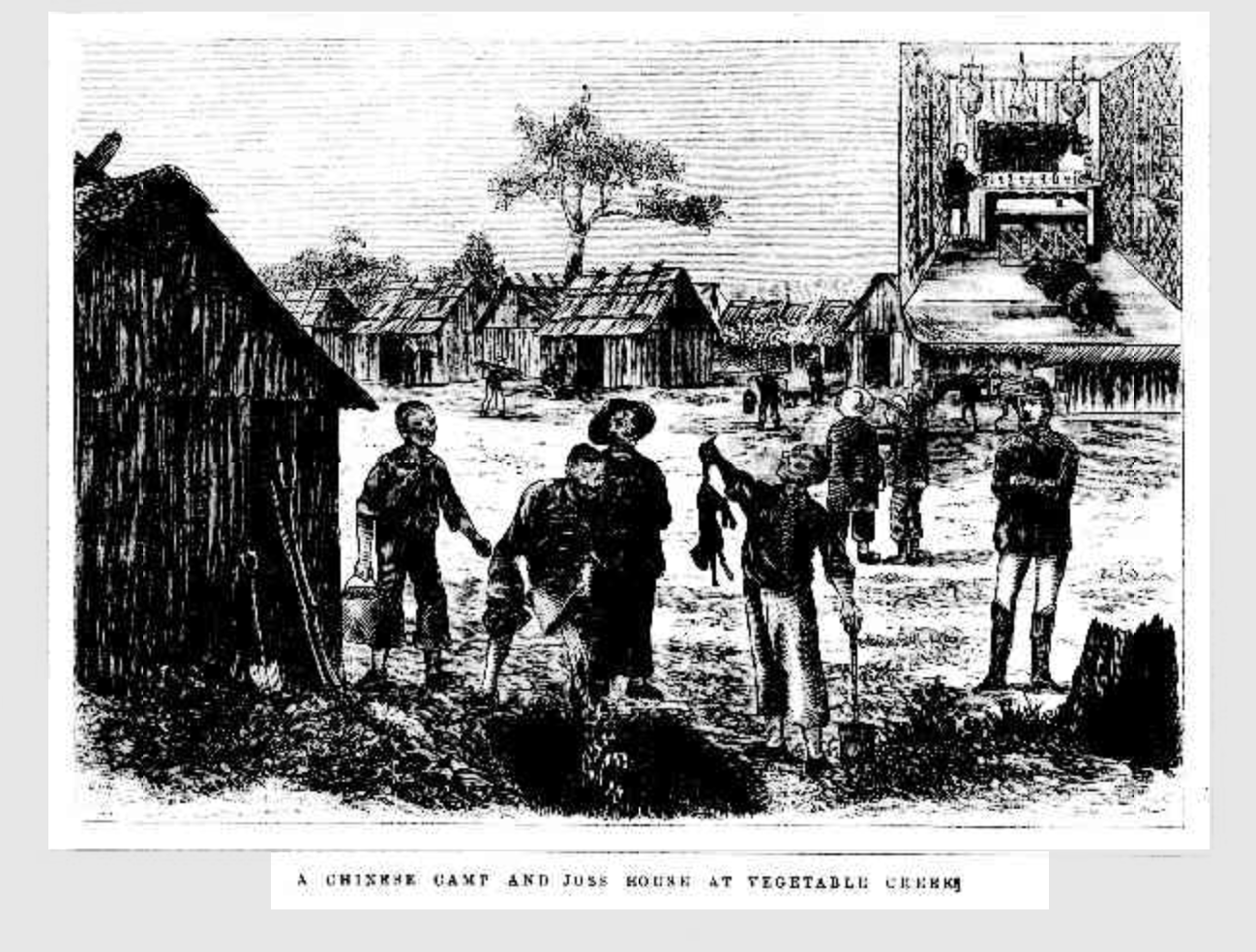
Emmaville Chinese and Joss House