CEDT approval, Sym Choon
Date Published
: Certificate Exempting Dictation Test (CEDT), White Australia policy (Dictation Test), discrimination / racism
: Canberra
: Canberra
: 1921
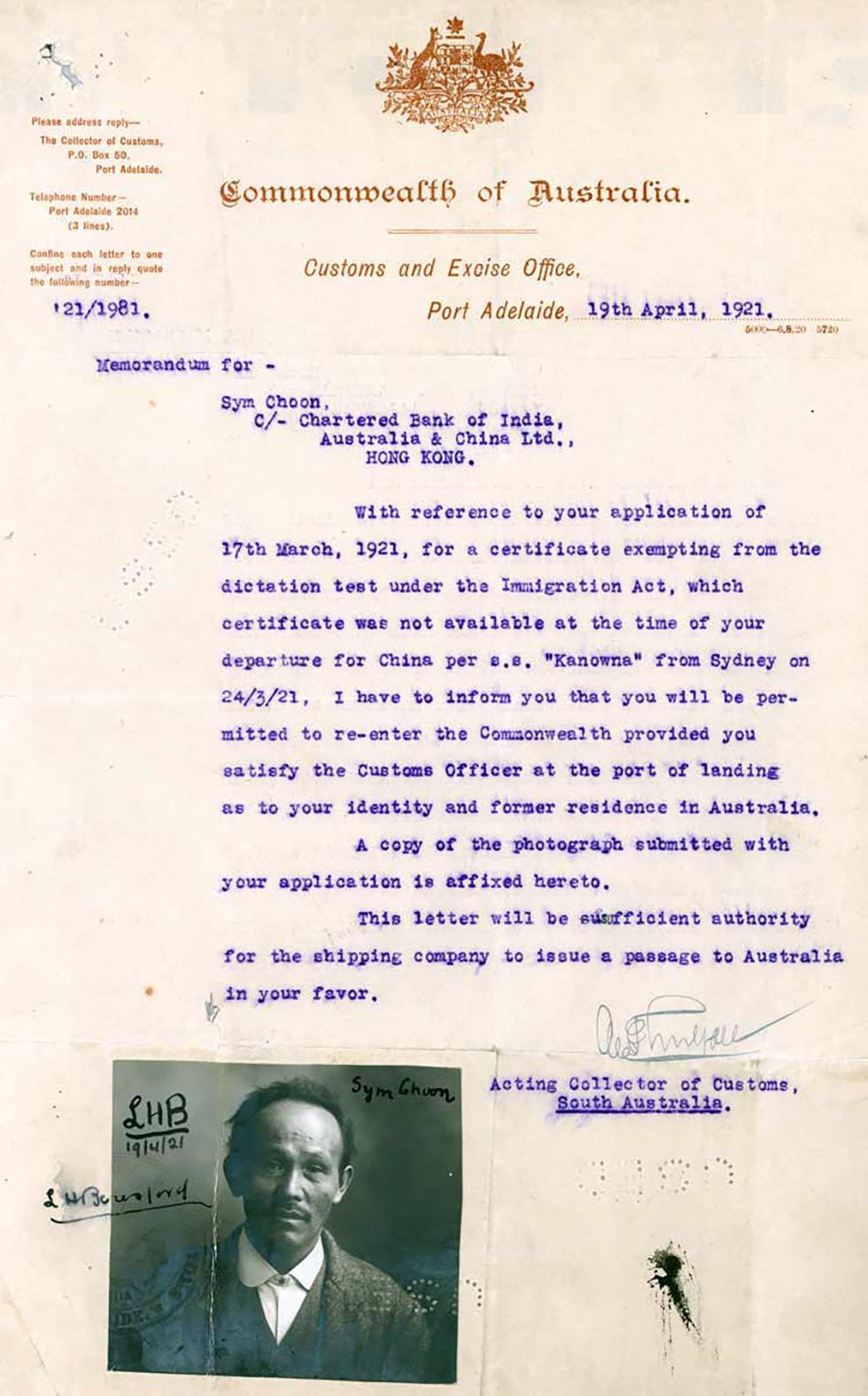
Sym Choon’s letter authorising an exemption from the dictation test, 1921.
Sym Choon's exemption from dictation test approval
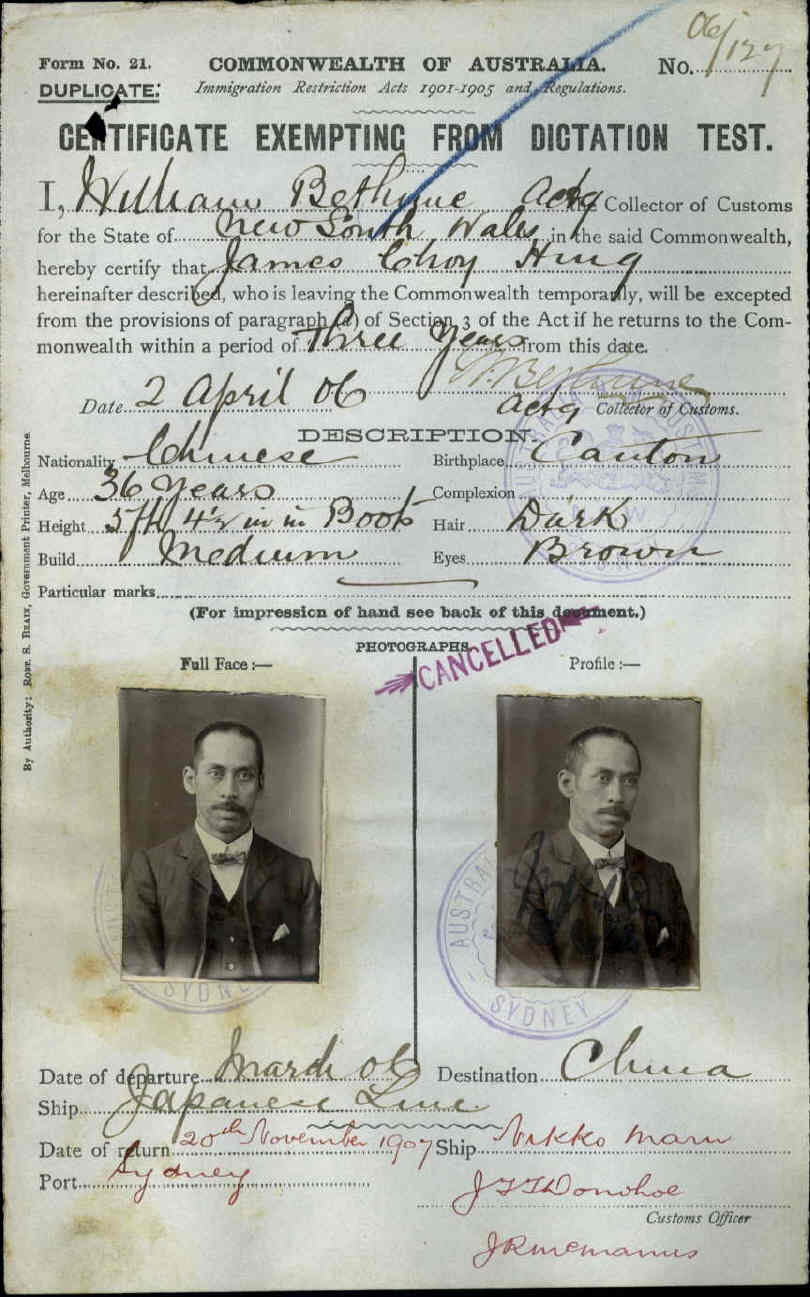
This is a letter exempting Sym Choon from the Immigration Restriction Act’s dictation test and authorising him to re-enter Australia after a visit overseas on 1921.
As the twentieth century progressed, the administration of the Dictation Test—and the wider machinery of the White Australia policy—became increasingly bureaucratic. For many Chinese Australians, particularly those of middle-class background who moved regularly between Australia and China, the system became something that could be navigated rather than feared, provided one engaged with it on its own terms. The immigration authorities themselves gradually shifted from the ad-hoc and discretionary practices of the early decades toward a more paper-oriented, rules-bound regime.
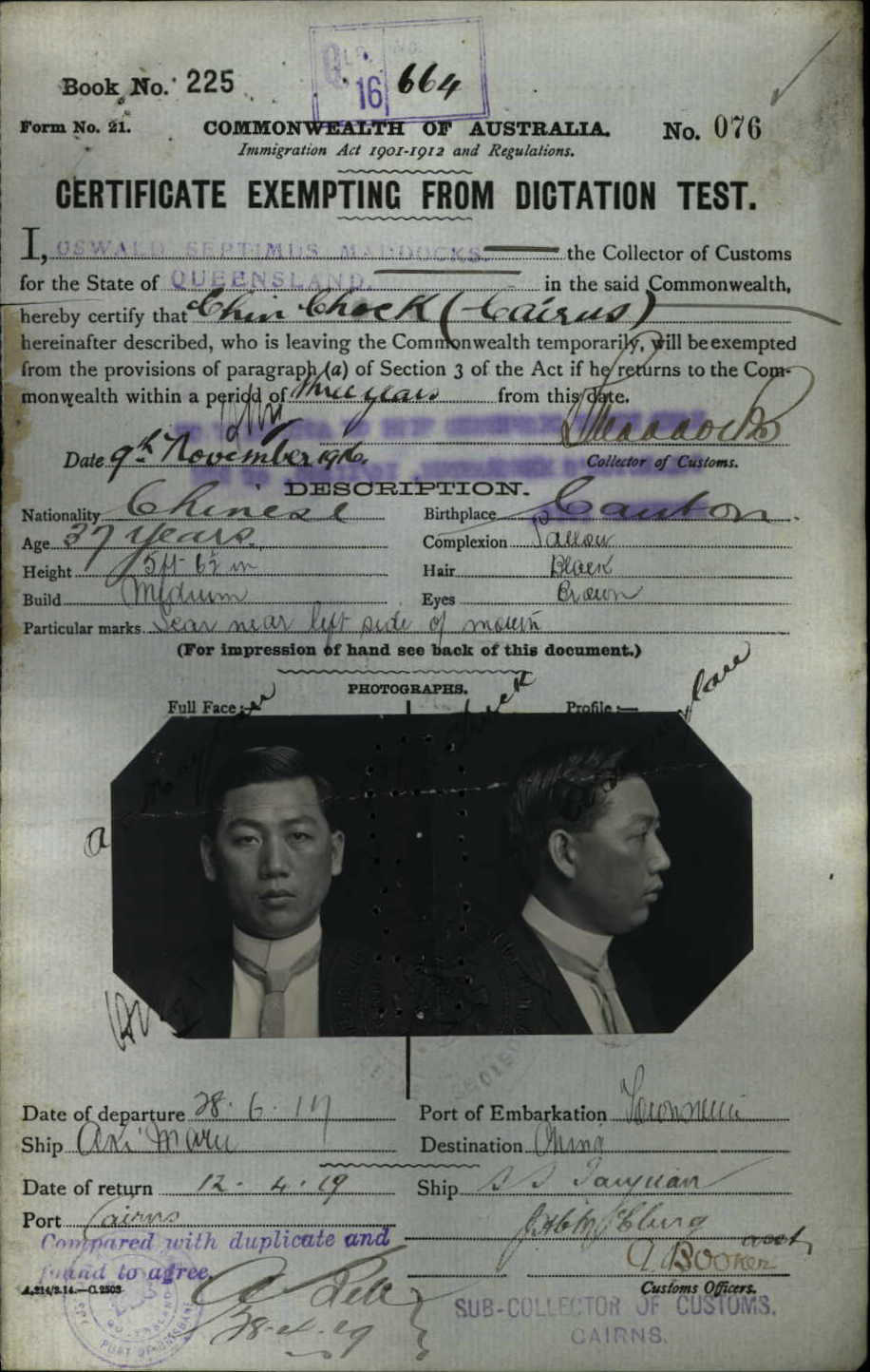
For these mobile, educated migrants, the key was to work within the bureaucracy: submit the correct forms, track expiry dates, and maintain correspondence with Customs or Immigration officials. A Certificate Exempting the Dictation Test (CEDT), once a fraught privilege, increasingly became a predictable administrative document. Even if a traveller departed suddenly before their certificate could be issued, or if a CEDT lapsed after its standard three-year validity, it was often possible to reapply and have a new certificate granted. This might involve letters back and forth, but the process itself was usually routine.
Yet these accommodations had limits. The system functioned more smoothly for those whom officials saw as of the “respectable class”. Those Chinese travellers who at least one customs officer described as belonging to the “vegetable class of Chinaman”, did not always receive the same treatment.