Condobolin
Date Published
: 干度布倫
: Town/small
: Central West (NSW)
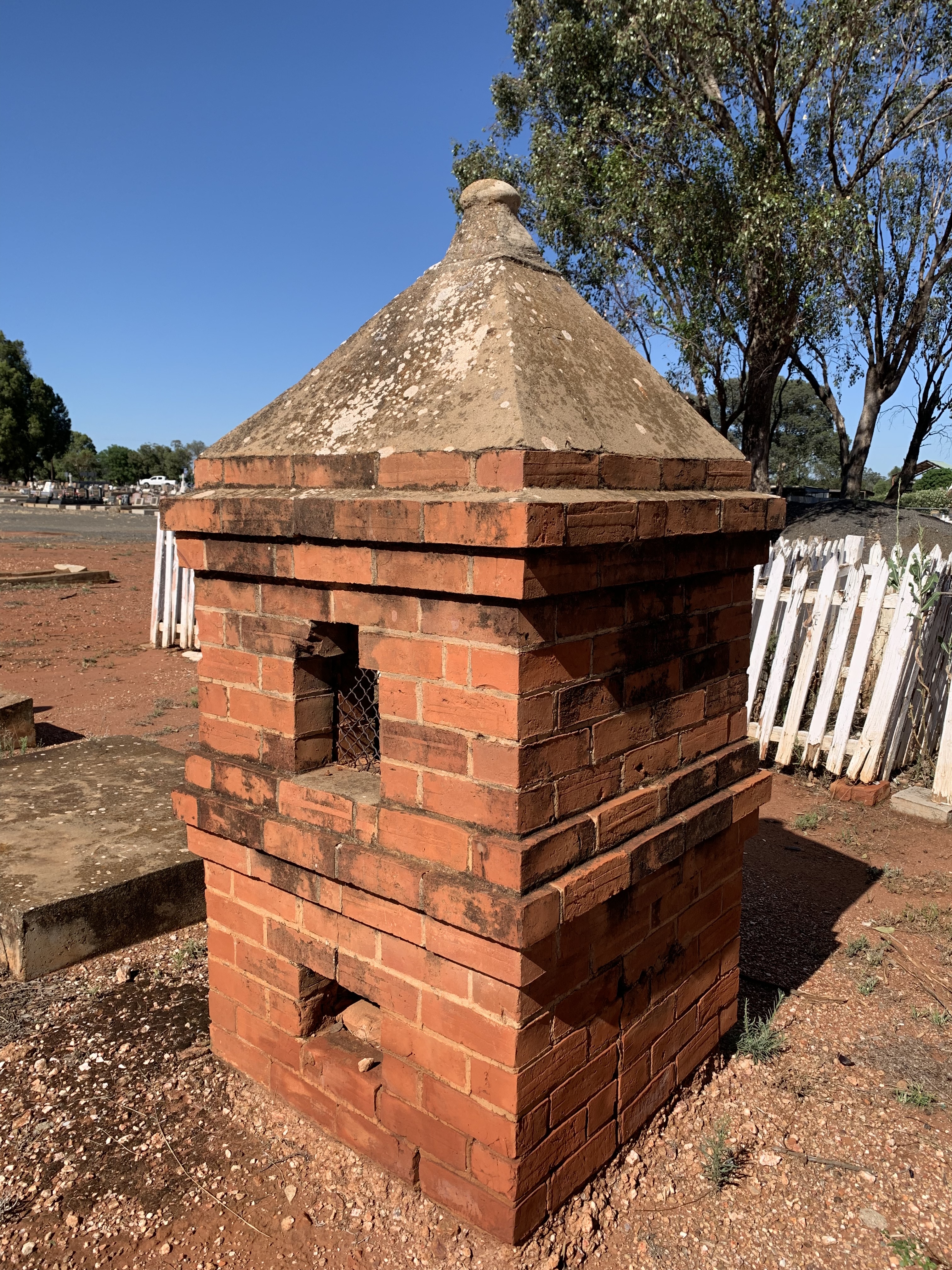
: Temples / Joss House, scrub cutting (bush clearing), burning towers
In 1988 Condobolin High School students conducted an oral history based bicententail project that helped to preserve the community memory of the significance of Chinese people in the history of Condobolin and its surrounding stations and communities.
Settlement and Industry (1870s–1900s)
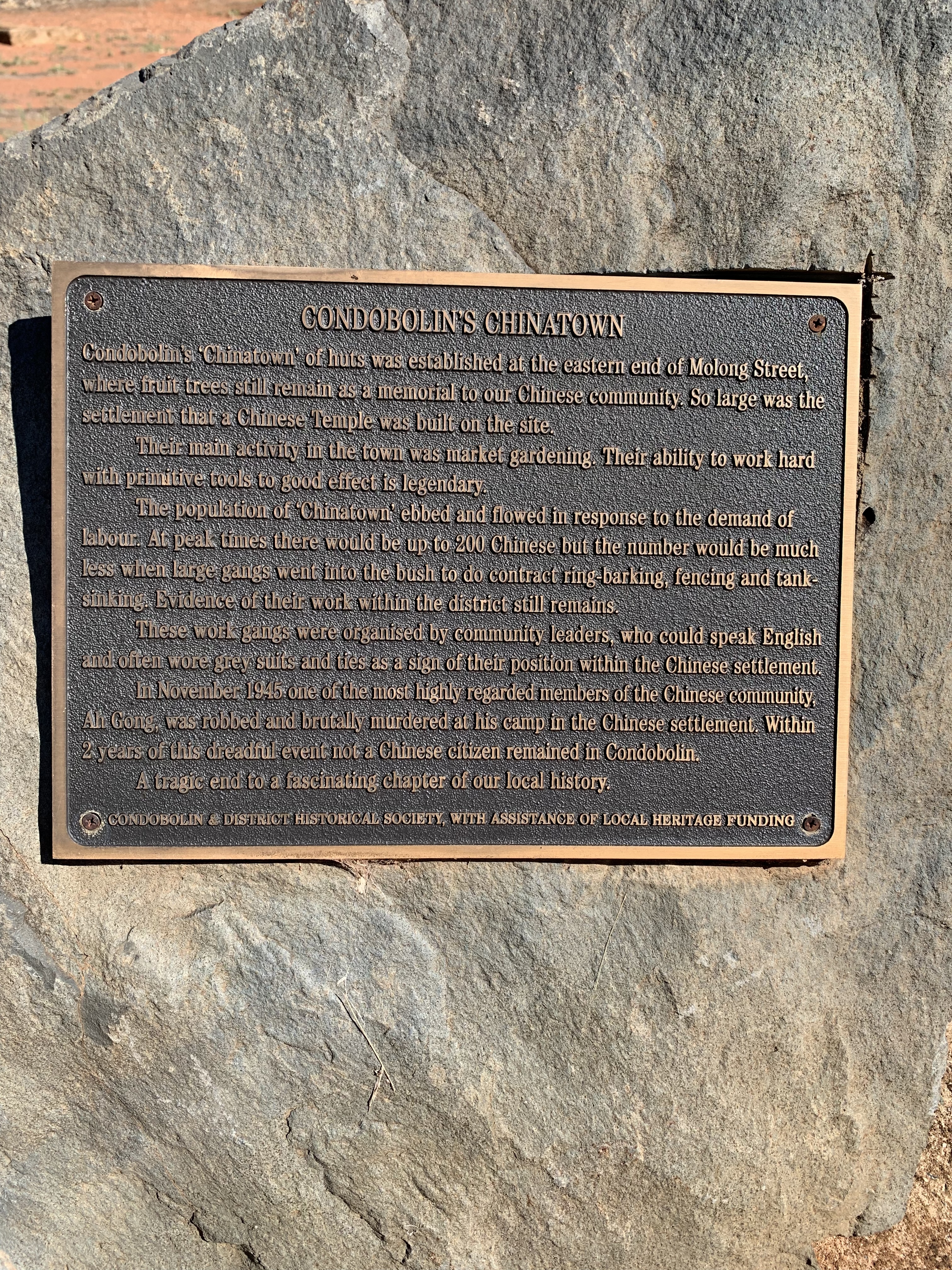
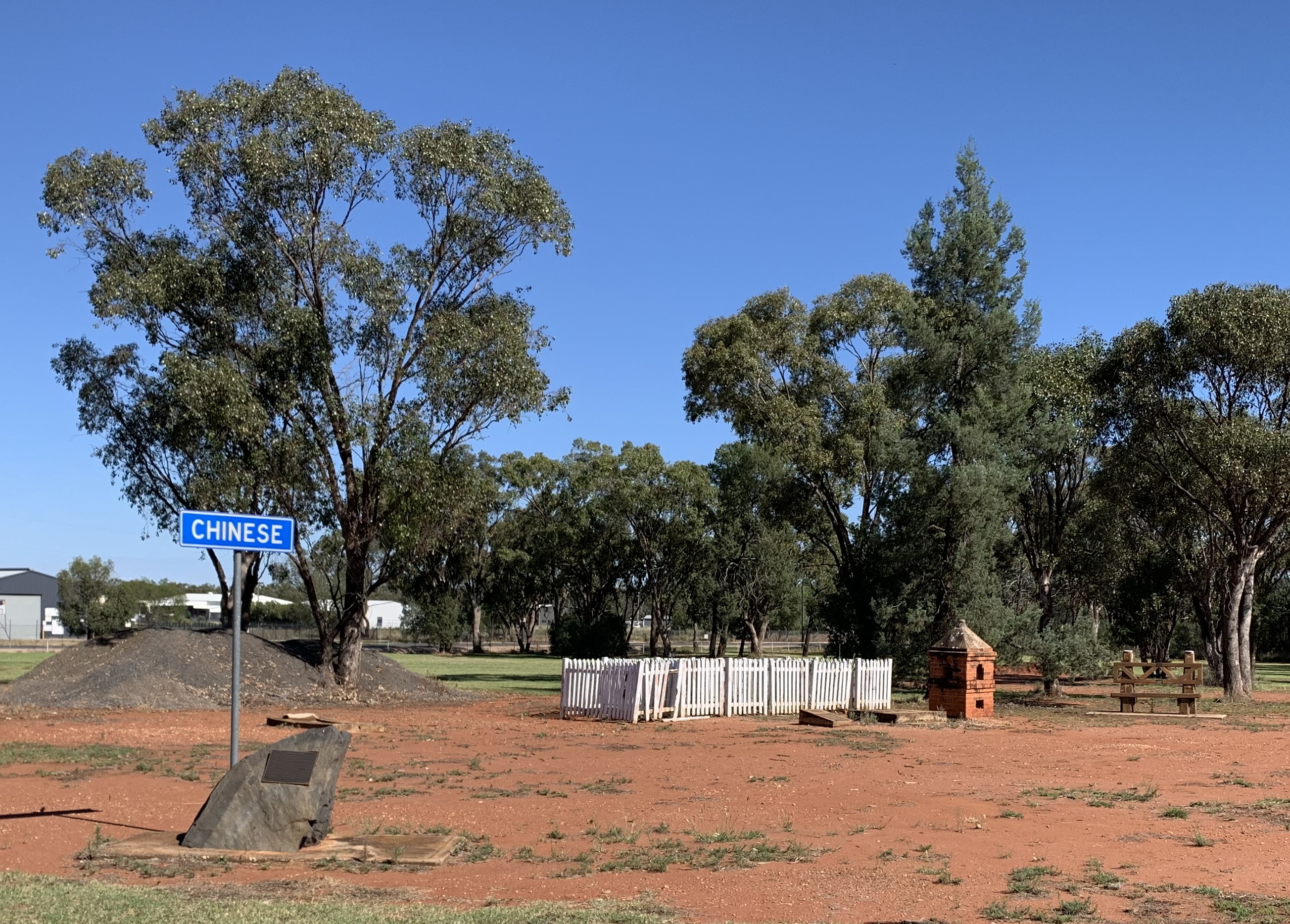
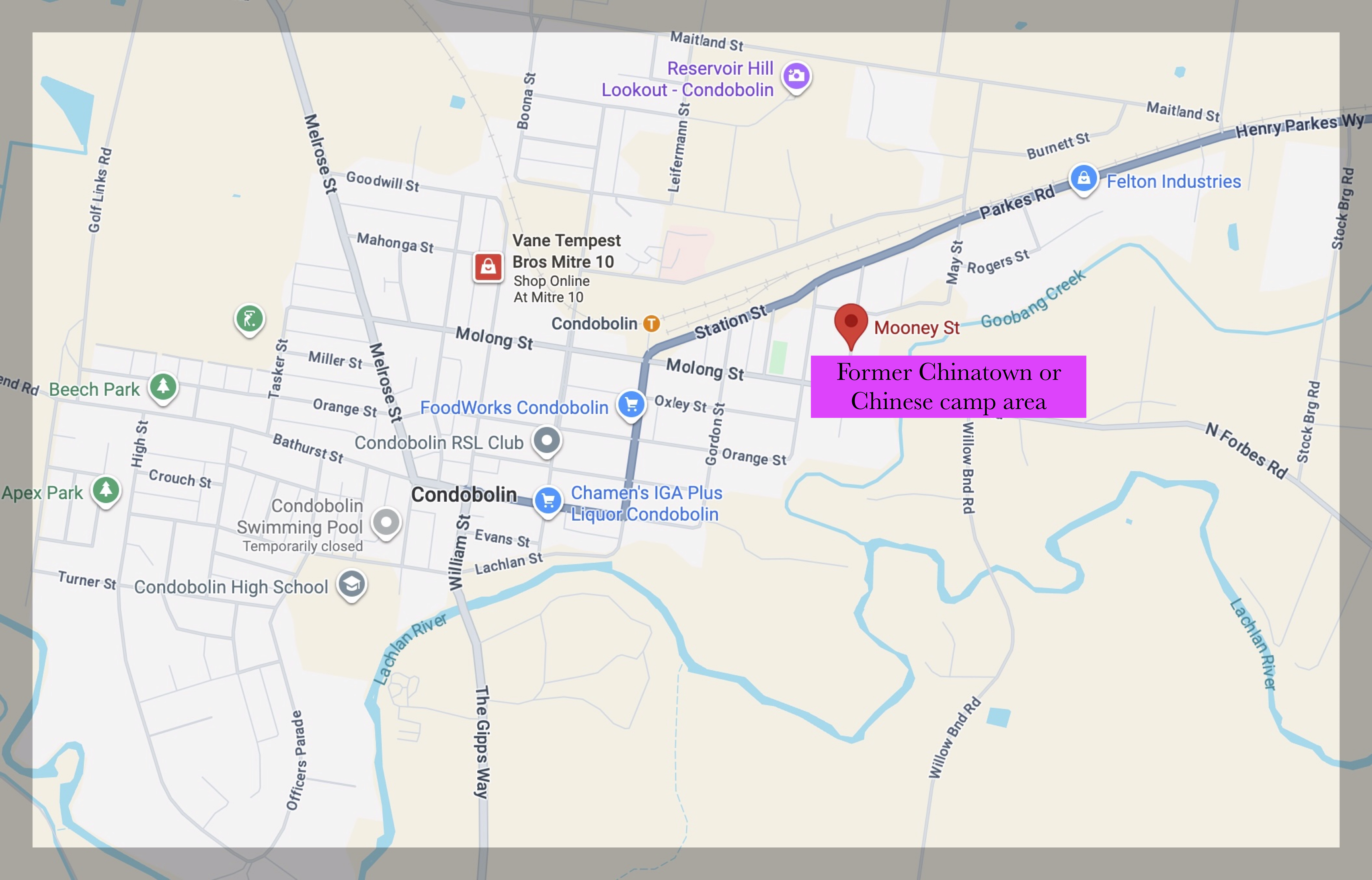
The first Chinese settlers arrived in Condobolin in the 1870s. Typically this is attributed the gold rush arrivals in other parts of New South Wales changing occupations as gold mining dwindled. While partly true, this assumption tends to underestimate the numbers who returned to their villages and the arrival of a second generation of people from these same villages in the Pearl River Delta to take up various occupations as rural Australia expanded in the post-gold rush era. Regardless of origin these workers established a "Chinatown" or what was then called a "camp" consisting of huts at the eastern end of Molong Street, near the Goobang Creek and Lachlan River.
The primary economic contributions of this community that may have been as high as 200 men included:
Market Gardening: Utilizing high-quality soil near "Chinamen's Bridge," they grew an array of vegetables and fruit trees (some of which, like fig and quince, survive today). Jackie Tik (aka Jack Tick) had a market garden on the bank of the river where the Condobolin High School now stands. Such gardeners would also hawke their produce to surrounding locales such as Trundle, Ungarie and Tullibigeal.
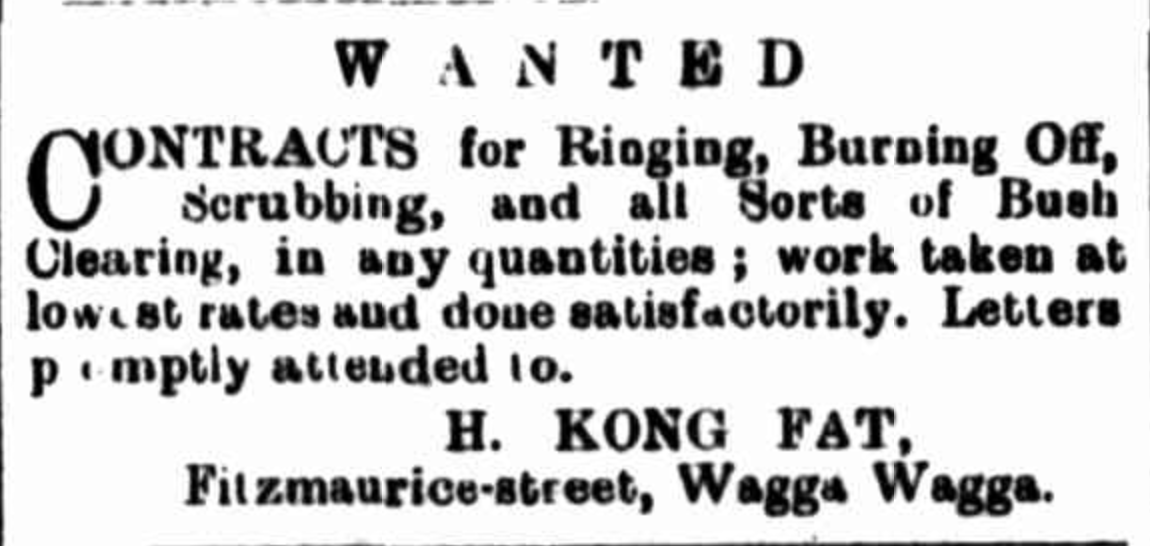
Contract Labor: Organized work gangs performed essential land-clearing tasks such as ring-barking, fencing, and "tank-sinking" (dam building) for local pastoral stations. This last is commonly reported and while plausible there is little direct evidence as these were often public works projects and Chinese men were usually barred from such work in NSW and other colonies.
Stores: A number of Chinese men also owned stores around town - George U Long, owned a grocery store on the town side of the Goobang Creek and Sam Yuk, also owned a store.
Leadership: These gangs were often led by influential figures like Sam Yook (who was also a partner in a skin buying firm - Lee Chong & Co) and Dan Kee (aka Tie Kee), who acted as agents, spoke better English, and wore professional attire (suits and ties) to reflect their status. Dan Kee also owned a boarding house for the workers he employed.
Social and Spiritual Life
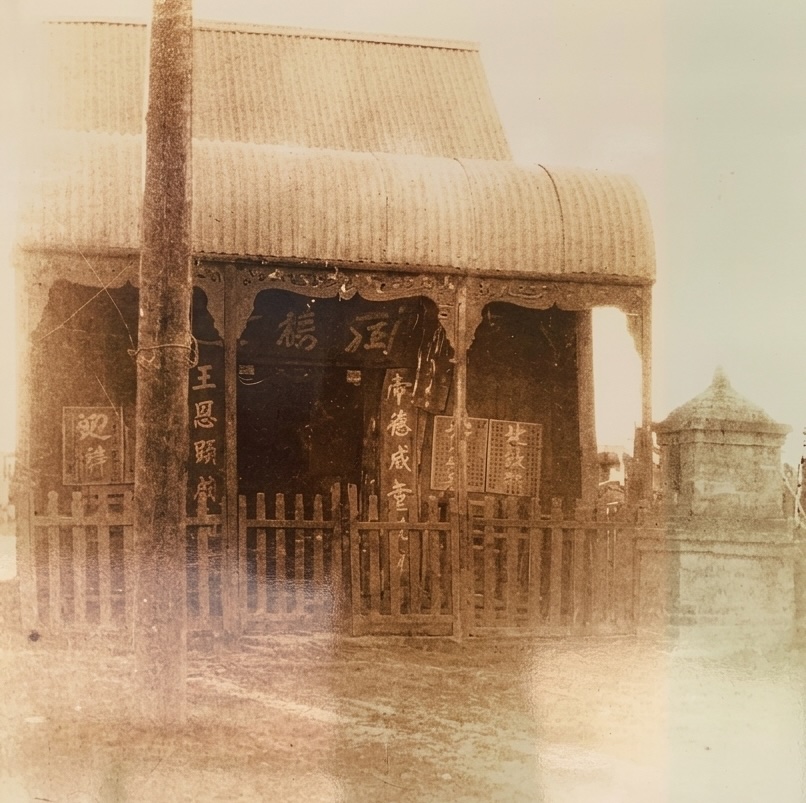
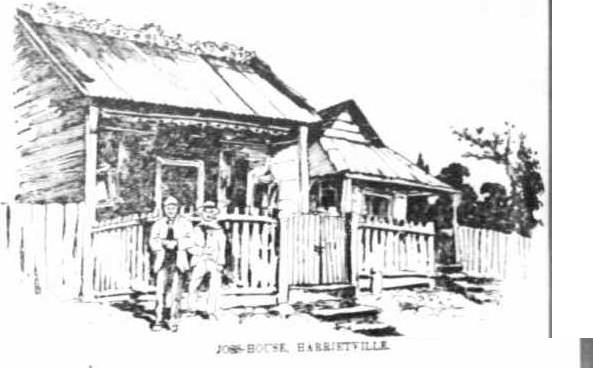
The community was large enough to support a Joss House (Chinese Temple). The original structure was destroyed by a fire in January 1902, an event that caused "a good deal of excitement" in the town. Despite the loss of valuable carvings, a second, more permanent temple was built shortly after. Social life also included traditional games like "Fantan," often played in secret cellars to avoid attracting the attention of robbers or authorities.
Notable Personalities
The community left a lasting impression on local residents, who recalled several individuals with affection:
"Bluejacket": A beloved vegetable vendor known for his blue denim overalls and his habit of marking credit in blue chalk on customers' gates. He eventually returned to China to die so his son could take his place in Australia.
Ah Gong (aka Ng Sha Gong): A respected market gardener known for his well-cared-for draught horse, which was so accustomed to its route that it would carry Ah Gong home while he slept on the wagon.
Jackie Tik (aka Jack Tick: One of the last residents to maintain traditional customs, such as wearing a pigtail, until the late 1940s.
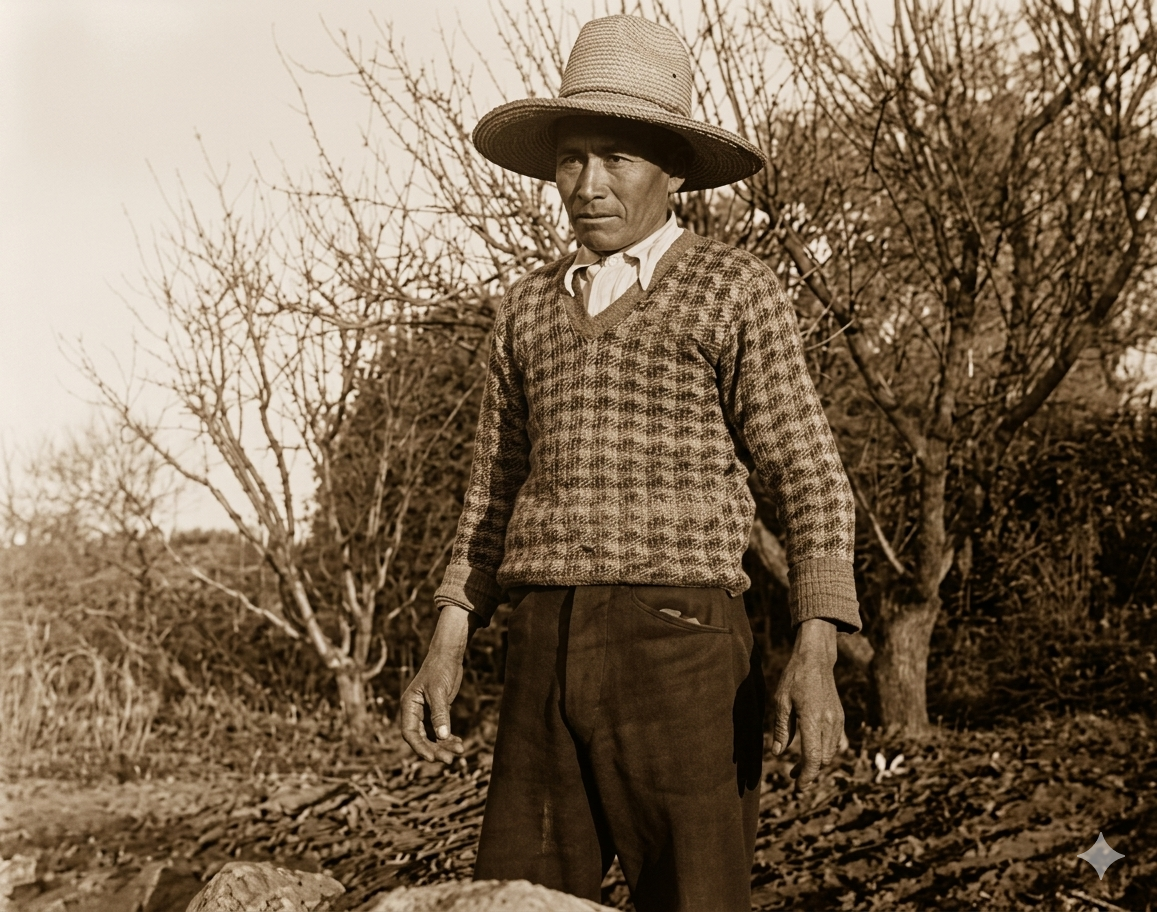
Jackie Tik (aka Jack Tick), market gardener
The Tragic End (1945–1947)
The long history of the Condobolin Chinese community ended abruptly following a violent crime. In November 1945, the elderly and highly regarded Ah Gong was brutally murdered and robbed in his camp by men associated with a travelling show.
The shock of this event is reported to have led to a rapid exodus and within two years of Ah Gong’s death, not a single Chinese person remained in Condobolin, marking a somber end to a foundational chapter of the district's history. Though it needs to be noted that the aging of the all male population, and changing economic conditions saw a similar reduction of the Chinese community in most NSW rural town.
Source: History of the Chinese in Condobolin, (Condobolin bicentennial project, 1988).
Donations
In a period when the local hospital was largely run and funded by the local community Chinese community donors were plentiful. Two list of donors provide many names as well as hint at a possible Condobolin branch of the Chinese Masonic Society.
1914 - Chinese Masonic Society mentioned - Lachlander and Condobolin and Western Districts Recorder, Wed 16 Sept 1914 Page 6 RED CROSS FUND
1919 - long list of Chinese names - hospital donations - Lachlander and Condobolin and Western Districts Recorder, Wed 5 Feb 1919 Page 4 Charitable Chinese
White Australia exceptionalism
At a time when the White Australia policy was at its height the Condobolin community rallied in support of one of its own - Lum Roy. In 1937 the well known Lum Roy was arrested as a prohibited immigrant - which he undoubtedly was, having illegally entered Australian in 1916. However, having worked for many years in Condobolin the community did not see this as adequate reason for his removal. After much lobbying Lum Roy was allowed to remain in Australia.