Walk, Northern Territory to Queensland
Date Published
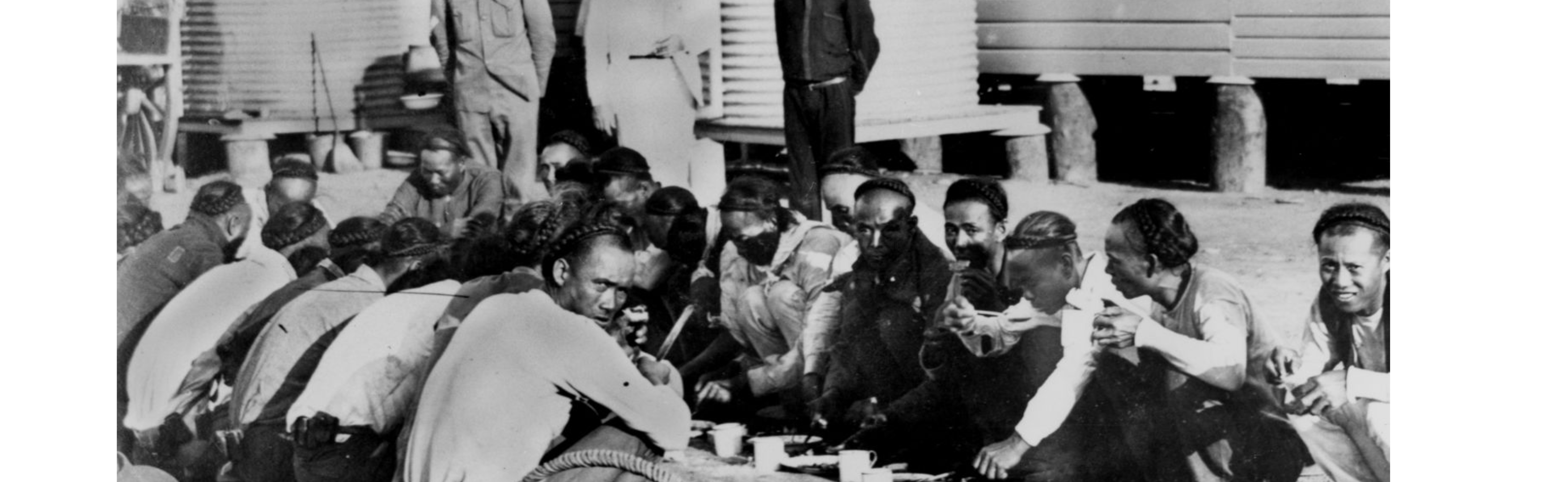
To avoid the Queensland poll tax many walked overland from Darwin.
"Discussion of lengthy overland travels by Chinese immigrants within colonial Australia have traditionally focused on the walk from Robe in South Australia to the Victorian goldfields, about 500 kilometres, between 1857 and 1862 involving around 16,500 migrants. Over a longer period (c. 1880–1901), small groups and individuals walked and occasionally rode from the Top End of the Northern Territory into North Queensland, about 1,500 kilometres. Travellers on this route faced diverse challenges including lack of water, Aboriginal attacks, ill-defined routes, lack of supplies and services, and the risk of arrest as illegal migrants as they crossed into Queensland. The northern trek has received little attention, despite being longer, in use for a greater period, and more hazardous than the Robe walk. Unlike their southern counterparts, only a few in the north used guides as they travelled through remote and unforgiving terrain. It is a migration that exemplifies the tenacity of both the Chinese and of those who were charged with enforcing the legislation of the times." (Grimwade, 2019:168)
"Chinese migrants in North Australia followed routes across nearly half the continent, which wound across expansive tropical savanna woodland and vast tracts of open grasslands; they were also dogged by a lack of supply points and the tropical climate. From Pine Creek, 220 kilometres south of Darwin, to the “border” towns of Burketown, Camooweal and Urandangi in Queensland, two main routes were favoured.4 The northerly route, the “Coast Road”, skirted the Gulf of Carpentaria while a more southerly route initially used the Overland Telegraph and then crossed the grasslands of the Barkly Tablelands (Figure 1). Once within Queensland, the routes diversified and became less precisely defined, with several family histories recounting travellers who ended up settling in Far North Queensland and some even heading as far as Sydney." (Grimwade, 2019:169)
Numbers who walked
Brisbane Courier, 30 July 1896, quotes Colonial Office figures: 1890: 1 / 1891: 11 / 1892: 46 / 1893: 3 / 1894: 26 / 1895: 20 / 1896: 38 (to June).
Many "Australian Chinese families recount incidents of their forebears illegally entering Queensland." "Intriguingly no informants have reported their forebears were arrested and imprisoned. Arguably this could be due to a desire to sanitise family traditions or, quite possibly, confirms that it was only an unfortunate few who were caught by Queensland police officers. Truth is elusive in this regard; records are sparse and, as noted earlier, names are either not recorded or incorrectly recorded. The stories etched in family traditions do, however, share the common themes of severe privation, risk and desperation." (Grimwade, 2019:185)
Confusion as to border restrictions post-Federation
See: Northern Territory Times and Gazette, Friday 14 March 1902, p.2 - THE CHINESE EXODUS.
See also:
Gordon Grimwade, ‘Tenacity in the Tropics: Chinese Overland Migration in Northern Australia During the Nineteenth Century’, Chinese Southern Diaspora Studies, Vol. 8, 2019, pp.168-189.