
Lunar / Chinese New Year
Date Published
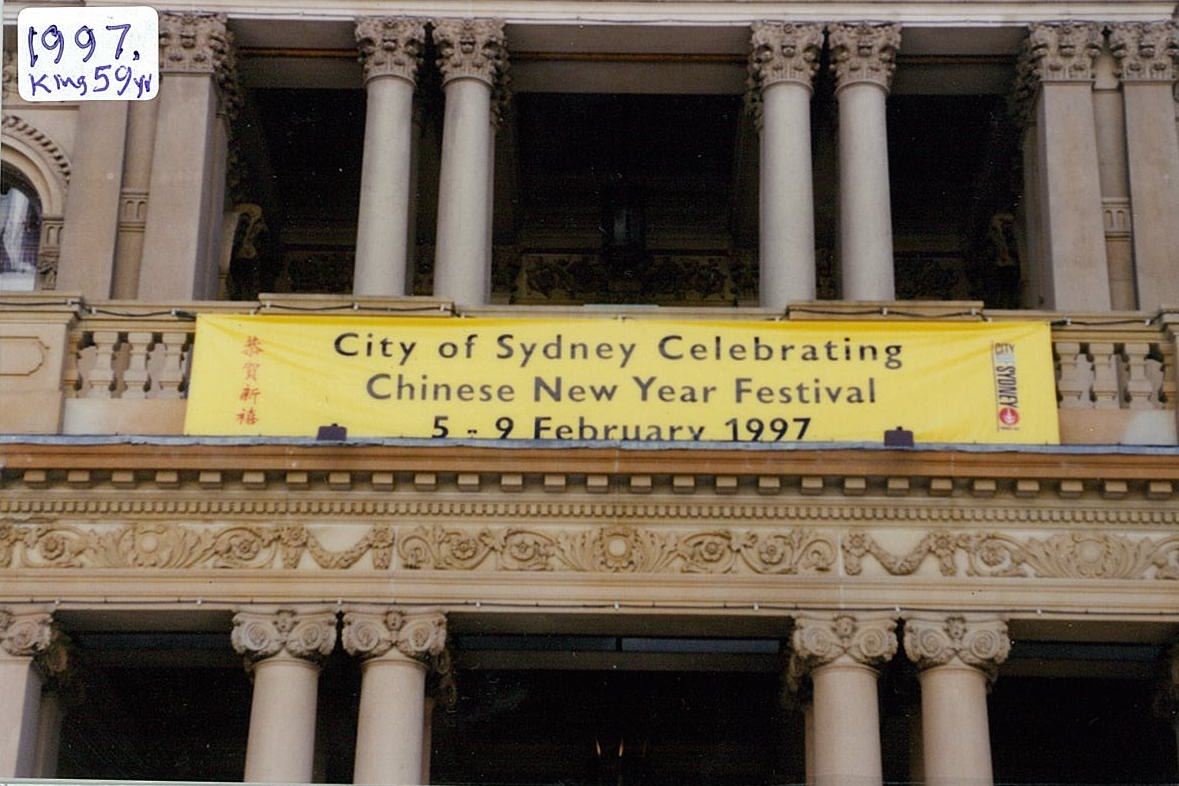
Chinese New Year / Luna New Year
The Lunar New Year—traditionally the most significant festival in Chinese culture—has long been celebrated in Australia. In the nineteenth and early twentieth centuries these celebrations were centred within Chinese communities and were commonly referred to by European Australians as “Chinese New Year.” Yet the festival was never entirely insular: in many towns, especially those with established joss houses, wider local participation was common. Visitors attended communal festivities involving roasted pigs, pig ovens, offerings, firecrackers, and temple ceremonies, making the event a visible and widely recognised feature of local life.
As the twentieth century progressed and Australia’s policies of racial restriction became more entrenched, celebrations of Chinese or Lunar New Year became increasingly confined to Chinese communities or families of Chinese heritage. Though the festival persisted, its public profile diminished, with only occasional engagement from the broader population.
This began to change in the 1980s. Sydney—followed by Melbourne—began to promote Chinese New Year as a public summer festival, making use of the warm season in the southern hemisphere to stage large outdoor events. At this stage the term “Chinese New Year” remained dominant, but as Australia’s multicultural landscape expanded and it became more widely recognised that Vietnamese, Korean, and other East and Southeast Asian communities also celebrated New Year according to the lunar calendar, the terminology gradually shifted to “Lunar New Year.” This was, of course, always the traditional term used by Chinese people themselves, but its adoption in Australia reflected an acknowledgement of the festival’s broader regional significance.
In this public reimagining, the festival also moved further away from its family-centred and ritual-oriented traditional roots. City-based Lunar New Year events increasingly became large-scale civic festivals—parades, markets, performances, and street celebrations—sometimes only loosely connected to traditional Chinese cultural practices. The result was a hybrid form: part cultural heritage, part multicultural branding, and part summertime public entertainment, reflecting broader shifts in how Australia represents, performs, and consumes Chinese and other cultural diversity.