Fan Tan
Date Published
Fan Tan (番攤) was a traditional Chinese gambling game widely played in Chinese camps and urban quarters in colonial Australia. It was a game of chance organised around a banker–player system and based on a simple numerical principle: counting in groups of four. Despite frequent condemnation by colonial observers, its operation was rule-bound, transparent, and easily understood by participants.
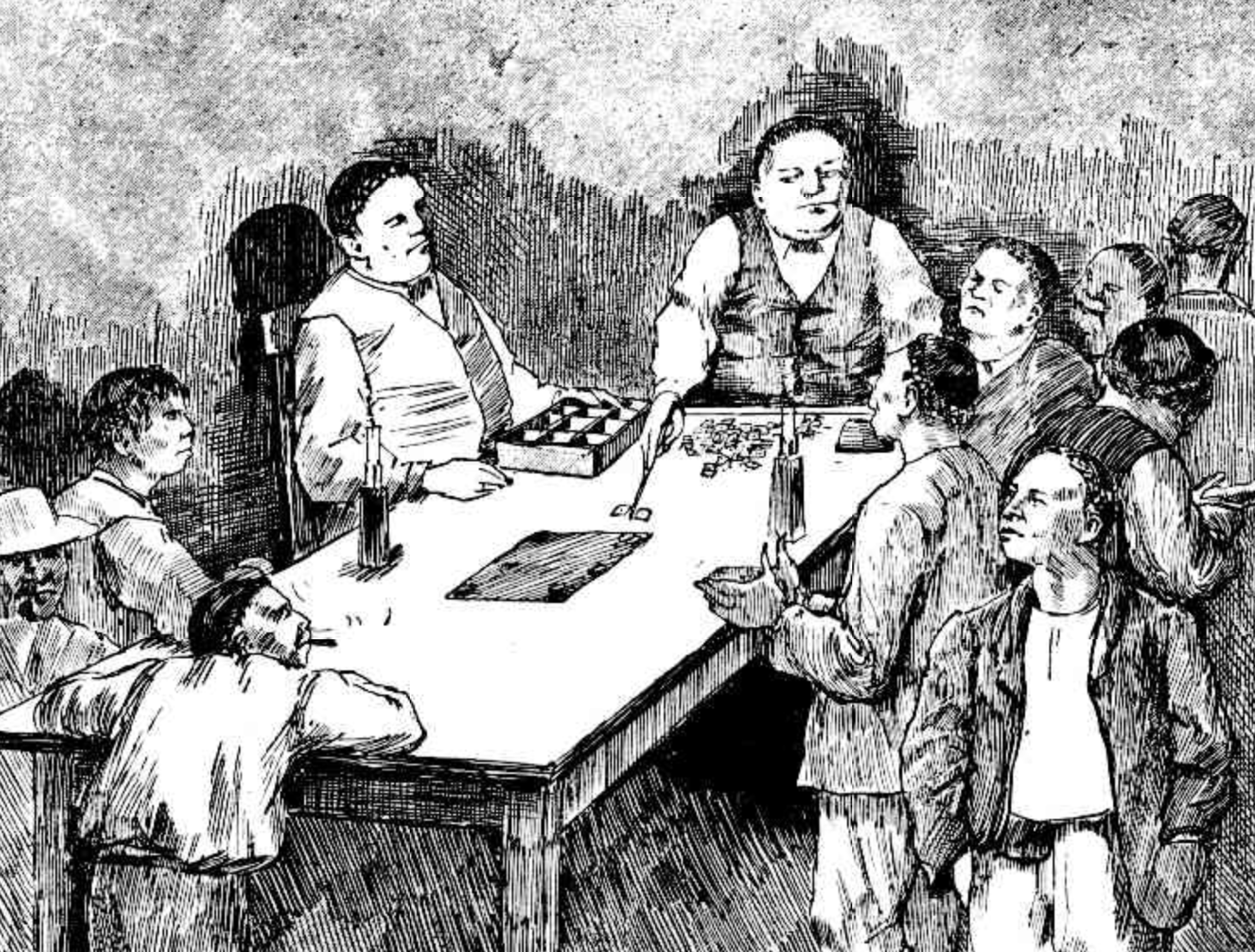
Games of Fan Tan typically took place in crowded interior rooms, often after work hours, where players gathered closely around a rectangular table. The table was fitted with a square lead plate that served as the betting surface and was conceptually divided into four sides and four corners. Two key figures managed the game. The croupier handled and counted the coins, while the banker acted as the house, paying out winnings and collecting losses.
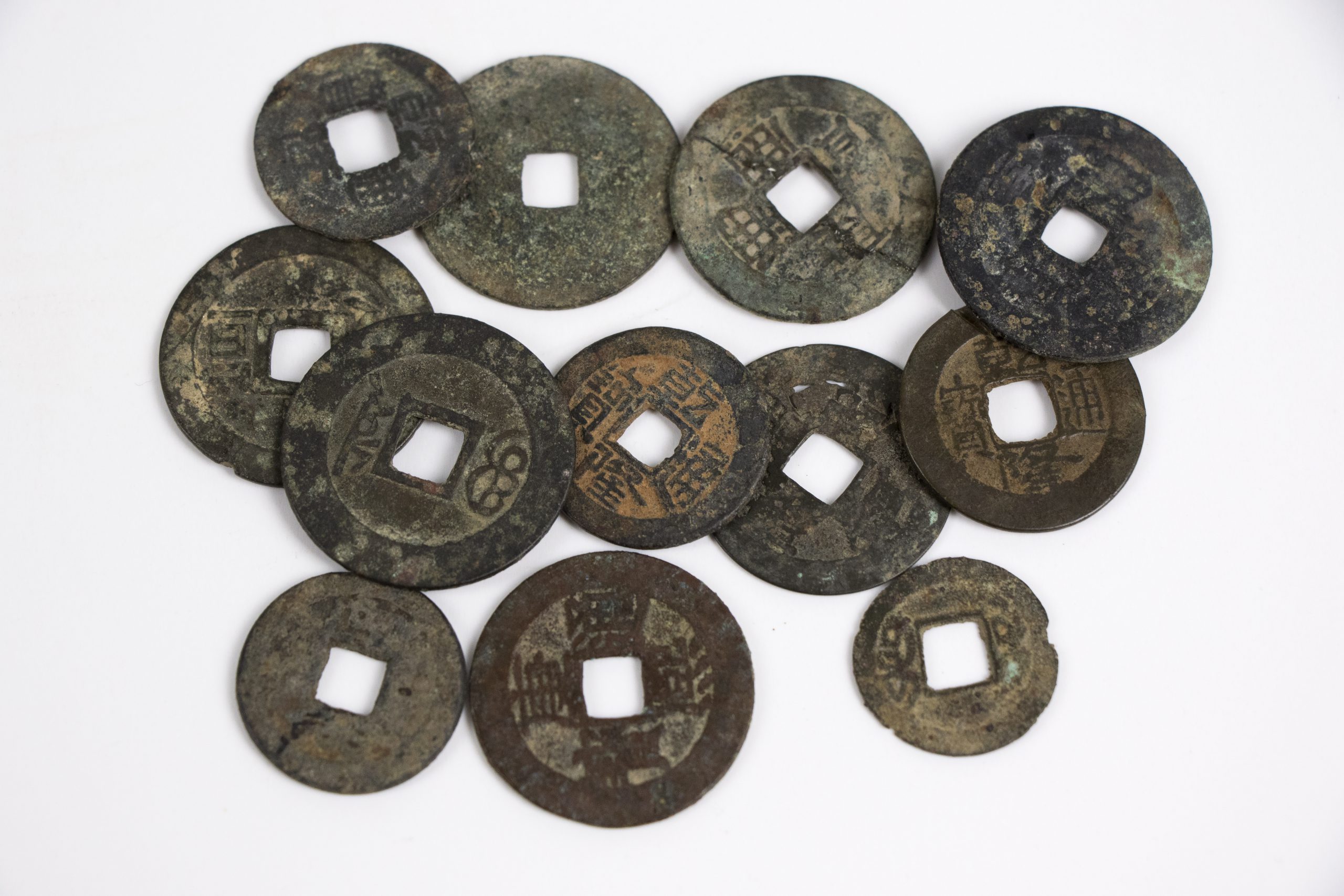
The equipment required was minimal. The croupier used traditional Chinese copper coins, known as "cash", as counters, along with a small cup to conceal part of the pile during counting. At the start of a round, a handful of coins was placed on the table and partially covered. The coins were then counted back into the original heap in groups of four. When counting was complete, one, two, three, or four coins remained. This remainder determined the outcome of the game.
Although only four final results were possible, the betting system allowed for a wide range of wagers. Players could bet on a single number by placing their stake on one of the four sides of the square, each side corresponding to a possible remainder. These bets carried higher payouts because the chance of success was lower. Alternatively, players could bet on corners between two sides, commonly referred to in English accounts by phonetic renderings such as “yit-ga,” which covered two outcomes and therefore offered more balanced odds. More complex intermediate bets allowed for partial wins or the return of stakes under certain conditions, further moderating risk.
The banker retained a small commission on all winnings, described in the Deniliquin account as one penny in every shilling won. This commission ensured a consistent house advantage, even though individual bets appeared close to even odds. While Fan Tan was fundamentally a game of chance, experienced players were often adept at estimating how many coins would remain long before the count was finished, and close attention was paid to the croupier’s handling of the coins. Cheating was considered uncommon but possible if the count was not carefully observed, particularly in games involving larger sums.
Within the Chinese camp, Fan Tan functioned as a regular and socially significant form of recreation. The Deniliquin account emphasises that it was played daily and regarded as an expected part of communal life rather than an occasional indulgence. Its importance is illustrated by the writer’s own analogy, which compares the game’s place in Chinese leisure culture to that of a daily meal in British life. In this sense, Fan Tan was not merely gambling but a shared social practice that combined chance, conversation, and routine.
Source: The Pastoral Times, Saturday 20 May 1882, p.3.