Boards
Date Published
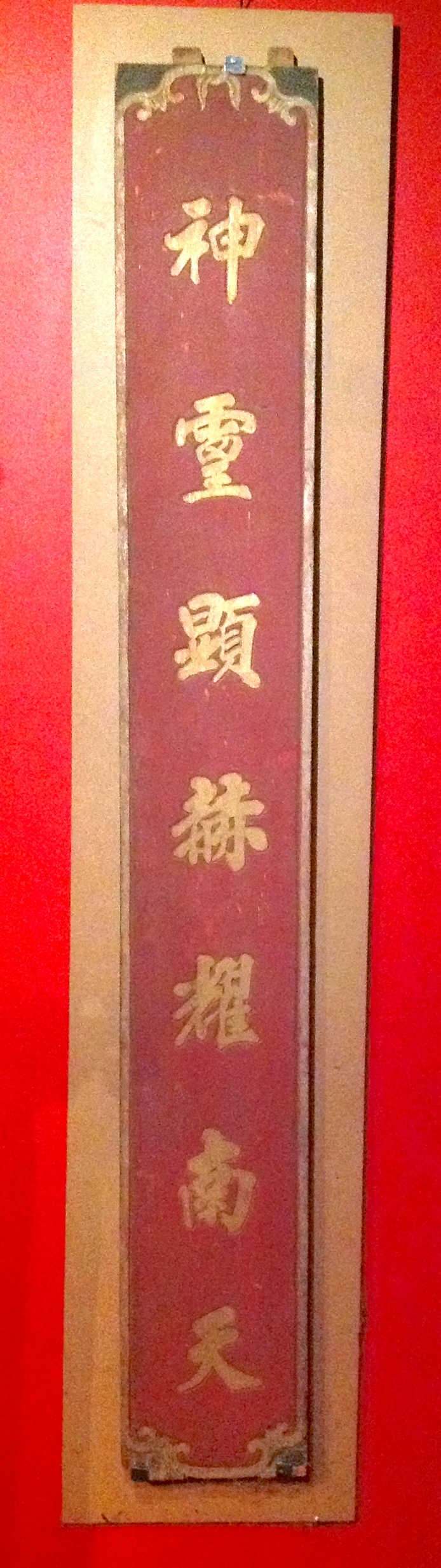
Wooden boards with big character inscriptions.
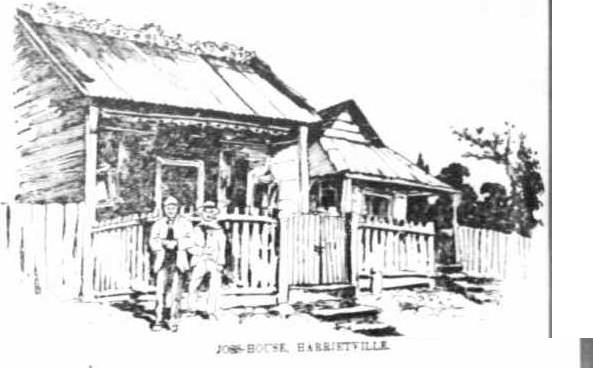
It is a strong tradition in Chinese culture to prominently display written expressions with the meaning and the calligraphic style both of importance. The most common examples of this are the various large wooden boards that were placed in Joss Houses, many of which have survived their original homes. Such boards, along with other temple equipment such a bells, were purchased or commissioned in China, usually Foshan in the Pearl River Delta.
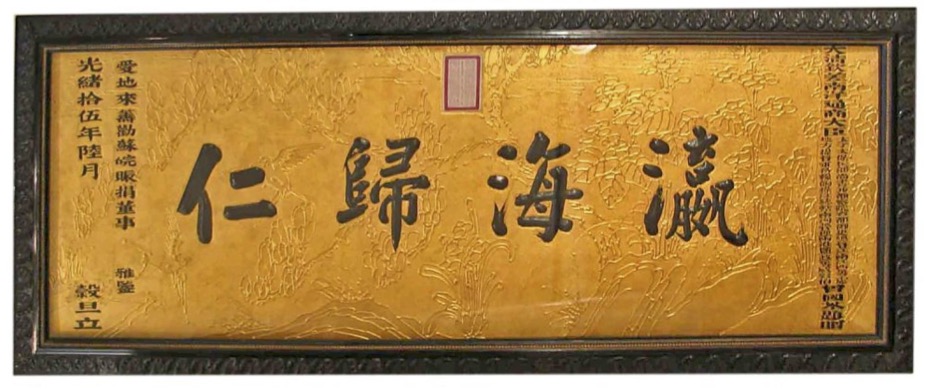
These temples usually had a name board fixed above the entrance. Inside others would be displayed. Such boards were often donated and the names of the donors might also be written in smaller characters, with the most prominent characters used for the temple name or the thought being expressed. The calligraphy was also important and often a prominent person, know for their excellence of style, would be asked to provide that copy. (See Finch and Williams, forthcoming)
In addition to temples such large calligraphy boards were also used for store names and in Masonic Societies and other societies. However perhaps the most interesting of these boards in Australia is one gifted in 1889 to the City of Adelaide from an Imperial Minister.