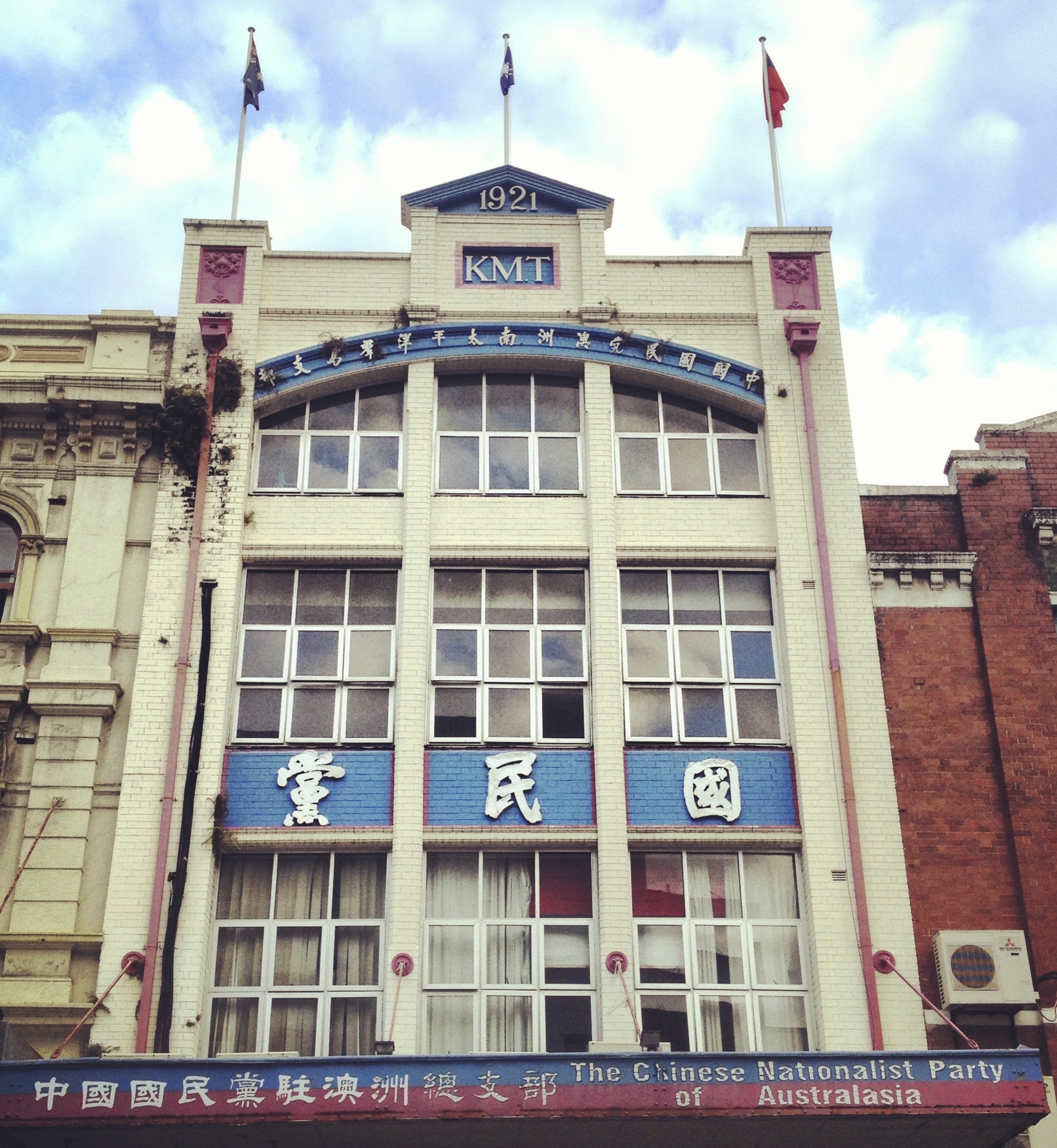
Kuomintang (KMT / Nationalist Party) building Sydney
Date Published
: building (existing), politics, China government, Kuomintang / KMT / Nationalist Party
: Sydney
: Sydney
: 1920
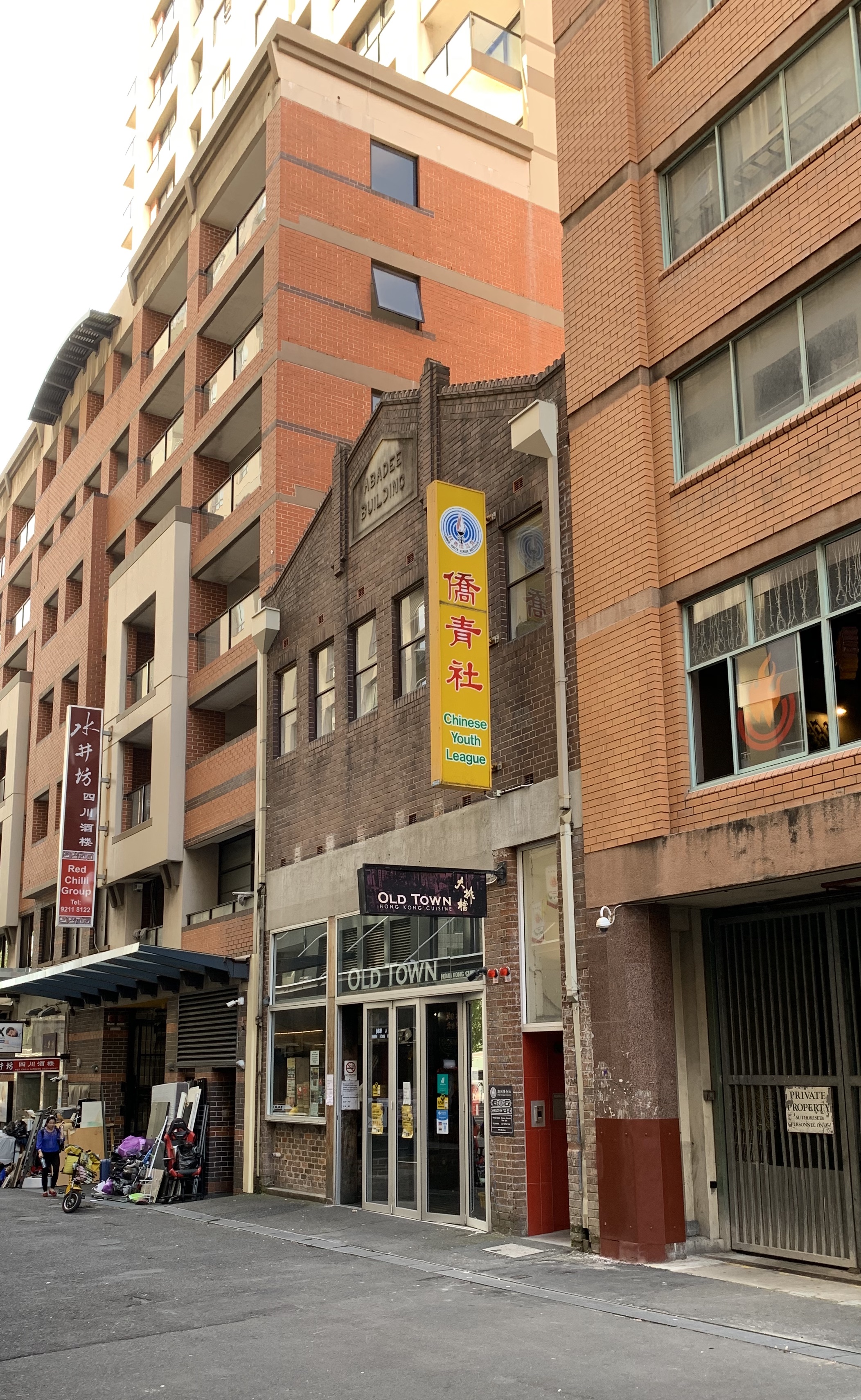
Kuomintang (KMT) / Nationalist Party headquarters building, 75-77 Ultimo Road, Sydney.
Nationalist Party Building, Sydney
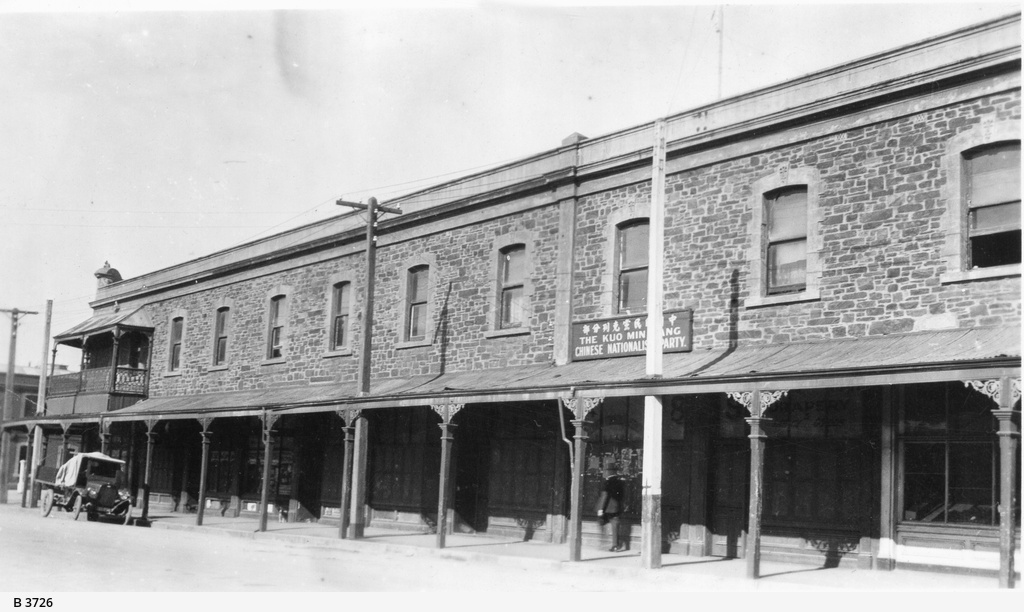
This building in the heart of Sydney was once the centre of both political and cultural life for generations of Chinese Australians. Now largely the preserve of elderly Taiwan connected people, the Kuomintang (國民黨) or Nationalist Party or KMT headquarters illustrates how changeable history, especially political history, can be.
The KMT as a political party grew out of the revolutionary movement headed by Sun Yat-sen that helped overthrow the Qing Imperial government in 1911. The movement and later party was strongly supported by the mainly Cantonese speaking peoples of southern China who lived and worked in Australia and other locations around the Pacific and Southeast Asia. Backed by the KMT and donations from these Chinese overseas, China was reunited in the 1920s after its warlord period under a KMT dominated government. The Japanese invasion in the 1930s, followed by the victory of the Chinese Communist Party in the subsequent civil war, saw KMT rule limited to the island of Taiwan after 1949 where it is a now democratic political party currently in opposition.
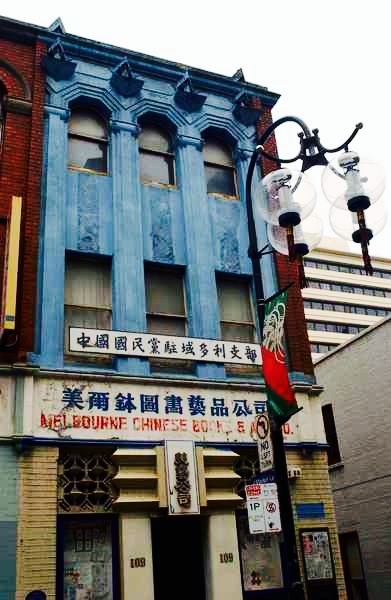
What did all this mean for Australia? Enthusiasm for the new republican government after 1911 and support for then largely Canton based KMT saw branches establish all around Australia and the Pacific. In both Sydney and Melbourne party headquarters were established. That in Sydney saw a purpose-built building erected in 1921, while in Melbourne an already existing building was given a new façade designed by Walter Burley Griffin around the same time.
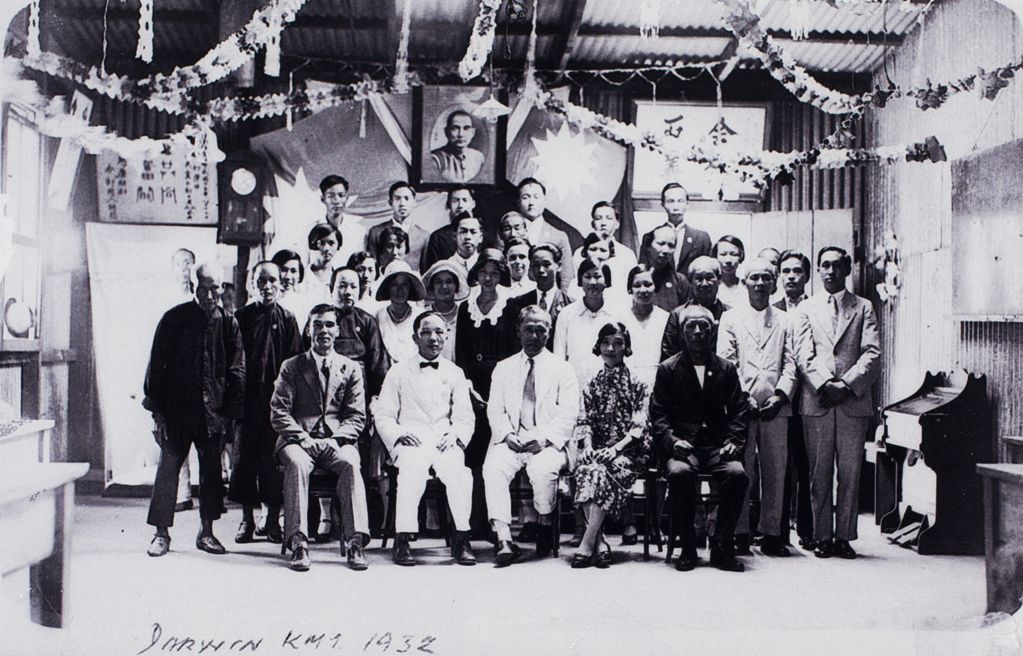
These buildings became the focus not only of Chinese nationalist politics but of social and cultural life for many Chinese Australians in the 1920s through to the 1950s. Plays, dances, films, and languages classes were all hosted in these KMT buildings. In the early period enthusiasm for the new China was key. Though political differences, now often forgotten, did exist, as one report of a ‘K.M.T. basher’ in the 1930s attests:
‘He has assaulted by means of a knuckle duster, other Chinese who held opposite political views to those of the Kuo Ming Tang.’
National Australian of Archives (NSW), SP1122/1; C33/7398, Harry Chun Fook, report, Investigating Officer to Boarding Inspector, 19 September 1933.
Nevertheless, in the 1930s and 1940s greater unity was achieved as fundraising and support for a China under threat from Japan became imperative. The KMT and their headquarters buildings playing a major role in the anti-Japanese movement. However, this unity within the Chinese Australian community was short lived and the withdrawal of the KMT government of China to Taiwan split those that instead supported the new government of China. Cold war tensions and Australian government suspicions making this community division worse.
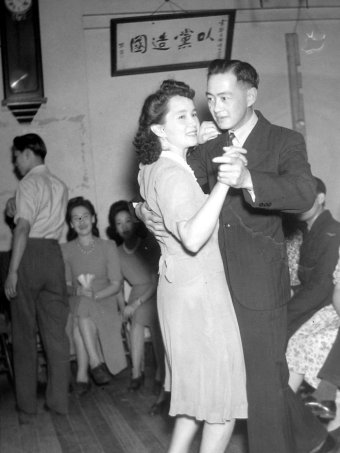
Social activities were as important as political
Gradually, as Cold War tensions eased and especially after Australia dropped its recognition of the KMT on Taiwan’s pretensions to rule China, the KMT headquarters lost relevance. Today they are the preserve of elderly (mainly Mandarin rather than Cantonese speakers) with the ground floors rented out to commercial businesses while upstairs all is quiet. Though the Sydney KMT’s top floor does house a small but significant museum devoted to the KMT’s history.
See also:
Unlocking the History of the Australasian Kuo Min Tang 1911–2013 by Judith Brett & Mei-Fen Kuo (Australian Scholarly Publishing 2013)
The building also hosts a museum focused on the history of the KMT in Australia.