Burning tower, Avoca
Date Published

: burning towers, cemetery sections, Chinese
: Central Goldfields (Vic)
: Avoca
: 1880 to 2026
Burning tower, Avoca
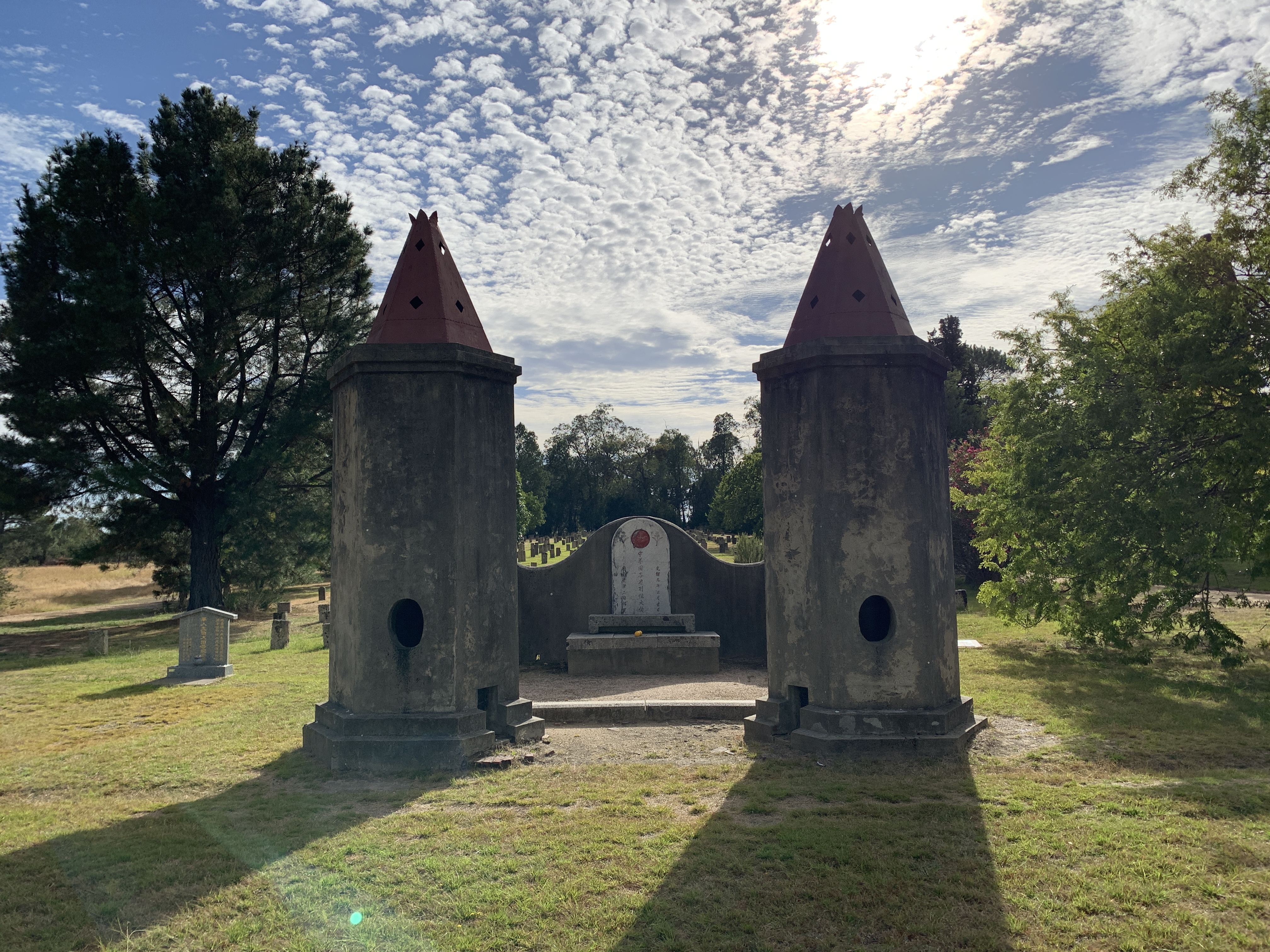
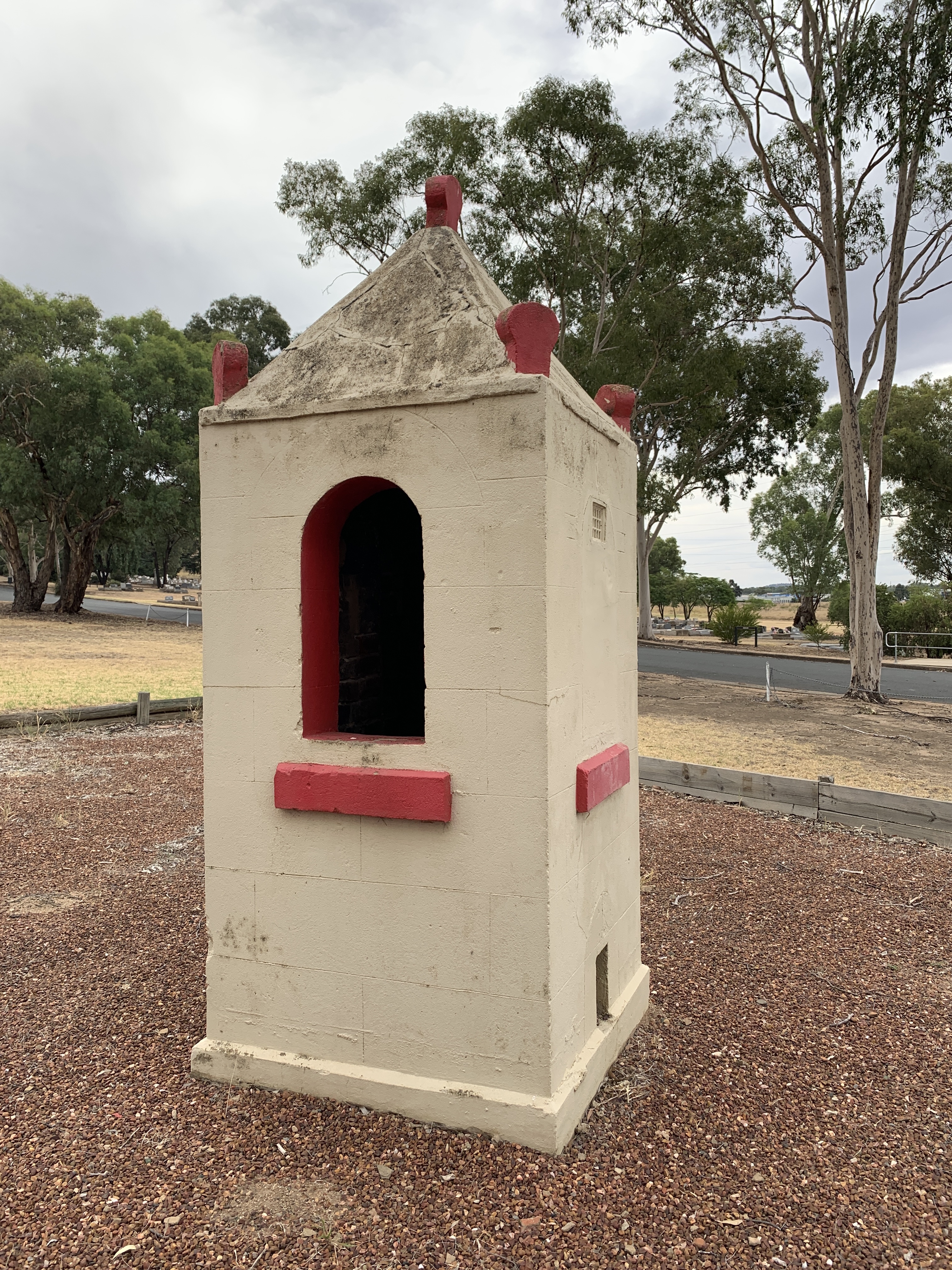
The burning tower at Avoca is one of the few for which we have a date of construction - 1880 - and a direct line between a fire at the cemetery and an order from a local magistrate that such a method be constructed.
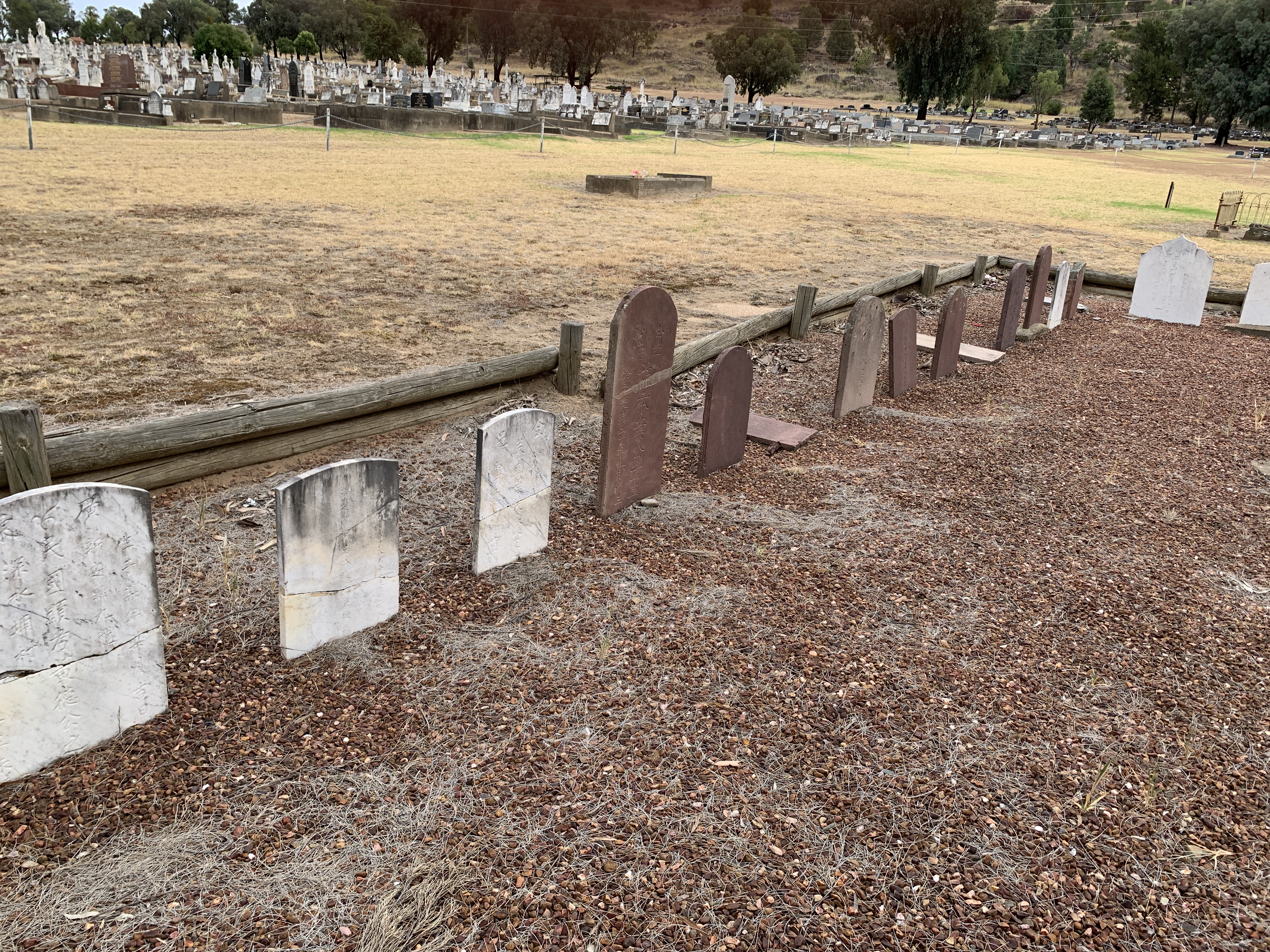
The practice adopted by Chinamen of performing religious rites and ceremonies over the graves of their dead countrymen nearly caused some damage in the Avoca cemetery on Saturday. The Chinamen had come prepared with a good supply of food and drink to sustain the souls of the dear departed, and in the course of the ceremonies had lighted a fire, candles, &c. Probably owing to the high wind the grass caught .fire and spread away rapidly in the direction of the quarters occupied by the Europeans' graves, and it seemed likely that the whole cemetery would be over-run with the fire, in which case much damage would have been done to tombstones, railings, and plants. Fortunately, however, Mr Buhlert and others, with two of the police, saw the smoke and by their exertions the fire was at last extinguished. Most of the Chinamen present at once made off without trying to put out the fire, but one of them, Ah Cow, showed a better spirit and worked manfully in assisting the Europeans. This man afterwards obtained his reward by being arrested on the charge of having lighted the fire, while his less active but equally guilty countrymen made good their escape. After remaining in the lock-up till Monday morning Ah Cow was fined £1 and 10s 6d costs, the amount being subscribed by his friends in the court. The presiding magistrate stated that he had power to fine the accused £100 for the offence, but the trustees did not press for a heavy penalty, and Constable Shanklin, who prosecuted, spoke favorably of the prisoner's exertions to subdue the fire. The Chinamen present in the court, through their interpreter, promised to be more careful in the use of fire for the future.
As a result the following year the burning tower was erected. While it is described as being at the direction of a local magistrate it is likely that the actual idea of the burning tower was suggested as a solution by the Chinese community as these tower are common in China, although more commonly associated with temples than with cemeteries.
To the Editor of the Avoca Mail
Sir, — I observe in the last issue of your contemporary an article dealing with what is termed " The Chinese difficulty in a new shape," the said difficulty being apparently a " joss-stick oven" recently erected in our cemetery. I quite agree with the writer that the " horrid red brick abomination" is no ornament to the burial ground, according to outer barbarian notions, but it must not be forgotten that it was chiefly built for utility, and by the express orders of the local magistrate to prevent the ignition of the grass at the Chinese burial ceremonies. The Chinese deserve credit for having obeyed the instructions of the court, and it appears to me that they have taken some trouble to make their " joss-stick oven" as ornamental as their ideas of the beautiful in art would permit them to do. If anyone doubts this let them inspect the structure. It will then be seen that the brick-work has been raised something after the fashion of a pedestal, and perhaps from designs supplied by some of the monuments existing in the cemetery. Then the roof has evidently been a subject of much study, and when the architect finally adopted the plan of the familiar pagodas of his native land he no doubt thought the barbarians would be lost in admiration of its gracefulness, and straightway " take a wrinkle" from it for use in their own buildings. But this was not enough. The brick work had to be further improved with a coat of red coloring, the joints were pricked out with white, and finally the roof was painted with graceful curves, which have placed Hogarth's " line of beauty" altogether in the shade. Now, sir, although the effect may not be all we barbarians desire, some allowance should be made for the evident intention to please, and it may be suggested that if it does not please us the builders should have been favored with our ideas on the subject before the structure was commenced. There is another aspect of the question, however, which is deserving of consideration. The Chinese have had a portion of the cemetery devoted to their use, and they may fancy that they have some sort of proprietorship in it, and some right to do as they please there while they hurt no one else. They do not trespass on the European part of the cemetery, and Europeans have no business to go into their part. If the writer for your contemporary will remember this and act upon it he will be able to keep his fingers out of the pork fat which he so much dislikes. It strikes me that we Britishers have a good many cemeteries in China and other foreign countries, and we have a way of doing as we like in them ; let us then afford John Chinaman the same privilege, and while he takes due precautions against fire and keeps his pagodas and pork fat on the ground set apart for him he should not be interfered with.
I am, &c.,
Q.Z.

Burning tower, Avoca
The credit for discovering this interesting information belongs to Anne Young of the Avoca and District Historical Society.
See also: Tending to graves in Avoca