Community participation
Date Published
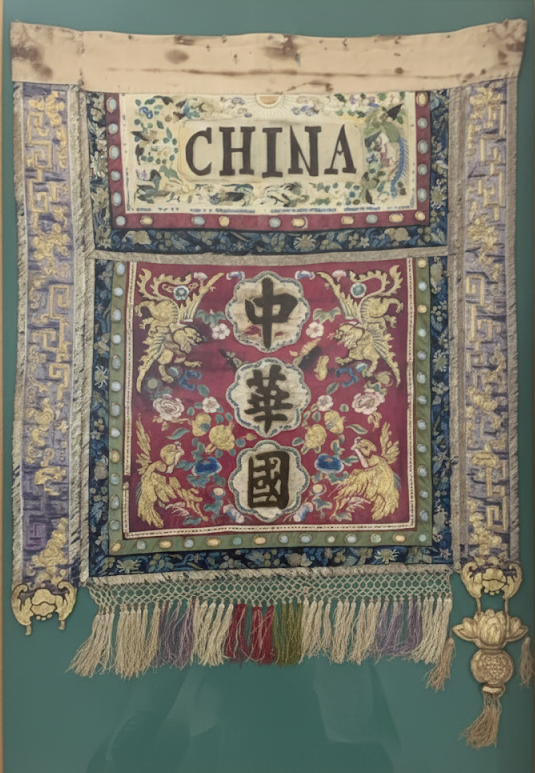
It was not uncommon for the Chinese community to participate in community events, often so as to add an exotic element.
Chinese people living in Australia were not as isolated from mainstream society as many older, racially biased or victim-centred narratives suggest. In fact, Chinese communities were often active participants in local civic life, particularly through philanthropy and public celebrations.
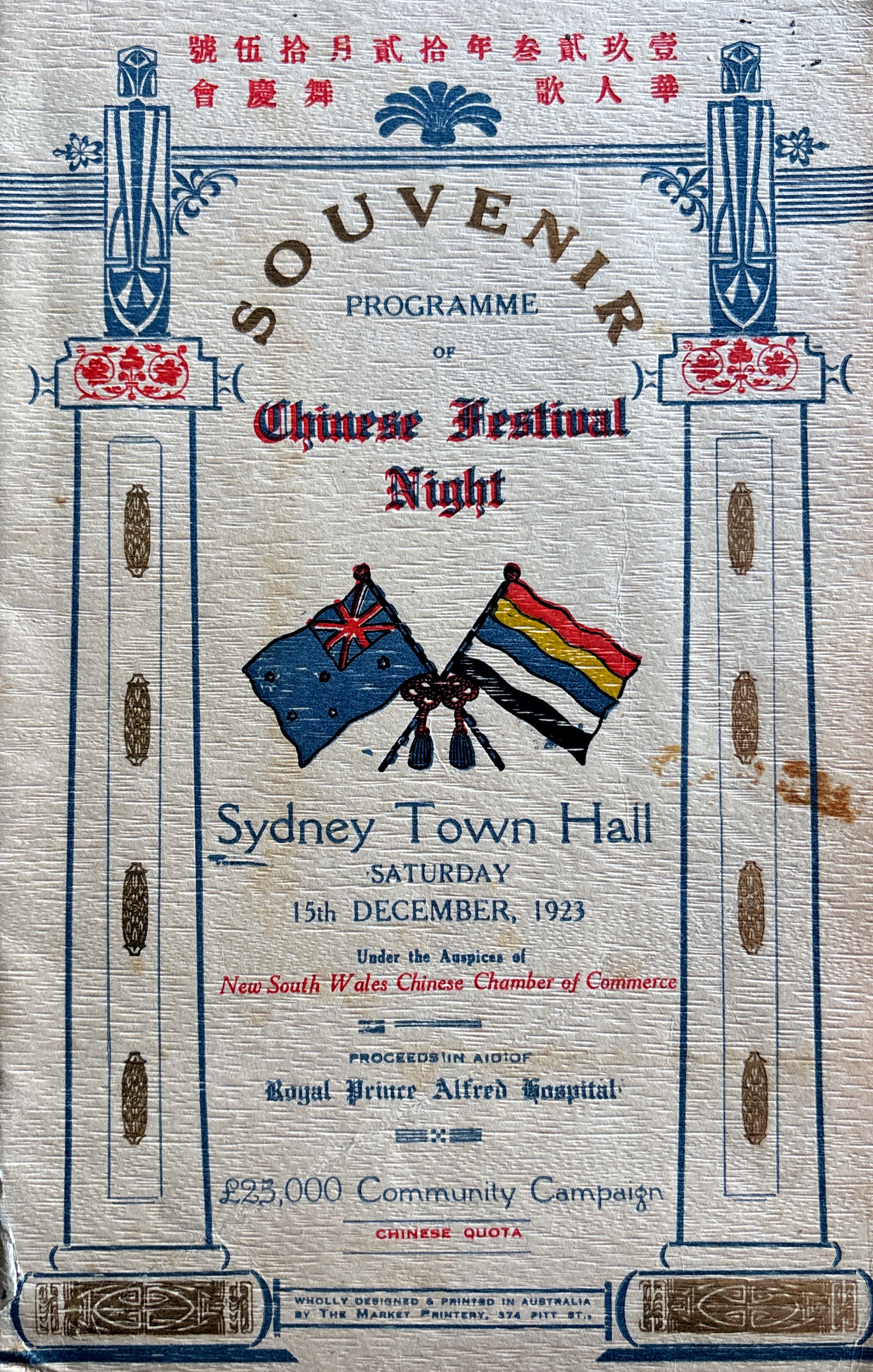
One of the most visible forms of engagement was the support for local hospitals, which in the nineteenth and early twentieth centuries relied heavily on community fundraising. Chinese residents not only contributed generously through donations but also organised and hosted fundraising events of their own — a practice especially common in Victoria. Even Chinese community festivals, such as the opening of Joss Houses or Chinese New Year celebrations, frequently attracted local attendance. Residents came either as invited guests or simply to enjoy the spectacle. Travelling Chinese opera troupes, which toured goldfields and regional towns, were also attended by non-Chinese audiences and sometimes also performed benefit concerts to raise funds for local hospitals .
Yet this participation existed within a social environment shaped by paternalism and casual racism. Chinese people could be accepted as contributors and entertainers, but rarely as equals. At agricultural shows, for instance, Chinese market gardeners regularly won prizes for their produce, yet the results often listed them anonymously as “the Chinaman” rather than by name — a sharp contrast to the named European prizewinners who followed.
This duality of inclusion and exclusion extended to public festivities. In Bendigo, Chinese participation in parades became a celebrated and enduring tradition, and in Albury, organisers invited Chinese processions from Victoria to provide what they called an “exotic” highlight for centenary celebrations. Similarly, football matches between Chinese gold miners and Chinese market gardeners, or novelty events such as the “Chinaman’s Cup” at Rocky River race meetings, reflected both genuine social engagement and a tendency to frame Chinese participation as a spectacle — an expression of curiosity more than equality.
Taken together, these examples reveal the complex social positioning of Chinese Australians during the colonial and early Federation periods. They were neither wholly excluded nor fully accepted: deeply embedded in local communities, yet continually defined by the racial boundaries of a society that viewed them as both useful neighbours and permanent outsiders.
Bendigo and Beechworth parades - ongoing - dragons
Albury 1925 centenary - invited from Victoria
Invitation in Wagga - https://trove.nla.gov.au/newspaper/article/143358243
Sydney 1938 - https://trove.nla.gov.au/newspaper/article/183847105
Chinese lanterns - https://trove.nla.gov.au/newspaper/article/274201652