Amoy Indentured men
Date Published
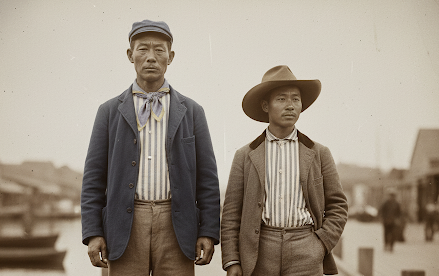
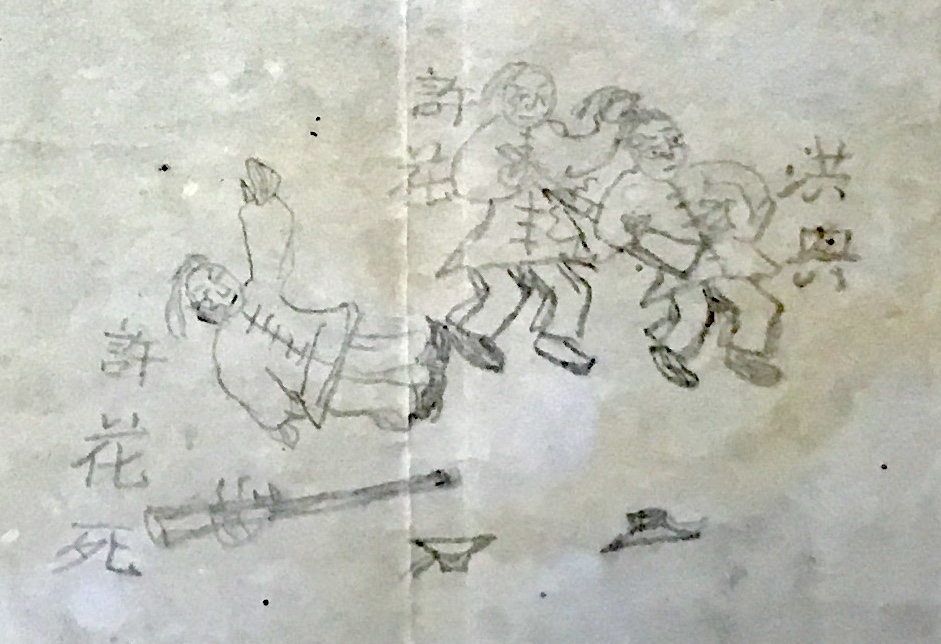
Workers brought under indentures through the Treaty Port of Amoy from 1848 to 1852.
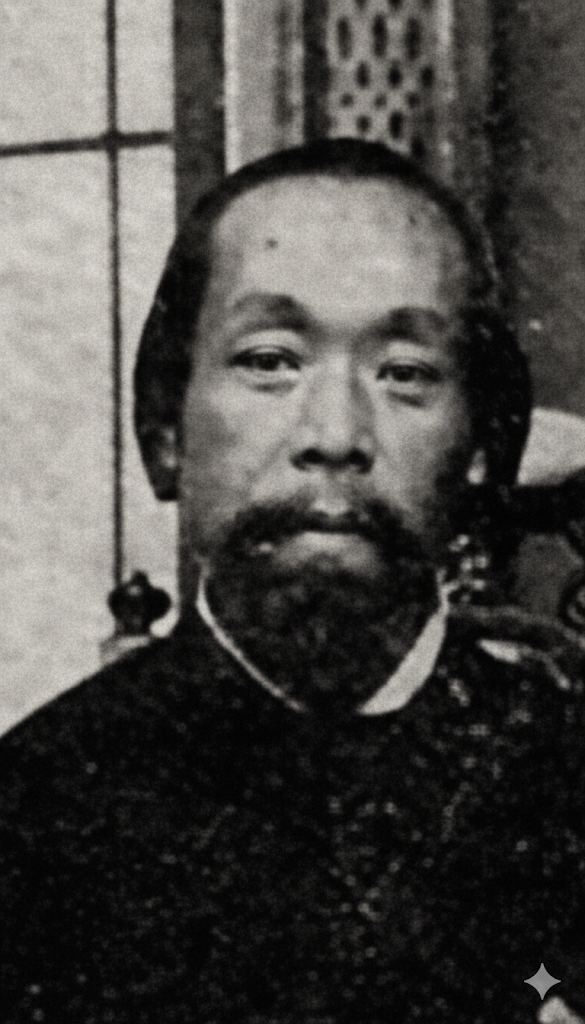
William Edward Oram Chi
"In 1847 the first group of indentured Chinese labourers arrived in the port of Sydney as part of what over the following six years was to become a systematic trade. The reactions within colonial society prompted by this trade were in the main negative, and ranged from outright admonition of the importers and employers for being involved in what was termed nothing less than a covert slave trade, to a qualified acceptance of the trade as the only measure available to those employers, specifically the squatters, in need of labourers and shepherds."
"Responses and Reactions to the Importation of Indentured Chinese Labourers" by Maxine Darnell. No. 99-2 – November 1999, Working Paper Series in Economic History.
"The importation of indentured Chinese labourers was not a reaction to the need to replace labourers who had fled to the fields. The indentured Chinese were already in place, as recognised and articulated by a contemporary:
“ … the arrival of the Chinese in the district at the critical period that they did, was in a great measure the salvation of the squatting interest, which without the presence of these people would have been, if not utterly ruined, at least vastly deteriorated ... The employment of this outlandish description of labourers therefore has been of more service to the colony than has heretofore been allowed." [Moreton Bay Free Press, 14 March 1852, p.2.]
Darnell, Maxine, “Life and labour for indentured Chinese shepherds in New South Wales”, 1847-55, Journal of Australian Colonial History, 6, 2004, pp.137-158.
It is often assumed that few if any of these Amoy men returned to China and given the circumstances under which many apparently entered into the bargain (ranging from escaping debt to kidnapping as well as the usual poverty) this is not to be unexpected. However, there is at least one report of some returning and certainly many did do well enough to make this a viable option:
"Twelve Chinese left here on Sunday last, homeward bound (for Amoy); they carry upwards of £3,000 with them. One, Han Ting, possessing over £500." Moreton Bay Courier, 10 February 1858, p.2.
This was a report from Gayndah where many former Amoy men became landowners or established businesses. One reason the bringing of men from Amoy ceased in 1855 was that as the gold rush began, they, like others also thought gold mining was a better option and a report of Chinese gold diggers returning to China includes mention of some having "taken passage for Amoy" specifically. The Age, 28 April 1856, p.3.
Another common assumption is that these men were hapless victims of ill-treatment and while instances of their ill-treatment are plentiful so are examples of their resisting such treatment ranging from running away from their employer to mounting court cases and in at least one case "they all struck work". This was again a Gayndah case, see The Tasmanian Colonist, 29 November 1852, p.4.
Mr. WENTWORTH moved a proviso to prevent any Chinaman, whether naturalised or not from obtaining leave or license unless he was duly discharged from all obligations to his master by indenture or otherwise. Some discussion ensued, and on a division Mr. Wentworth's proviso was lost, ...
The Maitland Mercury and Hunter River General Advertiser, Saturday 25 December 1852, p.2.
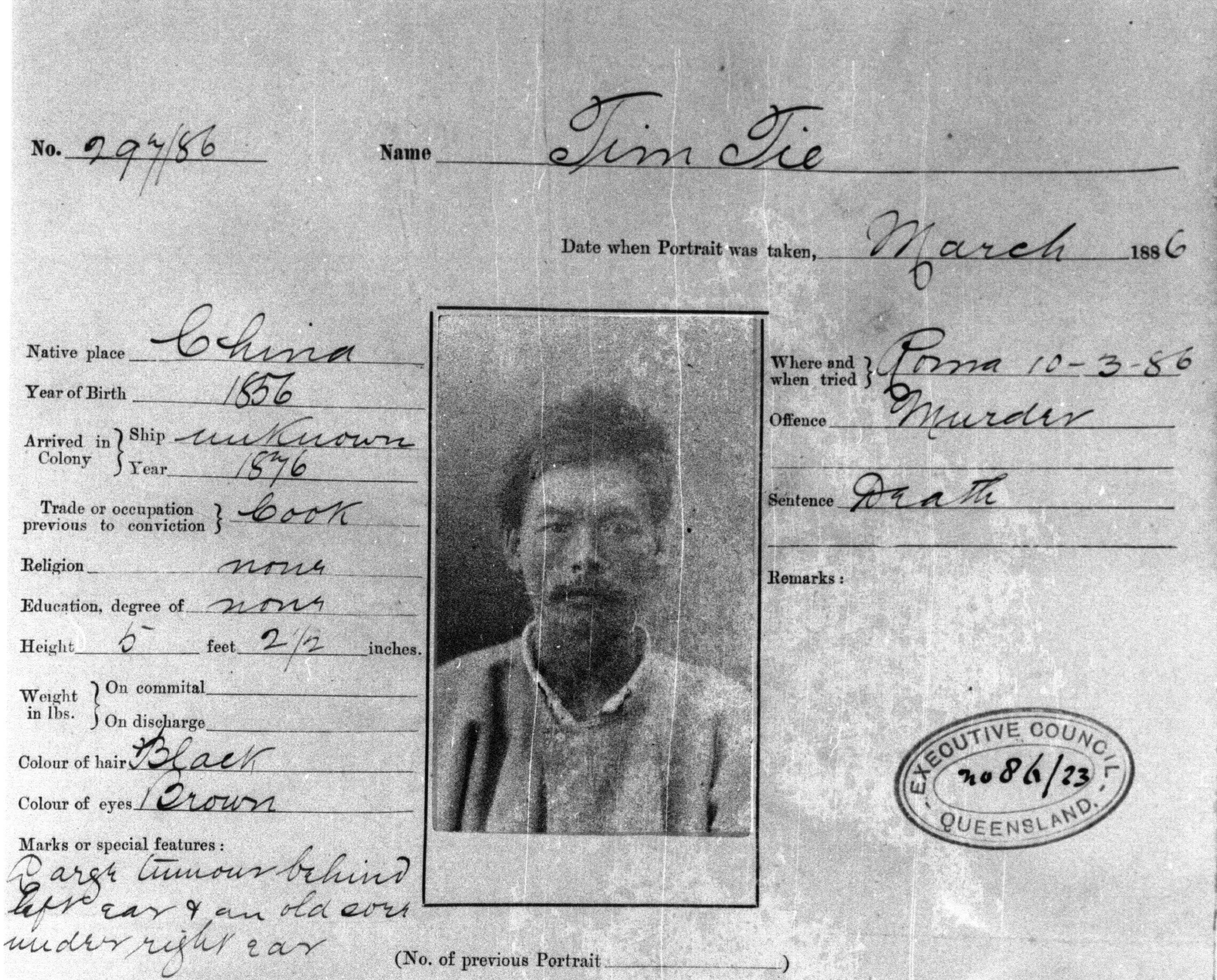
Certainly the some 3,000 men who came to the Australian colonies via Amoy (Xiamen) found varied treatment and varied fortunes.
As a set off against the dark account I sent you of the Chinamen in my last letter from Gulliga, it is but fair to state that at the next station above Gulliga, I met a squatter who employs forty men of that nation, and declared to me that they were peaceful, attentive to their duties, trustworthy, and every way valuable servants. He was surprised to hear that others found them so troublesome.
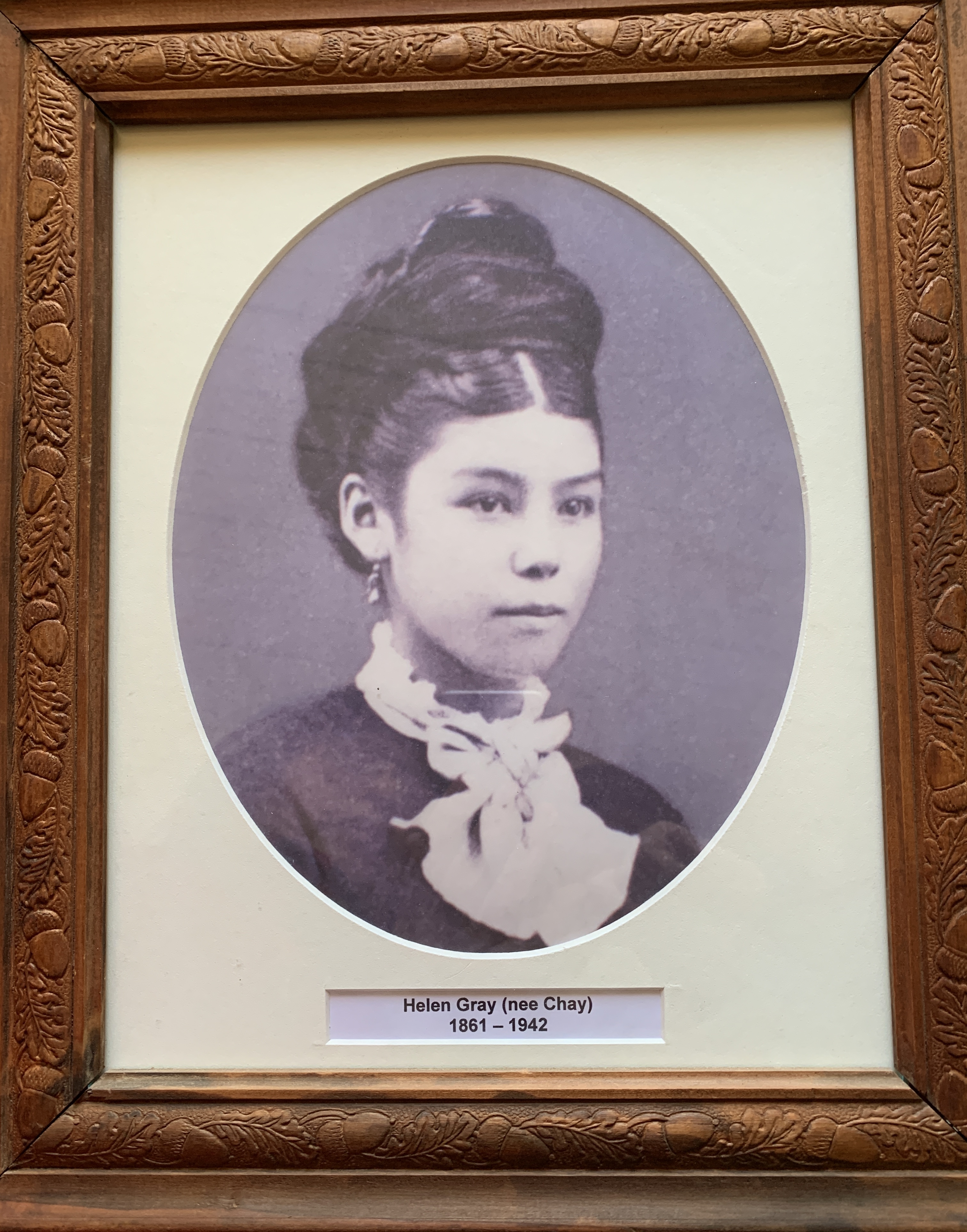
A tendency for they or their decedents to change names has made their tracing in Australian history more difficult family historians and DNA is gradually revealing this impact.
See also:
Darnell, Maxine, “Life and labour for indentured Chinese shepherds in New South Wales”, 1847-55, Journal of Australian Colonial History, 6, 2004, pp.137-158.
Margaret Slocomb, Among Australia’s pioneers: Chinese indentured pastoral workers on the Northern Frontier 1848 to c.1880, Balboa press, 2014.
Michael Williams, Too much like Englishmen: Amoy migrants in Australia, ChideStudyPress, 2026.